Russian Strikes in Ukraine: Video Suggests Retaliation After Attacks on Moscow

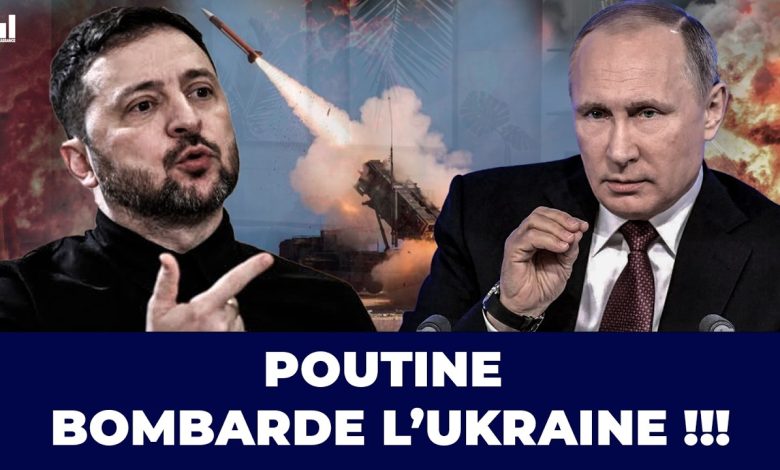
The video analyzes a sequence of escalation in the war between Russia and Ukraine. It presents Ukrainian attacks on Moscow, particularly on Russian refineries, as the context for an especially intense Russian military response on Ukrainian territory. The elements reported in the transcript should be understood as claims and analyses made in the video.
According to this narrative, the Russian strikes were intended to send a political and military signal to the Ukrainian authorities, in a conflict that has lasted several years. The video also focuses on the difficulties Ukraine faces in protecting its airspace, particularly against ballistic missiles.
Attacks on Moscow at the heart of the narrative
The transcript states that in June 2026, Ukraine reportedly carried out major attacks on Moscow. Russian refineries were allegedly hit, and fires reportedly broke out in several areas. The narrator emphasizes the symbolic nature of such attacks, which he presents as unusual given Russia’s ability to shield its capital from the direct effects of the war.
In his commentary, the video’s author believes that these operations may have increased pressure on Vladimir Putin. He interprets the attacks as a factor that contributed to a stronger Russian reaction. This reading is a personal analysis expressed in the video: the transcript provides no independent evidence to establish the specific decisions made by the Russian authorities or their internal motivations.
The narrator also describes Ukraine’s resistance as a central factor in the continuation of the war. He suggests that the Ukrainian authorities may believe they still have room for military action. Here again, this is an interpretation presented by the video, not a position directly attributed to the Ukrainian authorities.
Russian strikes described as massive
The video states that Russia bombarded Ukraine on July 6, 2026, with unprecedented intensity. An initial set of figures mentions 68 missiles: 23 ballistic missiles, 39 cruise missiles, and 6 Zircon hypersonic missiles. Later, however, the transcript refers to a total of 74 missiles and 496 drones.
This difference between the two counts appears in the source content itself. Therefore, based on the transcript alone, it is not possible to establish a single, definitive total for the number of missiles used.
The strikes are notably illustrated by footage presented as coming from Kyiv. The commentary interprets it as a show of force intended to underscore Russian military capabilities. It also mentions casualties, without providing a precise number or an exhaustive location of the reported damage.
According to the video, Russia says it is targeting military sites, facilities linked to weapons production, and weapons depots. However, the narrator notes that wars also cause damage affecting other areas and other populations. The transcript does not make it possible to verify, target by target, what was hit in the strikes discussed.
Ukrainian air defense under scrutiny
A large part of the analysis focuses on Ukraine’s air-defense capabilities. The video states that Russian ballistic missiles reportedly reached their targets and that the systems available on the Ukrainian side were unable to respond effectively to this threat.
The narrator explains that Patriot systems are particularly sought after because of their role in surface-to-air defense. He presents them as suited to intercepting ballistic missiles, described as fast and operating at high altitude before descending toward a target.
The video distinguishes these systems from other means of defense which, according to it, are better suited to drones and slower threats. It specifically cites the Russian Iskander and Kinzhal missiles to illustrate the threats Ukraine reportedly faces. The main idea developed is that Ukrainian airspace has become highly vulnerable to Russian strikes in the absence of sufficient defensive capabilities.
The transcript also states that Ukrainian stocks of Patriot missiles were insufficient, or even depleted, at that time. This claim is presented in the video without documentary data. It is accompanied by an appeal attributed to the Ukrainian authorities for resupply from the United States or European partners.
Patriot supplies: industrial constraints and political choices
The video mentions the construction in the United States of four factories intended to manufacture Patriot missiles, with an objective of operating at full capacity within three months. This information is reported in the transcript, without further details on the industrial timeline, expected volumes, or the state of progress of the facilities.
The commentary stresses several obstacles to supplying this equipment to Ukraine. It first refers to a global shortage, arguing that production would not be enough to meet all demand. It also mentions the high cost of the missiles and the time required before delivery.
Finally, the video highlights that some allied countries would be hesitant to transfer part of their stocks. According to the narrator, these states may fear reducing their own defense capabilities in an international environment seen as uncertain. Germany and the Netherlands are cited as having already sent missiles to Ukraine, without further details on the quantities or dates.
A controversy mentioned in Poland
The transcript also reports an investigation in Poland concerning a possible disclosure of information about an allegedly secret transfer of Patriot missiles to Ukraine. According to the video, members of the Polish opposition reportedly criticized the government for carrying out a shipment without parliamentary approval.
The narrator reports that the Polish defense minister reportedly acknowledged sending equipment and weapons to Ukraine, while raising the possibility of an audit or a list of equipment already transferred. The transcript gives neither the minister’s identity, nor references for the investigation, nor details of the parliamentary procedure mentioned.
This sequence illustrates the political weight of arms deliveries in countries supporting Ukraine. Beyond the equipment itself, these decisions raise issues of national security, transparency, and political oversight, as presented in the video.
An interpretation of escalation, without a conclusion on the outcome of the conflict
The video’s main thread is one of escalation: Ukrainian attacks on Moscow were allegedly followed by a large-scale Russian missile and drone campaign. The narrator sees it as a message intended for Kyiv and Volodymyr Zelensky, but that intention remains the author’s interpretation of the sequence.
The transcript does not make it possible to determine the overall military impact of these operations or to predict what will happen next in the conflict. It mainly highlights the immediate issue of Ukrainian air protection, access to Patriot missiles, and the choices facing countries that could supply them.
Frequently asked questions
How many missiles did Russia reportedly fire according to the video?
The transcript contains two different counts: it first mentions 68 missiles, then 74 missiles accompanied by 496 drones. This discrepancy does not allow a single total to be confirmed based on the video alone.
Why are Patriot missiles presented as important?
According to the explanation given in the video, Patriots are surface-to-air defense systems sought for their ability to counter ballistic missiles. The narrator distinguishes them from other systems that he considers more suitable for drones or less rapid threats.
What does the video say about Poland?
It mentions an investigation linked to the leak of information about an allegedly secret transfer of Patriot missiles to Ukraine, as well as criticism from the Polish opposition of the government. These elements are reported by the transcript without supporting documents.
Video source
View the source video on YouTube