Senegal: Bassirou Diomaye Faye’s Kiraay Party and the Political Realignment with PASTEF

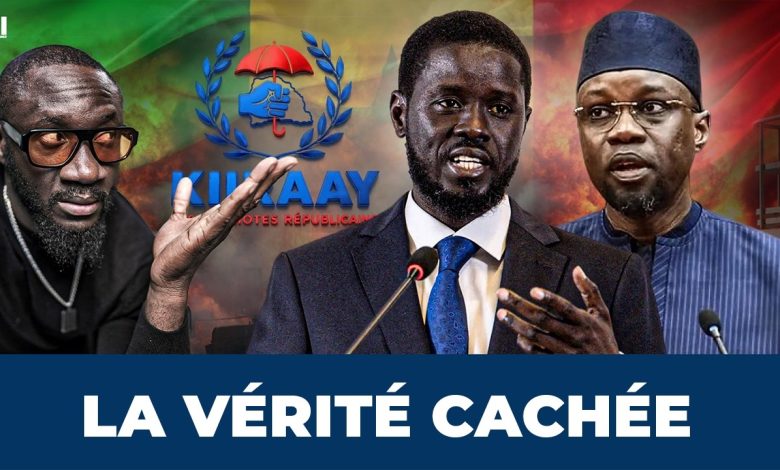
The announced creation of Kiraay by Bassirou Diomaye Faye opens a new political chapter in Senegal. The movement’s name is said to mean “shield” in Wolof, with the slogan “The homeland first.” Beyond its symbolism, this initiative is described as the establishment of an independent political base for the President of the Republic, amid tensions with Ousmane Sonko and the PASTEF party.
The available information presents this founding as a now openly acknowledged split between the two leaders, long described as close allies associated with the same political momentum. The central issue is therefore not merely the creation of a new party: it concerns each camp’s ability to organise its supporters, influence institutions and impose its political direction.
Kiraay, a “common home” for Faye’s supporters
When the party was announced, Kiraay was presented as a “common home” intended to bring together “patriotic republican brothers and sisters.” The idea of founding the movement was associated with planting a seed and building alongside people who trust one another.
This wording places the party within a strategy of political mobilisation around Bassirou Diomaye Faye. The slogan “The homeland first” also gives this new organisation a strong symbolic direction, its name being associated with the idea of protection or a shield.
Faye’s supporters expressed their backing for the initiative. Several hundred people reportedly waited outside the event venue in the heat, carrying placards. Among the arguments put forward by his supporters is the view that the president enjoys the trust of part of the population and should be able to rely on a political structure of his own.
A split attributed to disagreements with Ousmane Sonko
The creation of Kiraay is presented as formalising a political separation from Ousmane Sonko and PASTEF. The reasons cited include growing tensions over the movement’s leadership, economic-policy choices and the debt crisis.
The reported information also points to a broader question of leadership. When two major political figures govern or operate within the same political space, disagreements can concern not only programmes but also the distribution of influence, responsibilities and decision-making power.
Some Ousmane Sonko supporters portray him as a charismatic leader with a vision of independence for Senegal and a firm stance against what they see as colonialism or neocolonialism. Under this interpretation, Bassirou Diomaye Faye came to power with substantial political support from Sonko, which should imply a degree of continuity or political loyalty.
Conversely, Faye’s supporters believe that a past alliance does not necessarily require those involved to continue on the same path. According to this position, a President of the Republic may move away from a former ally when priorities, methods or policy directions no longer align with his own.
Institutional power at the heart of the balance of power
The situation described is shaped by a division of power between institutions. The reported information indicates that, in May 2026, Bassirou Diomaye Faye would have removed Ousmane Sonko from his duties as Prime Minister, along with ministers and secretaries of state serving in the government. Ousmane Sonko would then have become President of the National Assembly through PASTEF.
PASTEF is also presented as holding 130 of the 165 seats in Parliament. If this distribution is maintained, it places the party in a decisive position within the National Assembly. For Bassirou Diomaye Faye, the purpose of Kiraay would therefore be to build a force capable of supporting his agenda and rebalancing the political relationship of power.
The departure of some officials for the new party has been downplayed by PASTEF. A newspaper close to the party mentioned a few dozen resignations, comparing them with what it described as strong membership momentum within PASTEF. These contrasting assessments illustrate a battle of perceptions: each camp seeks to show that it retains genuine mobilisation capacity.
Why a president generally seeks his own political structure
Creating a presidential party often responds to a need for autonomy. A political structure makes it possible to rely on activists, organise candidacies, communicate a message and defend a political line during elections or institutional deadlines. Dependence on another leader’s organisation can become difficult when disagreements emerge.
This logic has existed in other contexts. In France, Emmanuel Macron created En Marche in 2016, later renamed Renaissance, without relying on either the Socialist Party or the right. In Senegal, Macky Sall left Abdoulaye Wade’s Senegalese Democratic Party in 2008 to found the Alliance for the Republic, before becoming president in 2012.
These precedents do not determine how the Senegalese situation will develop, but they show that a leader may seek to build an independent political apparatus in order not to remain dependent on a pre-existing organisation. In Kiraay’s case, the initiative is presented precisely in these terms: creating a structured base around Bassirou Diomaye Faye.
The risks of a politically divided executive and Parliament
When the executive is led by a president while Parliament is dominated by a competing political force, deadlock, difficult negotiations and institutional tensions can arise. This situation is not exceptional in democracies, but it requires compromises to ensure continuity in public action.
France’s period of cohabitation between Jacques Chirac and Lionel Jospin from 1997 is cited as an example of shared institutional power: the president retained a major role in foreign affairs and the military, while the prime minister led the government. In the United States, Barack Obama’s presidency also faced a powerful Republican Congress from 2010 onwards, which complicated the adoption of several proposals.
In the Senegalese context described, the coexistence of a president supported by Kiraay and an Assembly in which PASTEF would hold a large majority could require permanent dialogue between the two poles. The creation of Kiraay thus appears both as an act of political organisation and as a response to a potentially conflictual institutional framework.
A political alliance weakened by the exercise of power
The episode highlights the potential fragility of alliances based on personal closeness, a shared goal or mutual popularity. Once governing begins, economic decisions, institutional priorities and respective ambitions can expose deep differences.
Previously close relationships can then turn into political rivalry. The cases of François Mitterrand and Michel Rocard in France, Tony Blair and Gordon Brown in the United Kingdom, and Uhuru Kenyatta and William Ruto in Kenya are cited as illustrations of this possible evolution between political allies.
For Senegal, Kiraay is therefore presented as more than simply a new party label. It marks Bassirou Diomaye Faye’s intention to gain autonomy, while PASTEF remains described as a major parliamentary force associated with Ousmane Sonko. The evolution of their relationship will depend on their ability to manage their political and institutional differences.
FAQ
What does Kiraay mean?
Kiraay is presented as meaning “shield” in Wolof. The movement is associated with the slogan “The homeland first.”
Why is the creation of Kiraay considered important?
It is presented as formalising a political split between Bassirou Diomaye Faye and Ousmane Sonko, as well as creating an organisational base of the president’s own.
What is the institutional issue between Kiraay and PASTEF?
The reported information indicates that PASTEF would hold 130 of the 165 seats in the National Assembly. This parliamentary majority would give the party significant weight in relation to an executive supported by a new political structure.