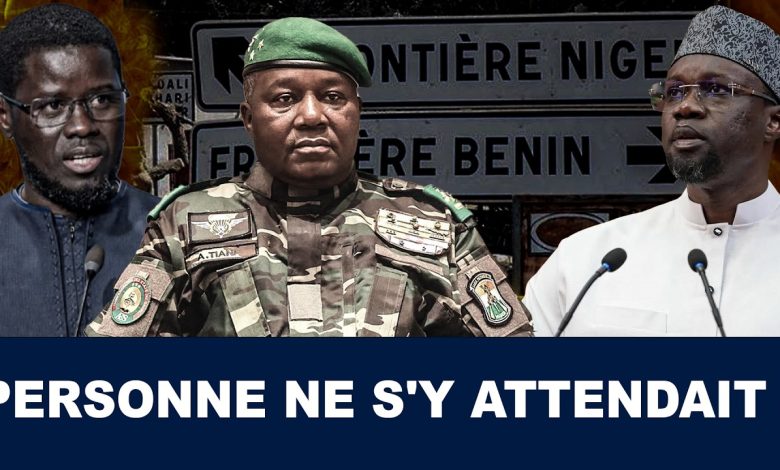
Bassirou Diomaye Faye has founded his own political party, called Kiraay and presented under the slogan “The homeland first.” Its creation marks a turning point in the political relationship between the Senegalese president and Ousmane Sonko, with whom he had until then shared a political path and common political space around Pastef.
The founding of Kiraay is more than the emergence of a new organisation. It reflects the president’s desire to establish an autonomous political base, at a time when Pastef remains a major parliamentary force. The situation therefore opens a new phase marked by competition, possible negotiations and uncertainty over the balance of power.
Kiraay, a new structure around Bassirou Diomaye Faye
When presenting the party, Bassirou Diomaye Faye described its creation as the foundation of a “common home.” He addressed his supporters as “patriotic republican brothers and sisters,” stressing the idea of building with people who trust one another.
The name Kiraay is presented as having a meaning in Wolof. Its slogan, “The homeland first,” places national attachment at the centre of its positioning. Beyond the symbolism, the political objective appears clear: to bring together activists, party officials and supporters directly associated with the President of the Republic.
Supporters of Bassirou Diomaye Faye have publicly expressed their backing for the initiative. Gatherings and placards supporting the president were reported during the launch period. For its part, Pastef downplayed departures and defections to the new organisation, arguing that they did not undermine its grassroots momentum.
A break with Ousmane Sonko and Pastef
The creation of Kiraay comes after growing tensions between Bassirou Diomaye Faye and Ousmane Sonko. The reported differences concern, in particular, the movement’s political leadership, economic choices and debt management. These disagreements gradually took on both institutional and personal dimensions.
According to the available information, Bassirou Diomaye Faye ended Ousmane Sonko’s tenure as Prime Minister in May 2026, along with that of the ministers and secretaries of state who were members of the government. Ousmane Sonko then became President of the National Assembly through Pastef.
This development changed the nature of the disagreement. It is no longer simply about differences within the same alliance, but about the existence of two distinct political poles: the presidency, now supported by Kiraay, and Pastef, of which Ousmane Sonko remains a central figure.
Some of Ousmane Sonko’s supporters believe that his role, charisma and vision of a more independent Senegal were decisive in Bassirou Diomaye Faye’s rise. In this view, the president owes him political recognition. Conversely, supporters of Bassirou Diomaye Faye argue that an elected president must be able to chart his own course, including when relationships or ambitions diverge.
Parliament’s decisive weight
The balance of power is not determined solely by grassroots organisations. Pastef is said to hold 130 out of 165 seats in Parliament, giving it a dominant position in the National Assembly. This majority places Ousmane Sonko and his party at the heart of the institutional equation.
In this context, Kiraay is intended to enable Bassirou Diomaye Faye to build his own political force so that he does not depend exclusively on a party associated with another leader. A presidency with an autonomous organisation can more easily structure its message, organise its supporters and prepare its candidates.
However, the coexistence of a president controlling the executive and a rival force dominating Parliament may also generate tensions. Political initiatives may be subject to difficult negotiations, deadlock or compromise. The outcome will depend in particular on the ability of both camps to maintain institutional dialogue despite their political split.
Why alliances between leaders can weaken
The case of Bassirou Diomaye Faye and Ousmane Sonko illustrates a common challenge in alliances based on personal closeness, joint mobilisation or strong popularity. These factors can be powerful during a campaign or a period in opposition. They are not always enough when the time comes to govern, distribute responsibilities and make decisions on sensitive issues.
International precedents show that allies can become political rivals. In France, François Mitterrand and Michel Rocard experienced major differences despite belonging to the same political family. In the United Kingdom, Tony Blair and Gordon Brown also maintained a lasting rivalry within the Labour Party. In Kenya, Uhuru Kenyatta and William Ruto, allies from 2013 to 2022, later opposed each other politically.
These examples cannot predict developments in Senegal. They nevertheless show that an alliance between two strong personalities can be affected by ambitions, methods, economic priorities or differing definitions of authority at the top of the state.
An independent party base: a classic presidential issue
The pursuit of party autonomy is not a new phenomenon. Emmanuel Macron created En Marche in 2016, a movement that became Renaissance, without depending on the Socialist Party or the traditional right. In Senegal, Macky Sall left Abdoulaye Wade’s Senegalese Democratic Party in 2008 to create the Alliance for the Republic before becoming president in 2012.
These examples highlight a recurring political principle: a president often seeks to have an organisational instrument directly tied to him. Such a structure makes it possible to bring together activists, select candidates and defend an independent political direction.
For Bassirou Diomaye Faye, Kiraay therefore represents both a political vehicle and a response to an imbalance: Pastef remains powerful in Parliament, while the presidency seeks to consolidate its freedom of action. The creation of the party formalises this desire for political emancipation.
What future for relations between Kiraay and Pastef?
The split between the two former allies does not necessarily mean that all dialogue is impossible. The functioning of institutions requires relations between the executive and Parliament, particularly when the balance of power is so pronounced. However, the stated differences and the governmental break make cooperation more complex.
The main question now concerns Kiraay’s ability to establish itself sustainably in the face of Pastef. The new party will have to turn the support expressed around the president into a structured organisation, with leaders, activists and an identifiable political presence.
For Pastef, the challenge will be to preserve its cohesion and parliamentary influence while pursuing a line distinct from that of the presidency. The ongoing realignment thus places Senegal in a political phase in which presidential authority, the parliamentary majority and grassroots loyalties are no longer united under the same banner.
FAQ
What is Bassirou Diomaye Faye’s new party called?
The new party founded by Bassirou Diomaye Faye is called Kiraay. It is presented under the slogan “The homeland first.”
Why did Bassirou Diomaye Faye create Kiraay?
Kiraay was created amid a break with Ousmane Sonko and differences over political leadership, economic policy and debt management. It also gives the president his own organisational base.
How strong is Pastef in Parliament?
Pastef is said to hold 130 out of 165 seats in Parliament, giving it a very large majority in the National Assembly.