Ousmane Sonko Challenges Bassirou Diomaye Faye on Transparency and Presidential Power

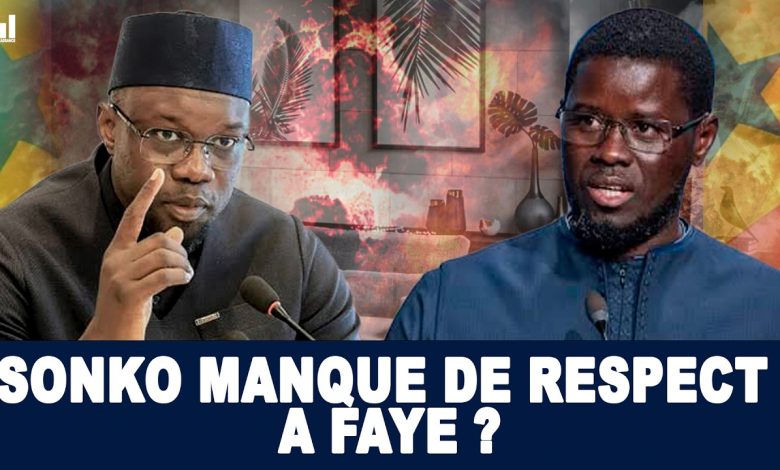
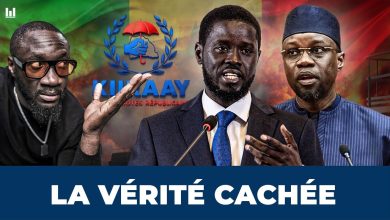
In the excerpt relayed through the video, Ousmane Sonko indirectly addresses Senegalese President Bassirou Diomaye Faye with a series of questions about political commitments he attributes to him. At the heart of his remarks are asset declarations, the place of the President of the Republic within a political party, and an institutional reform intended, according to him, to strengthen public transparency.
Sonko repeatedly uses the expression “our little brother” to refer to Bassirou Diomaye Faye. He asks what may have changed in the head of state’s positions since the statements mentioned in his speech. This wording, widely discussed in the video, is above all part of a political critique concerning principles of governance.
Asset declarations at the heart of the challenge
The first issue raised by Ousmane Sonko concerns the obligation to declare one’s assets at the beginning and end of a term in office. He states that Bassirou Diomaye Faye had himself defended this principle when he was a candidate.
For Sonko, declaring assets upon taking and leaving public office is a requirement of transparency. He says that he himself made a declaration when he was Prime Minister and announces that he must also declare his assets upon leaving office, within the timeframe he mentions.
Sonko therefore questions the possibility of backtracking on this measure. He presents this obligation as an important element of public administration and asks why it could pose a problem for the President of the Republic.
The Presidency of the Republic and leading a party
The second issue concerns holding both the presidential office and the leadership of a political party. In his remarks, Ousmane Sonko recalls a position he attributes to Bassirou Diomaye Faye: a President of the Republic should not be a party president.
His argument is institutional. According to him, when an official is criticized as a party leader, their status as President of the Republic may be invoked, blurring the distinction between partisan responsibilities and the presidential office.
Sonko also returns to Bassirou Diomaye Faye’s resignation from the position of secretary-general of Pastef, as he recounts it. He explains that he learned of the decision through the press and questioned the person concerned. According to his account, Bassirou Diomaye Faye then told him that he wanted to stand “above the fray.”
Two years later, Sonko questions what he presents as a shift in this orientation. He does not offer a definitive answer in the excerpt: his point is to ask the reasons for this apparent change.
A reform to curb presidential power
Ousmane Sonko advocates a constitutional reform that he describes as important for the advancement of Senegalese democracy. In his remarks, he links this reform to several objectives: greater transparency, better public administration and stricter limits on certain presidential prerogatives.
He notably mentions limiting the power to dissolve the National Assembly. The reasoning presented in the video is that such a power should not be exercised without safeguards, in order to avoid, in the terms used in the commentary, an excessive concentration of authority.
Sonko also supports the idea of preventing the President of the Republic from simultaneously being the top leader of a party. For him, these measures should form part of a broader institutional transformation.
He refers to the possibility of a referendum to submit certain issues to the Senegalese people. In his speech, however, he questions the usefulness of consulting the public on principles that he presents as already having been publicly defended: asset declarations upon leaving office and the separation between the Presidency of the Republic and party leadership.
Questions, not an established explanation
The video then develops the idea of a divergence between Ousmane Sonko and Bassirou Diomaye Faye. However, several claims made in the commentary are matters of interpretation, hypothesis or the opinion of its author. This is notably the case for the explanations put forward regarding possible political, technocratic, local or international influences.
These elements are not demonstrated by evidence presented in the excerpt. They must therefore be distinguished from the statements directly attributed to Ousmane Sonko, which mainly concern institutional commitments, transparency and the organization of power.
Likewise, the video claims that there are disagreements regarding the economy, sovereignty and relations with the International Monetary Fund. A passage attributed to Sonko stresses that Senegal’s future would depend first and foremost on the efforts of the Senegalese people, fiscal consolidation, and an economic and social recovery plan. He presents financial institutions as potential partners, without describing them as the sole solution to budgetary difficulties.
But the main issue in the segment remains political and institutional: Sonko publicly asks why previous positions, which he attributes to Bassirou Diomaye Faye, would appear no longer to be defended in the same way.
The meaning of the expression “our little brother”
The expression used by Ousmane Sonko drew attention in the video commentary. It considers that it may be understood through a reference to a relationship of seniority or closeness, rather than as an attack on the presidential office.
Nevertheless, it is necessary to adhere to the wording of the remarks: Sonko speaks of “our little brother and President of the Republic” and raises questions about his political evolution. In his speech, the expression is associated with a call to return to what he describes as “the essentials” and “his political soul.”
Beyond this wording, Sonko’s message therefore targets specific institutional choices. He calls for consistency between the past statements he recalls and the current directions he questions.
FAQ
What does Ousmane Sonko criticize Bassirou Diomaye Faye for in this excerpt?
Ousmane Sonko questions what he presents as changes in position concerning asset declarations, a political party being led by the president, and a reform aimed at limiting certain presidential powers.
What reform does Ousmane Sonko advocate?
He advocates a constitutional reform associated with transparency in public administration, asset declarations upon taking and leaving office, and limits on certain presidential prerogatives.
Does the video establish the causes of any possible disagreements between the two officials?
No. The commentary puts forward various hypotheses and interpretations, but the excerpt does not provide elements allowing the causes of these presumed divergences to be established with certainty.
Video source: watch the video on YouTube.