United Kingdom and Russia: Fears of Escalation Over Support for Ukraine

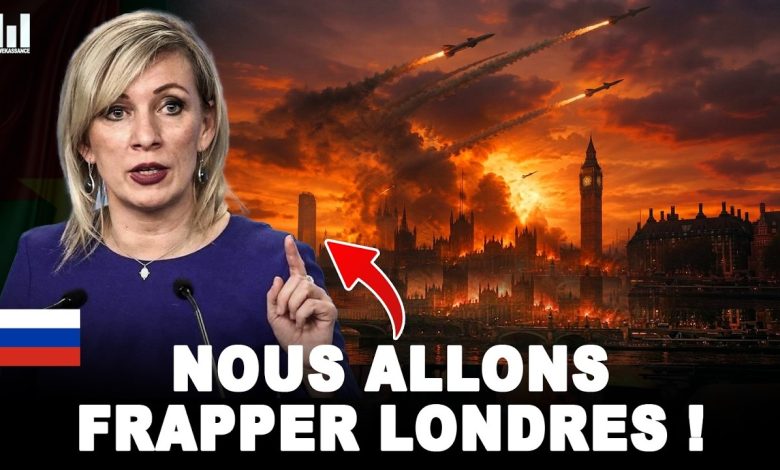
Tensions between the United Kingdom and Russia are described as particularly acute in the context of British support for Ukraine. British security officials are said to have warned the Prime Minister about the risk of Russian actions targeting defence and security infrastructure. This threat is presented as a possible response to the political, military and technical role attributed to London in the war in Ukraine.
However, some of the elements put forward are based on unspecified security warnings, while others remain hypothetical. No date, specific target or confirmed method has been established. The key issue is therefore to distinguish between statements, threats and contemplated scenarios on the one hand, and an attack that is actually planned or imminent on the other.
British support for Ukraine at the heart of tensions
The main reason cited is the political and military support provided by the United Kingdom to Ukraine. This support is said to include funding, weapons, ammunition, protective equipment, radar systems and other resources intended for Ukrainian forces.
A figure of at least $25 billion has been cited to describe the scale of this aid since the beginning of the war. The British government is also portrayed as determined to continue this support. In the account of the reported tensions, this position is seen as a factor of direct confrontation with Moscow.
A visit to Kyiv by the new British head of government is notably described as a strong political gesture. It is said to have been interpreted as a demonstration of continuity, or even a strengthening, of Britain’s commitment to the Ukrainian authorities.
Storm Shadow missiles, a particularly sensitive issue
Storm Shadow missiles occupy a central place in the grievances attributed to Russia. It has been suggested that the United Kingdom may have proposed providing Ukraine with classified documents related to the assembly or reconstruction of these missiles.
According to the characteristics highlighted, these missiles would make it possible to target objectives more precisely than drones while flying at low altitude. Their ability to evade radar and their purported stealth features would make them especially feared in the context of deep strikes.
The text contrasts this capability with that of drones used by Ukraine. According to this presentation, the latter can reach targets inside Russian territory, but carry smaller payloads and generally have a more limited impact than a missile of this type.
The prospect of additional British assistance related to Storm Shadow missiles is therefore described as a major threshold of tension. From the reported Russian perspective, this would no longer be merely diplomatic or financial support, but a contribution capable of increasing Ukraine’s strike capabilities.
The issue of Russian vessels and cargoes
Tensions do not concern Ukraine alone. Accusations also involve the interception or seizure of vessels carrying Russian fuel. It is claimed that several tankers may have been affected by operations attributed to British forces.
The response attributed to the Russian authorities is unambiguous: if Russian vessels or the assets of their economic operators were seized, Moscow could respond in a similar way against British vessels or those linked to the United Kingdom.
A reported statement denounces restrictions on the movement of Russian vessels and describes the prospect of seizures followed by the resale of assets as “piracy” or “brigandage.” The same statement indicates that such a situation would trigger an equivalent response. These remarks illustrate the risk of tensions spreading into the maritime sphere.
In this context, relations between London and Moscow are presented as being shaped by a logic of reciprocity and retaliation. The lack of political de-escalation fuels concern that maritime, diplomatic and military disputes could converge into a single crisis.
What types of actions are feared in the United Kingdom?
The scenarios mentioned do not necessarily describe an open conventional military strike. Instead, they concern indirect or covert actions against British defence and security infrastructure.
The forms of action cited include drone attacks, arson and the use of “sleeper cells.” These cells would refer to people already present on British territory who would be waiting for instructions from Moscow. It is also suggested that British nationals could be recruited for payment to carry out certain operations.
These hypotheses highlight a particular difficulty for security services: discreet actions that are hard to attribute and carried out by local networks do not have the same profile as an identifiable military attack. Nevertheless, no specific operation is documented in the available information.
A threat considered inevitable, but not publicly substantiated
The strongest phrase mentioned is that of a Russian attack deemed “inevitable” against British infrastructure. This assessment is said to come from senior British security sources. It is also accompanied by concern about the Prime Minister’s personal security.
However, based on the elements presented, the alleged inevitability of such an attack is not supported by public evidence, a detailed official warning or a Russian claim announcing a specific operation. It is a particularly serious risk assessment that must be viewed against a backdrop of already severely deteriorated confrontation.
The possibility of a visit by the CIA director to Moscow is also mentioned. This visit is speculatively linked to possible discussions about strikes or retaliatory actions against the United Kingdom. However, no element makes it possible to establish with certainty that this subject was discussed.
An escalation in which statements matter as much as actions
The sequence described illustrates rising tensions between Russia and the United Kingdom around three issues: aid to Ukraine, Ukrainian strike capabilities and the maritime movement of Russian vessels. Each issue can give rise to firm statements, retaliatory measures or reciprocal threats.
In this context, the risks mentioned against British territory should be treated with caution. Scenarios involving drone attacks, sabotage or the activation of sleeper cells are presented as possibilities, not as established facts. Their mention nevertheless reflects the depth of mistrust between London and Moscow.
FAQ
Why might the United Kingdom be targeted by Russia?
The reason put forward is British military and political support for Ukraine, particularly regarding military equipment, sanctions and the issue of Storm Shadow missiles.
What forms could the feared actions take?
The scenarios cited include drone attacks, arson, sabotage and the use of sleeper cells. However, no specific scenario has been confirmed.
Has an attack against the United Kingdom been confirmed?
No. The attack is presented as a threat or risk assessment attributed to security sources. No timetable, specific target or confirmed operation has been provided.