In Mozambique, South African tourists expelled from a restaurant: what the videos show

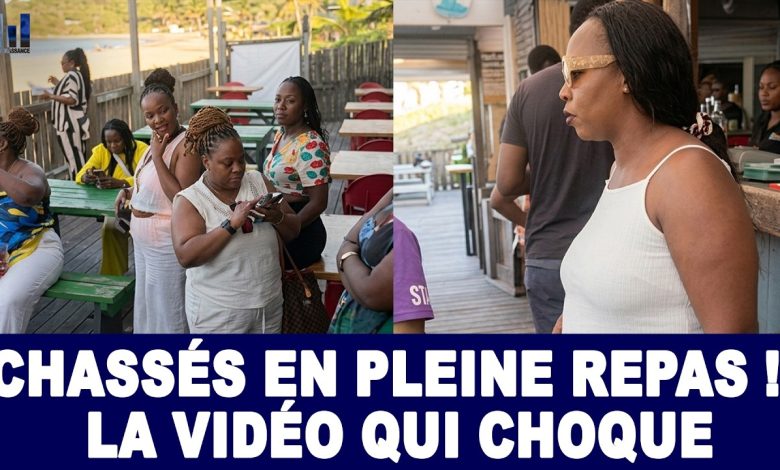
Videos shared in the source show an altercation at an establishment in Mozambique. South African women, described as tourists, are ordered to leave by a woman who tells them to go back home. The footage and accompanying comments have reignited a sensitive discussion about tensions between Mozambique and South Africa, particularly over immigration and the place of Mozambican nationals in South Africa.
The sequence alone does not make it possible to establish all the circumstances that preceded the incident, or to identify with certainty the status of the people present at the establishment. However, the transcript refers to three videos and interprets the scene as a reaction of frustration toward violence or xenophobic behaviour attributed to certain individuals in South Africa.
Tourists asked to leave
According to the remarks heard in the videos, a woman asks the South African visitors to return to their country. The tourists reply that they came with their passports and money for a stay, and that they do not intend to settle in Mozambique.
This response echoes, in the transcript, the movement of Mozambicans to South Africa. In particular, the commentary links the argument to the issue of people who enter South Africa and then remain there without valid documents. However, this is an interpretation presented in the video: the footage is not enough to demonstrate that this issue was the sole cause of the altercation.
A particularly tense exchange pits the two positions against each other. On one side, the South African women stress their status as visitors and the tourist nature of their trip. On the other, the woman confronting them expresses her dissatisfaction with South Africans, in wording that the source’s commentary interprets more as collective frustration than hostility directed solely at these customers.
The passive role of those present raises questions
In the commented sequences, security guards as well as female employees of the establishment appear to be present. The transcript stresses that they do not clearly intervene to separate those involved or restore calm. It sees this as a striking element, while specifying that it is not possible to determine with certainty whether they were security guards, police officers or simply staff members.
The woman leading the expulsion appears to have some form of influence at the location, according to the analysis offered in the video. But her exact role remains uncertain: she may be connected to the management of the establishment or simply be someone listened to by others. Nothing in the transcript confirms that she was its owner or manager.
Another woman eventually intervenes to curb the verbal escalation. This gesture is described as an attempt to defuse the situation. The tourists leave or are escorted out, without the transcript reporting any official intervention or any possible aftermath of the matter.
An incident placed in a context of migration tensions
The video’s commentary links the incident to a broader situation between the two neighbouring countries. It mentions frustrations related to the presence of Mozambican nationals in South Africa, particularly those who may be living there without regular documents. It also mentions allegations of criminality against certain individuals, without providing elements that establish a link between those allegations and the people at the centre of the filmed scene.
This distinction is essential: the South African women shown in the videos are described as holidaymakers. The transcript itself considers that they were probably not involved in the behaviour denounced against some foreigners in South Africa. It is therefore not possible to assign them individual responsibility for acts committed by other people.
The source also recalls that not all South Africans share hostile views toward foreigners. It indicates that some oppose xenophobic acts. The filmed incident thus illustrates the risk that ordinary visitors may be confronted because of their nationality in a context of cross-border tensions.
Close relations between Mozambique and South Africa
Beyond the altercation, the transcript stresses the historical and economic interdependence between Mozambique and South Africa. It states that the two countries maintain significant trade ties and cites a figure of $6.7 billion for their bilateral trade in 2024. This figure is reported as it is put forward in the source.
According to the commentary, South Africa notably exports machinery, vehicles and food products to Mozambique. In return, Mozambique reportedly supplies, among other things, minerals, coal, electricity and gas. The idea put forward is that both economies have an interest in preserving their relationship.
The video also recalls the support it says Mozambique provided to Black South Africans during apartheid, after Mozambican independence in 1975. It states that the country provided assistance in various forms and that the apartheid regime carried out actions against Mozambique in response to that support. It adds that, after apartheid, South Africa reportedly invested in Mozambique.
The transcript also refers to an agreement allowing citizens of both countries to travel for 30 days without particular difficulty. However, it considers that the management of irregular stays and offences falls to institutions, not to citizens acting on their own initiative.
Avoiding a logic of retaliation between civilians
The central point made in the source is the danger of a response between civilian populations. Even when frustrations exist over irregular immigration, insecurity or xenophobic behaviour, the video states that authorities must address these situations within the framework of the law.
From this perspective, targeting tourists or residents based on their nationality risks fuelling a spiral of retaliation. People who did not take part in the alleged acts may then become targets of anger linked to much broader political, social or security issues.
The incident reported in Mozambique thus highlights a tension: collective grievances may exist, but expressing them against uninvolved individuals can increase the risk of confrontation. The scene, as commented on in the source, above all calls for distinguishing individual responsibilities from broader debates between states and societies.
FAQ
What do the videos mentioned show?
They show an altercation at an establishment in Mozambique, where South African women, described as tourists, are asked to leave and return to their country.
Why were the South African tourists confronted?
The transcript links the argument to frustrations over the treatment of Mozambican nationals in South Africa and debates on immigration. However, the footage alone does not make it possible to confirm the precise origin of the incident.
Were the people filmed responsible for the acts denounced?
Nothing in the transcript establishes this. The commentary instead presents them as visitors who may have been confronted because of their nationality.
Video source: watch the video on YouTube.