South Africa: Controversial Remarks on Unity, Apartheid and African Migrants

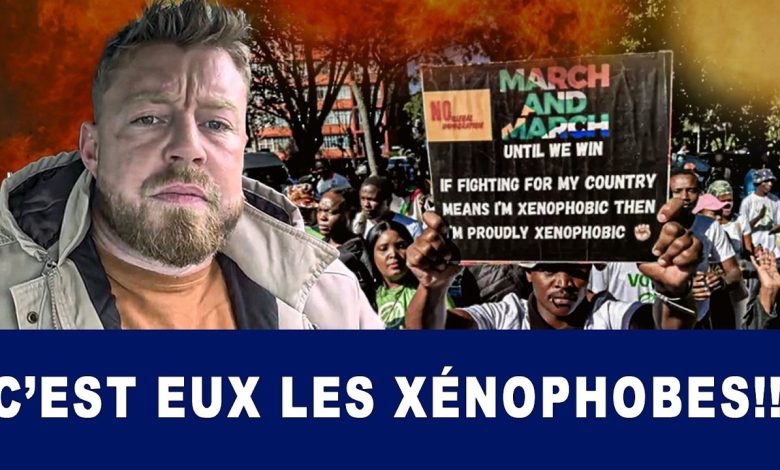
In South Africa, debates over national unity, the legacy of apartheid and the presence of African migrants remain deeply sensitive. Remarks attributed to a white South African have revived the discussion by denouncing what he portrays as a contradiction: calling for inclusion among the country’s racial groups while rejecting citizens of other African countries.
This argument rests on a central idea: hostility towards Black African migrants would be incompatible with the principles of equality, diversity and unity regularly invoked in South African public debate. However, the very broad claims made in these remarks, particularly about the behaviour of “all” Black or white South Africans, cannot on their own describe an entire society.
An accusation of contradiction over unity
The speaker believes that South Africa condemns apartheid when separation is imposed by white people, but that part of society would accept a form of separation when it targets Black Africans from other countries. In his view, this position reveals an inconsistency: it would be impossible to defend equality, inclusion, diversity and unity while excluding people on the basis of their national origin.
His argument is not limited to criticism of hostility towards foreigners. It also questions the meaning of the word “unity” in a society made up, in the terms used, of Black people, white people, mixed-race people, Indians and other groups. For him, unity that applies only to South African citizens, while excluding other Africans, would lose some of its moral and political coherence.
This line of reasoning directly links the rejection of African migrants to the history of segregation. The speaker argues that it would be contradictory to condemn racial separation while reproducing exclusionary practices towards Black foreigners. This is his interpretation of the situation, rather than a claim supported by cited evidence.
Remarks that also trivialise apartheid
The speech goes further by calling on those who reject foreigners to openly embrace the idea that equality, inclusion or unity may not always be desirable. It even raises the possibility of saying that apartheid was not “necessarily” bad.
This wording is especially serious in light of South African history. Apartheid is described in the reported remarks as a past of separation and segregation. Presenting the contemporary exclusion of certain foreigners as a repetition of mechanisms of separation does not, however, justify downplaying that system. Criticism of xenophobia cannot be used to minimise apartheid or to portray segregation as an acceptable response to social tensions.
The issue raised is therefore twofold: denouncing rhetoric targeting African migrants, without turning that denunciation into an argument for hierarchy between communities or a return to segregationist principles.
Crime and immigration: a question left without statistical evidence in the reported remarks
Undocumented foreigners are accused, in the debates mentioned, of being linked to a significant number of crimes in South Africa. The reported remarks themselves acknowledge that it is difficult to establish this statistically and that it is not possible, on that basis, to claim that undocumented people are all criminals.
This distinction is essential. Being undocumented is presented as contrary to the rules, but this does not make it possible to automatically attribute criminal acts to all those concerned. Equating an entire category of people with crime replaces an examination of individual responsibility with collective accusation.
The speaker also asks white South Africans a question: if crimes attributed to foreigners are genuinely a major concern, why would they not take a greater part in efforts to fight crime? This question remains unanswered in the available material. It therefore does not allow for conclusions about a uniform position among white South Africans on insecurity or immigration.
The feeling of an unfinished liberation
Another part of the speech addresses Black South Africans and questions the meaning of liberation after apartheid. The speaker argues that many difficulties remain: access to land, banks, mineral resources, the economy, employment, food production, public services, electricity, water, hospitals, security and education.
He contends that the promises or expectations associated with the end of apartheid have not been fulfilled for part of the population. He refers in particular to unemployment, insecurity, difficulties in accessing certain services and the perception that the economy still lies beyond the control of Black South Africans.
However, these claims are expressed broadly and are not accompanied by any precise data in the remarks under review. They reflect political and social frustration, but they are not enough to establish a comprehensive assessment of South Africa since the end of apartheid. Nor do they make it possible to attribute these difficulties to particular national groups.
Social media as a reflection of identity tensions
The speech also refers to reactions seen on TikTok around South African dances, particularly amapiano. According to the example given, non-South African Black Africans who dance to this music may receive comments telling them not to appropriate a culture that is supposedly not theirs. Conversely, a white person taking part in the same dance may sometimes be welcomed as “one of us.”
These examples illustrate a perceived inequality of treatment in online interactions. They do not, however, make it possible to measure the views of the entire South African population or to draw a general conclusion about cultural practices. Social media often amplify highly visible opinions without necessarily representing every perspective.
Avoiding generalisations to understand xenophobia in South Africa
Xenophobia in South Africa cannot be analysed through the simplistic opposition between Black South Africans, white South Africans and African migrants. The reported remarks combine criticism of exclusion, broad accusations against different communities and a challenge to the record of the post-apartheid period.
The underlying question remains: how can a society based on equality and dignity be defended while addressing tensions related to immigration, insecurity, unemployment and access to resources? A credible response requires distinguishing individual situations from collective accusations, avoiding essentialising racial or national groups, and rejecting any trivialisation of segregation.
Calls for unity can retain their meaning only if they are accompanied by vigilance against rhetoric targeting people because of their origin. Likewise, social and economic difficulties cannot be resolved by stigmatising African migrants, nor by nostalgia for or the implicit rehabilitation of systems of separation.
Frequently asked questions
Can undocumented foreigners be equated with criminals?
No. The remarks examined acknowledge that no statistical data are provided to establish a general link between undocumented status and crime. An administrative status cannot be used to attribute crimes to an entire group.
Why is the reference to apartheid central to this debate?
Because the reported remarks compare the exclusion of African migrants with mechanisms of separation. This comparison is used to denounce a contradiction between stated principles of unity and the rejection of certain populations, but it cannot justify downplaying apartheid.
Do social media reactions represent all of South Africa?
No. Comments observed online may reveal tensions or individual attitudes, but they are not sufficient to describe South African society as a whole.