South Africa: taxi drivers warn of slowdown after foreigners leave

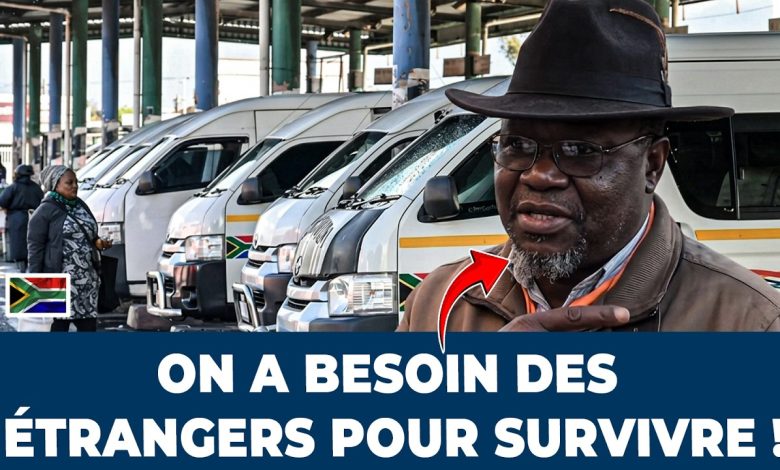
In South Africa, taxi drivers, shopkeepers and residents describe economic activity slowing sharply in some neighbourhoods after foreign nationals left or moved away. In the source video, several testimonies describe quiet streets, closed shops and long waits to get a fare or load goods.
The sequence also addresses checks targeting people considered to be in an irregular situation, as well as the issue of documents allowing them to work in the country. The testimonies relayed do not necessarily challenge the principle of complying with the law, but some speakers question how the situation was allegedly handled and its immediate economic consequences.
Taxi drivers facing unusual waiting times
One driver explains that business has become “very difficult.” According to his testimony, more than fifteen vehicles had been waiting since the start of the morning and, having arrived at 4 a.m., he had still not got a fare. He directly links this drop in traffic to shop closures and the lack of movement in the streets.
Another speaker says that loading goods, which previously took between five and ten minutes, would now take up to 45 minutes. For him, this slowness illustrates an unprofitable day: coming to work without customers or activity would not cover the expenses incurred.
The concern is also financial. One driver notably mentions newly purchased vehicles and the difficulty of paying their instalments if business does not pick up. In these testimonies, transport appears to depend closely on the neighbourhood’s commercial activity: fewer open shops and fewer customers mean fewer fares.
Closed businesses and dependence on local activity
The video shows or mentions closed shops on a street, a situation presented by those interviewed as not isolated. According to some of them, many of these businesses are operated or owned by foreigners. Their closure would therefore have effects beyond the owners alone: drivers, suppliers, handlers and residents would all be affected by the halt in activity.
One testimony sums up this concern by stating that South Africans themselves also risk suffering economically. Another believes that recovery would require coexistence with foreigners who are legally present, as their departure could mean less activity and less investment.
These remarks do not constitute an overall economic assessment of South Africa. They reflect the perception of actors encountered in the areas covered by the sequence: in their immediate environment, quiet streets and shuttered storefronts are interpreted as signs of a sharp decline in the local economy.
Regularisation: a solution put forward by several speakers
Several people quoted in the video maintain that the country’s rules must be respected. They do not challenge the fact that a state enforces its migration legislation and requires valid documents to live or work on its territory.
However, some propose another approach: regularisation carried out with the embassies of the countries concerned. They believe that foreign nationals could be supported in obtaining the necessary documents, rather than being required to return to their country of origin before possibly being able to come back.
According to this analysis expressed in the video, returning home can take time because of administrative procedures. Some may never return. For drivers and shopkeepers who depend on the customers and activity generated by these populations, this prolonged absence fuels fears of a lasting drop in income.
One speaker therefore urges foreigners in South Africa to contact their embassy in order to obtain the appropriate documents. The stated objective is twofold: to ensure compliance with the rules and to help restart activity in affected neighbourhoods.
The distinction between a passport, visa and work authorisation
The video mentions the case of people who had a passport and a visa, but whose documents did not authorise them to work. A police authority quoted in the sequence explains that possessing a passport was not sufficient when the visa did not include the right to work.
This point shapes much of the debate. On the one hand, speakers highlight the economic contribution of foreigners through their businesses and activities. On the other, they acknowledge that, in their view, residence and professional activity must fall within a clear legal framework.
The transcript also reports that one speaker links the need for valid documents to security and crime concerns. This position is expressed as an opinion in the sequence. On its own, it does not make it possible to draw conclusions about the extent of, or responsibility for, criminal phenomena linked to a nationality or migration status.
Criticism of the methods and the authorities’ response
The video’s narrator claims that Africans were shocked by how the operations were conducted, referring to violence, injuries and deaths. These allegations are reported in the transcript, without independent information here to verify the circumstances, toll or responsibilities.
The sequence also mentions a request for compensation for property attributed to Ghanaian nationals and destroyed in South Africa. According to the narrator, the government response referred to would have stressed the illegal nature of some of the activities or property concerned. Here again, these elements are presented in the video as commentary and the narrator’s interpretation.
The question of the South African government’s involvement is raised in the sequence, but the transcript provides no evidence allowing a definitive conclusion to be established. It mainly highlights questions about the authorities’ response, administrative checks and possible mechanisms for investigation or compensation.
Between legal sovereignty and African solidarity
The debate presented brings together two concerns that several speakers seek to reconcile: the enforcement of South African laws and the idea of solidarity among Africans. The video recalls that each country has its own rules concerning the entry, stay and employment of foreigners.
At the same time, the economic testimonies stress the concrete interdependencies between South African residents and foreign nationals: businesses, transport, purchases, services and the movement of goods. For the taxi drivers interviewed, the immediate issue remains the resumption of sufficient activity to work and meet their financial commitments.
FAQ
Why do taxi drivers say their activity is declining?
In the testimonies relayed, they explain it through shop closures, reduced traffic in the streets and the absence of customers. Some mention waiting for long hours without getting a fare.
Do the speakers challenge compliance with migration laws?
Not all of them. Several acknowledge that people living or working in the country must have appropriate documents. Their disagreement is more about the methods used and the idea of regularisation with the support of embassies.
Does the video establish the South African government’s responsibility for the violence mentioned?
No. The narrator raises this question and reports criticism, but the transcript provides no verifiable evidence allowing a conclusion about specific responsibility.
Video source
Watch the source video on YouTube