In South Africa, a Burundian Migrant Faces Questions Over Language, Papers and Integration

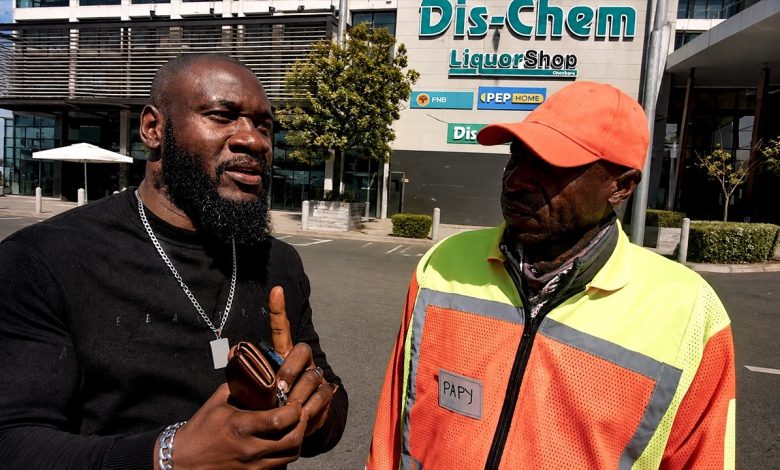
In South Africa, issues of immigration, administrative documents and integration fuel sensitive debates. A Burundian national who says he has lived in the country for ten years describes the obstacles he faces in regularising his status. The discussion also reveals deep disagreements over learning local languages, respecting the host country’s rules and the place of foreigners in society.
The migrant says that he entered without following legal procedures and has no documents after a decade in the country. Married to a Burundian woman and the father of a child born in South Africa, he believes that the lack of papers compromises his future. Opposing him is the view that irregular entry and an openly stated refusal to integrate may explain some of the difficulties he faces.
The central disagreement: should local languages be learned?
The most contentious issue concerns language. The Burundian national says that he does not want to speak Zulu, despite having spent ten years in South Africa. In his view, learning a local language should not be a mandatory requirement for living in the country or obtaining documents.
He says he prefers French and believes that acceptance by local residents should come naturally, without being imposed through the adoption of a language or culture. In his reasoning, administrative documents and language proficiency are two separate issues.
An opposing position is expressed during the discussion: living permanently in a country without showing interest in its language or culture may be seen as a lack of respect. Learning Zulu, or other local languages, is presented not as an absolute obligation but as an approach that could make relations with South Africans and day-to-day integration easier.
Ten years without documents: an experience seen as a dead end
The Burundian man says he does not understand why he has still not obtained papers after ten years in South Africa. He argues that a person who lives normally, commits no crime and respects the country’s conditions should be able to regularise their status.
His interlocutor instead stresses the conditions of entry and a state’s right to set its own rules. He argues that a country may seek to protect its sovereignty, particularly by regulating access to residency and nationality. From this perspective, having been present for a long time would not necessarily create an automatic right to documents.
The discussion also addresses children born in the country. The migrant mentions his child and difficulties related to the birth certificate. In response, it is pointed out that children do not choose the circumstances of their birth, while also recalling that authorities may apply their national rules concerning civil registration, residence and nationality.
Between a sense of rejection and a call to respect the rules
The Burundian national says he feels hostility towards Black foreigners in South Africa. He states that some South Africans directly tell him to return to his country. He also mentions a road incident in which a motorist allegedly drove dangerously close to him, interpreting the behaviour as a way of intimidating foreigners.
However, he refuses to explain tensions solely through the actions of some migrants. During the discussion, accusations are made against Nigerians and Zimbabweans, who are associated with drugs, fraud or crime. These statements are challenged by the Burundian man, who considers it unfair to single out entire nationalities based on individual behaviour.
He highlights what he sees as the contributions of many foreigners: Mozambicans in construction, Zimbabweans in technical trades, and Cameroonians, Congolese and Ghanaians in the medical field. He also mentions Indians and Chinese people in technology sectors. These statements express his view of the economic presence of different communities and do not constitute a statistical assessment of employment in South Africa.
In his view, the networks that allow illicit products to enter the country cannot be attributed to foreigners alone. He argues that border control is the responsibility of the authorities and that any large-scale illegal activity implies complicity or failures within the structures responsible for that control.
Work, infrastructure and services: reasons for staying
When asked why he is in South Africa, the migrant cites infrastructure, transport opportunities and the circulation of money. He believes that the standard of living is more favourable there than in his country of origin. He also mentions employment opportunities, although his lack of documents severely limits his prospects.
He describes a work environment involving vehicles and says that white customers show him more respect. He also argues that white owners and investors play an important role in the economic activities he observes. This is his personal assessment of his working environment.
The discussion also addresses access to healthcare. The Burundian man says he knows people close to him who received free treatment in hospital, while specifying that he has not been hospitalised himself. His interlocutor recalls criticism sometimes voiced about pressure on public services when resources, medicines or specialised treatments are insufficient.
Returning home to build solutions there
Despite his attachment to the opportunities he associates with South Africa, the Burundian national eventually considers returning home. He says he is ready to return to Burundi at any time, believing that there is “a lot to do” in his country. He acknowledges that ten years spent abroad is a long period, but considers that readjustment remains possible.
This conclusion is based on an idea shared during the discussion: improving countries of origin cannot rely solely on residents leaving for more developed states. The migrant argues that Africans must also return to their countries to seek solutions there, even as he points to the lack of unity and the structural difficulties they face.
He does not, however, close the door to mobility. In his view, everyone travels according to their plans, whether for visiting, studying or business. Nevertheless, he warns that settling permanently in South Africa is difficult, particularly for someone without recognised qualifications or documents.
A discussion revealing complex tensions
This confrontation illustrates opposing views of immigration in South Africa. On one side, a migrant expresses a feeling of exclusion despite years of presence and family life in the country. On the other, the emphasis is placed on sovereignty, respect for the law, cultural integration and the protection of national resources.
Language emerges as a central symbol of this disagreement. For one side, it should not determine dignity, rights or access to documents. For the other, it represents a concrete sign of respect towards the host country’s population. Beyond this divide, the discussion shows that debates on immigration combine administrative, economic, social and human realities that cannot be reduced to a single experience.
FAQ
How long does this Burundian national say he has lived in South Africa?
He says he has lived in South Africa for ten years.
Does he speak Zulu?
No. He explains that he does not want to learn or speak Zulu, believing that it should not be mandatory.
What is the main problem he raises in the discussion?
He says he has not obtained documents after ten years in the country and believes that this situation blocks his professional and family future.
Is he considering returning to Burundi?
Yes. He says he is ready to return and believes that the people concerned must also help improve their country of origin.