Niger: Announced ICC Withdrawal Revives Debate on International Justice

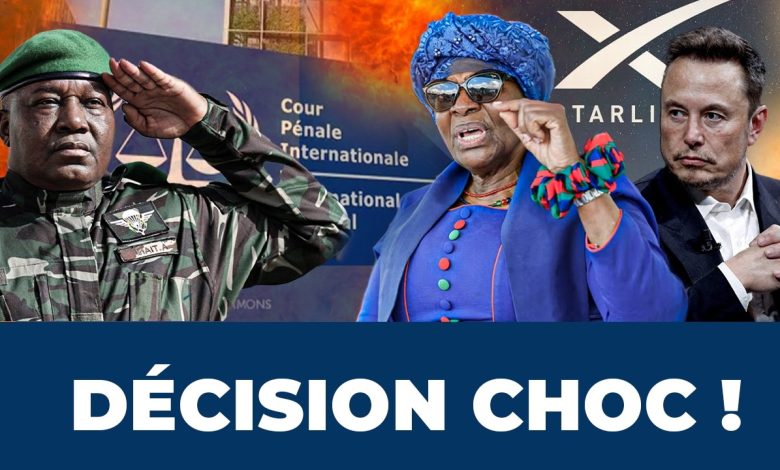
Niger’s announced withdrawal from the International Criminal Court (ICC) brings a major question back into focus: can international justice be regarded as credible if its action is perceived as being applied unevenly depending on countries and power dynamics?
According to the available information, Niger has begun a withdrawal process that would not take effect until after a one-year period. The decision is presented as an act of sovereignty, but it also forms part of a recurring criticism levelled at the ICC by several African officials and observers: that the institution primarily prosecutes African leaders or actors, while officials from influential powers are more easily able to avoid its reach.
What is the role of the International Criminal Court?
Created in 2002, the International Criminal Court is tasked with trying alleged perpetrators of the most serious crimes. Its mandate covers, in particular, genocide, crimes against humanity and war crimes.
The principle is to fight impunity when crimes of extreme gravity are committed. The existence of an international court reflects the idea that no official should be able to evade justice solely because of their political, military or diplomatic position.
The ICC has nevertheless faced significant criticism. On the one hand, it has secured convictions against certain defendants. On the other, its critics believe that the number of proceedings and convictions remains limited in view of the scale of conflicts and alleged crimes around the world.
Why is the ICC’s work contested in Africa?
The main criticism concerns the strong presence of African cases among the Court’s most prominent proceedings. Names such as Thomas Lubanga, Germain Katanga, Jean-Pierre Bemba and Bosco Ntaganda, all linked to the Democratic Republic of the Congo, are regularly cited in this debate. Laurent Gbagbo, the former president of Côte d’Ivoire, and Ahmad Al Faqi Al Mahdi, from Mali, are also mentioned among those prosecuted by the ICC.
For the institution’s critics, this concentration fuels the impression of unbalanced justice. They argue that African leaders have been more exposed to international proceedings than officials from Western powers or states with greater geopolitical influence.
This perception is reinforced by a frequently asked question: why have certain leaders associated with controversial military interventions, particularly in Iraq, not faced comparable prosecutions? The criticism does not necessarily deny the seriousness of the crimes alleged against individuals targeted in Africa. It concerns the requirement for equal treatment of situations, regardless of the countries involved.
The limits of non-universal international justice
The debate surrounding Niger’s withdrawal from the ICC also rests on the fact that several major states are not part of the Court. The United States, Russia and Israel are cited as countries that have not joined the institution.
This situation fuels a straightforward criticism: states that do not recognise the ICC’s jurisdiction are less likely to see their leaders, military personnel or nationals brought under its authority. Conversely, states that are parties to the system theoretically accept that their nationals may be subject to Court proceedings.
For supporters of withdrawal, this disparity weakens the very idea of universal justice. They believe it is difficult to defend a global institution when some of the most powerful actors remain outside its framework.
Others may nevertheless consider that leaving the ICC reduces the avenues available to victims of serious crimes before an international court. Withdrawal therefore raises a fundamental tension between two objectives: preserving a state’s sovereignty and maintaining a mechanism of criminal accountability beyond national borders.
The weight of power dynamics in international cases
Criticism of the ICC does not concern only its list of cases. It also targets its capacity to act independently when major strategic interests are involved.
The case of arrest warrants targeting Vladimir Putin in the context of the war in Ukraine is presented as an example of Western support for the Court’s action. These warrants concern alleged war crimes linked to the transfer of children from occupied Ukrainian territories to Russia. Russian authorities have put forward their own justification, particularly relating to the protection of children in areas affected by fighting. The facts and responsibilities, however, remain subject to ongoing judicial proceedings and assessments.
At the same time, critics point to tensions that have emerged around judicial initiatives related to the situation in Gaza. They stress that officials, judges or staff associated with sensitive international proceedings may face political pressure or sanctions. This reality fuels the idea that the independence of an international court can be put to the test when it concerns influential powers or their allies.
The issue is therefore not only one of legal texts. It also concerns the political, financial and diplomatic means that an institution actually has to enforce its decisions.
The Burundi precedent and choices of sovereignty
Niger is not presented as the first African country to distance itself from the ICC. Burundi is cited as the first African state to have officially left the institution, under the presidency of Pierre Nkurunziza.
This precedent illustrates a broader trend: when governments believe that international mechanisms undermine their sovereignty or fail to guarantee equal treatment, they may seek to withdraw from them. This approach does not automatically resolve allegations of crimes or human-rights concerns. It does, however, change the framework within which these issues can be addressed.
For a country that withdraws, the aim is to reaffirm that matters relating to its governance should first be examined by its own institutions. For ICC supporters, the risk is that this logic limits access to international justice when national mechanisms are contested or insufficient.
What does Niger’s announced withdrawal mean?
Niger’s announced withdrawal does not end the debate over international crimes. Above all, it expresses distrust of the current architecture of international criminal justice.
Its supporters see it as a rejection of a system considered selective, in which African states would bear greater judicial consequences than non-member powers or politically protected states. Its critics may see it as a weakening of a tool designed to prosecute the most serious crimes.
Ultimately, the decision raises a question that goes beyond Niger: how can genuinely consistent international justice be guaranteed if the rules do not appear to apply with the same force to all states? As long as this question remains without a convincing answer, challenges to the ICC will continue to fuel debates about sovereignty, fairness and global power dynamics.
FAQ
Why does Niger want to withdraw from the ICC?
The announced withdrawal is associated with criticism of the Court’s impartiality. Some voices believe that the ICC mainly prosecutes African officials while having limited capacity to act against leaders of major powers.
Is the withdrawal immediate?
No. According to the information mentioned, a one-year period would be required before the withdrawal takes effect.
What crimes is the ICC supposed to try?
The International Criminal Court deals in particular with cases concerning genocide, crimes against humanity and war crimes.