In Kenya, Protests Against Remarks Seen as Xenophobic Toward Foreign Small Traders

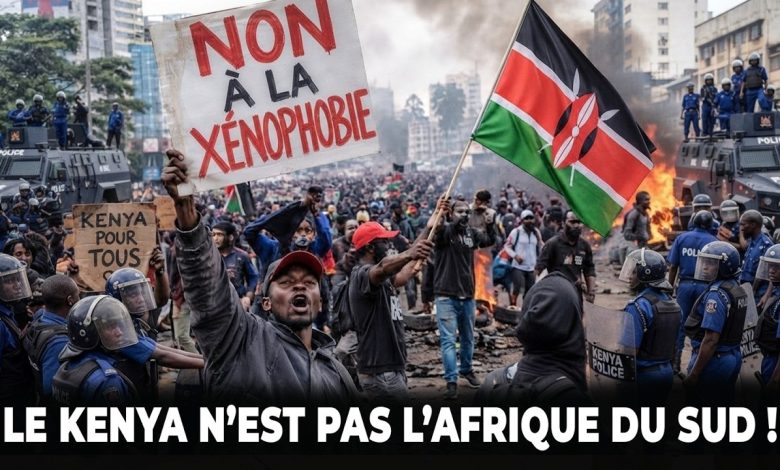
Kenyans took to the streets to reject remarks and measures seen as hostile towards foreigners engaged in small-scale business activities in the country. At the heart of the protest was the situation of African vendors, particularly Burundians and Congolese, some of whom were reportedly threatened following a political sequence focused on foreigners’ access to retail trade.
Demonstrators argued that foreigners living and working in Kenya should not be made responsible for the country’s economic difficulties. Their message was also directed at the authorities: social tensions must not lead to attacks, harassment or the stigmatization of African nationals living in Kenya.
A controversy over small businesses run by foreigners
The controversy stemmed from remarks attributed to President Ruto on the policy for welcoming investors. According to this position, visa facilitation was intended to attract investors capable of creating businesses, rather than foreigners coming to run small shops or sell in informal markets.
In this context, the idea of barring foreigners from taking part in certain basic commercial activities sparked serious concern. Retail trade, small services and street vending are precisely the means of livelihood for many African migrants in Kenyan cities.
Burundians were notably cited among those affected by this atmosphere. Some sell coffee, doughnuts or other products on the streets of Nairobi. Critics of the measure point out that these vendors also buy their goods locally before reselling them, making them part of the country’s everyday economy.
As the debate gained momentum, foreigners reportedly began to fear for their safety, and some went to their embassies while considering a return to their countries of origin. Threats against African traders were also reported.
Protesters refuse to make migrants scapegoats
Demonstrators expressed clear opposition to all forms of xenophobia. They said that Africans living in Kenya were brothers and should not have to leave the country under pressure from political rhetoric or threats from private individuals.
In their view, a small trader from Burundi, the Democratic Republic of the Congo or another neighbouring country cannot be held responsible for unemployment, the condition of roads, a lack of public services or the economic difficulties faced by Kenyan citizens. This argument rejects the idea that excluding foreigners would solve the country’s structural problems.
Participants also called for no physical attacks against foreigners. They demanded that national rules be enforced without violence, stressing that no one should be attacked because of their nationality or economic activity.
The mobilization also took on a broader political dimension. Slogans hostile to the president were heard, with demonstrators arguing that the authorities should not encourage a narrative pitting Kenyan citizens against African migrants.
The East African Community at the centre of the arguments
Opponents of restrictions targeting foreign small traders invoked the spirit of the East African Community. This regional organization includes Kenya, Tanzania, Uganda, Rwanda, Burundi and the Democratic Republic of the Congo, among others.
Human, commercial and cultural exchanges are significant in this region. Its populations often share longstanding ties, and Swahili is a common language for a large part of them. Travel for work, selling, buying or starting a business is part of the regional reality highlighted by protesters.
According to this view, preventing nationals of neighbouring countries from carrying out small economic activities in Kenya would run counter to the goal of regional openness and integration. Demonstrators therefore defended cooperation based on movement, trade and mutual respect, while recalling that activities must comply with Kenyan law.
The issue also prompted reactions in Burundi. A Burundian foreign affairs official reportedly noted that Kenyans also live in Burundi, underlining the need to protect nationals of every country in a closely interconnected regional context.
A government position revised after public pressure
The measure initially mentioned was reportedly amended. Rather than a general closure of foreign businesses and departure from the country, those concerned would now have 90 days to regularize or improve their documents.
President Ruto also stated that nationals of countries in the region could work and invest in Kenya, provided they complied with the rules set out in national legislation. This wording maintains the requirement for administrative compliance while recognizing the possibility for East Africans to carry out activities in the country.
The authorities also announced increased police patrols to prevent people from being attacked or intimidated. The announcement responded to concerns over the risks of violence and harassment against African migrants.
A mobilization rooted in a context of civic protest
Demonstrators presented this mobilization as an extension of Kenya’s strong tradition of civic pressure. They notably recalled opposition to a finance bill in 2024, which they said would have introduced new taxes on everyday products and services, including bread, milk and medicines. The bill was ultimately not adopted.
They also referred to the case of a teacher and content creator who was arrested and later found dead after being transferred to Nairobi. According to the reported information, the initial explanations suggesting suicide were challenged by the public. An independent investigation reportedly later concluded that violence had occurred, and the police chief resigned before being arrested for murder.
Demonstrators use these precedents to underscore their ability to hold institutions accountable. In the case of foreign traders, their main demand remains the same: to reject the designation of African migrants as responsible for the country’s problems and to demand their protection against threats.
FAQ
Why did Kenyans protest?
They protested against remarks and proposed restrictions targeting foreigners involved in small businesses. Participants rejected the idea that African migrants should be blamed for Kenya’s economic difficulties.
What measure was ultimately announced for the foreigners concerned?
Instead of a general closure of foreign businesses, a 90-day period was reportedly granted to regularize or improve administrative documents.
What role does the East African Community play in this debate?
Demonstrators invoke the principles of regional cooperation, movement and exchanges among East African countries. They believe these principles should allow nationals of the region to work and trade while complying with Kenyan law.