Ibrahim Traoré and the Fight Against Religious Extremism in Burkina Faso: Key Points From His Remarks

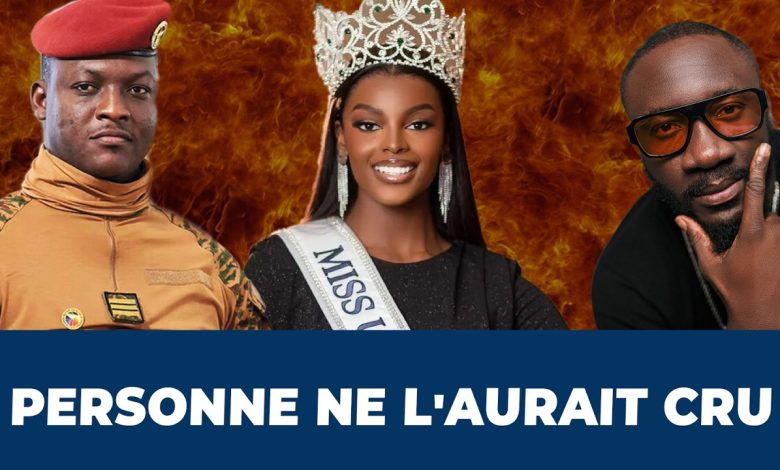
Remarks attributed to Ibrahim Traoré on religion, extremism and social cohesion have drawn widespread attention. The central message is clear: faith should not be used to justify hatred, exclusion or violence. In this vein, Burkina Faso’s president calls on religious leaders and citizens to distinguish spiritual practice from fanaticism.
The speech also stresses a political and social issue: preventing radical preaching from weakening national unity or diverting young people from development priorities. Muslims, Catholics, Protestants, followers of traditional religions and other parts of society are all mentioned from the same perspective of mutual respect.
A denunciation of extremism beyond any one religion
The remarks attributed to Ibrahim Traoré do not portray extremism as an exclusively Muslim phenomenon. They also target excesses that may emerge in Christian circles or in any community when religious affiliation becomes a pretext for rejecting others.
This approach is based on a distinction between faith and fanatical behaviour. Believing, praying and following a religious tradition are not called into question. However, viewing others as enemies, systematically describing them as unbelievers or excluding them from their own families is portrayed as a dangerous drift.
The speech particularly criticises injunctions that could lead some people to cut ties with their relatives because they do not attend the same church or mosque, or do not share the same beliefs. The idea put forward is that spirituality cannot be used to normalise humiliation, verbal violence or accusations directed at parents and family members.
Rejecting hypocrisy and isolationism
Another important theme concerns the contradiction between certain rejectionist rhetoric and the everyday use of products, technologies or services designed elsewhere. The remarks attributed to the head of state criticise those who indiscriminately denounce everything that comes from outside while using phones, means of transport, equipment or tools resulting from global innovation.
The message is not about giving up local production. On the contrary, it emphasises the need to develop national capacities: processing resources, creating, learning, manufacturing and investing in technology. But this ambition should not be confused with an inconsistent rejection of every outside contribution.
In this view, independence depends less on slogans than on work, training and production. Burkina Faso is presented as a country that needs engineers, technical skills, researchers, entrepreneurs and young people able to contribute concretely to its development.
The suspension of certain sermons and the security question
The remarks also refer to the suspension of certain sermons deemed extremist. This measure is presented as a response to messages likely to create divisions or encourage radicalisation. By contrast, imams who promote peaceful, patriotic and respectful speech are praised.
The issue raised is sensitive: regulating religious speech directly affects individual freedoms and freedom of worship. However, the position defended in these statements is that the state cannot remain passive when speech calls for hatred, exclusion or violence.
The text also refers to concerns about Burkinabè citizens who may pursue training abroad focused on sharia and Islamic jurisprudence, without associated professional training. These elements are presented as stemming from intelligence work and should therefore be treated cautiously in the absence of verifiable details about the people concerned, the institutions or the exact framework of these programmes.
In the reported remarks, this concern is mainly used to defend one principle: training pursued abroad should not lead to the importation of norms incompatible with social peace or the country’s institutions. The emphasis is placed on the need to know individuals’ training paths and to prevent the risks of indoctrination.
Why sharia is mentioned in this debate
Sharia is described as a body of Islamic legal and ethical principles derived in particular from the Quran and traditions of interpretation. The speech refers to certain penalties traditionally associated, in classical readings, with offences such as theft, adultery, alcohol consumption or apostasy.
The stated aim is to reject the idea of applying corporal punishment or the death penalty in Burkina Faso. This position is linked to a vision of the state focused more on protecting citizens, education and development than on punitive religious justice.
It is important to note that interpretations of sharia vary across countries, legal schools and religious movements. The debate raised here therefore primarily concerns preventing discourse that would present a radical or violent interpretation as a rule to be imposed on everyone.
Funding young people of all faiths
One proposal emerges from the remarks attributed to Ibrahim Traoré: increasing funding for young people from different religious backgrounds, whether they are Muslim, Catholic, Protestant or followers of local religious traditions. The aim would be to limit the influence of external funding that could attract young people facing economic hardship.
This idea is based on the observation that poverty can make some people vulnerable to material promises or networks of influence. Supporting young people within the country would, according to this logic, encourage their training and participation in national life without exposing them to divisive rhetoric.
The speech also calls for collective responsibility towards children and young people living in the most remote areas. The stated priority is not only religious or security-related: it concerns access to food, education, skills and future prospects.
A call to love all human beings
One of the most striking passages in the speech is the call to regard all human beings as worthy of respect, regardless of their religion or origin. This idea is set against doctrines that choose who should be loved, accepted or protected.
In a context of security tensions and ideological pressures, this position is intended as a reminder of the shared goal: preserving stability, human dignity and the unity of Burkina Faso. The statements attributed to Ibrahim Traoré thus make the fight against extremism a religious, social, educational and national issue.
FAQ
What do the remarks attributed to Ibrahim Traoré criticise about religious extremists?
They criticise extremists for turning religion into a tool of exclusion, hatred or violence. The speech targets excesses that may exist in different religious communities, without limiting the phenomenon to a single faith.
Why are sermons mentioned?
The speech refers to the suspension of certain sermons considered extremist. This measure is presented as a way to prevent discourse that divides citizens or encourages radicalisation.
What role do young people play in this message?
Young people are presented as a priority. The remarks call for investment in training, technical skills, production and economic opportunities in order to reduce vulnerability to indoctrination and extremist influence.