Ghana Rejects Cyril Ramaphosa Visit Amid Attacks Targeting Ghanaians

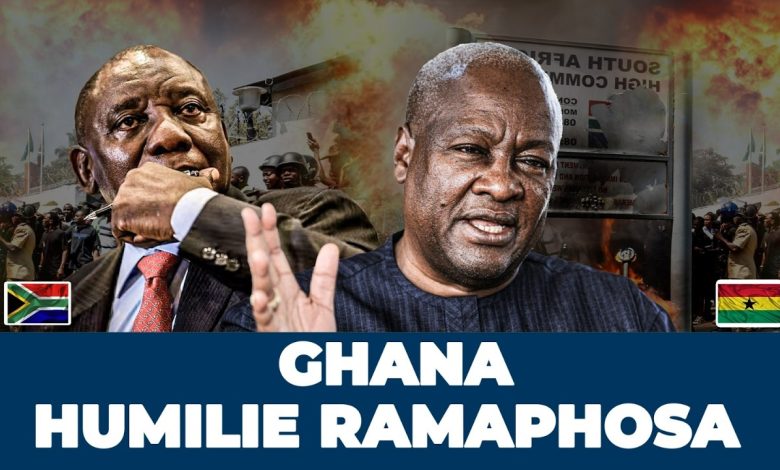
According to the transcript, the Ghanaian government rejected a request for a state visit by South African President Cyril Ramaphosa. The decision is said to be linked to Accra’s concerns following recent xenophobic attacks in South Africa that affected Ghanaian nationals.
The issue took on a diplomatic dimension following the death of a Ghanaian citizen and reported violence against foreigners. However, the transcript reports differing accounts from Ghanaian and South African authorities regarding the exact circumstances of this death.
A state visit rejected amid tensions
Based on the information presented, Ghana believes that attacks against its nationals require a firm response. The refusal to receive Cyril Ramaphosa is presented as a political signal intended to underscore the importance Accra places on the safety and dignity of Ghanaians living abroad.
The transcript states that the decision comes amid a rise in violence against foreigners in certain areas of South Africa. It also refers to the repatriation of 1,000 Ghanaians, followed by the registration of another 900 people for a return programme.
These figures are reported in the video and form part of a period of serious concern among the Ghanaian nationals involved. The key point put forward by Ghana is the need to protect its citizens, including when they live or work outside the country.
The dispute over the death of a Ghanaian national
According to the transcript, Ghana maintains that a Ghanaian was killed during the attacks of 30 June, a date that reportedly coincided with an ultimatum issued by groups hostile to immigrants. This account is disputed by South Africa.
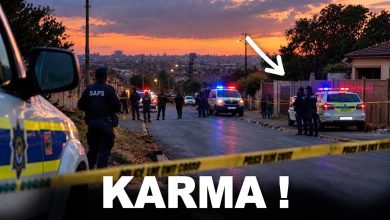
South African authorities, as cited in the video, reject the idea that the man was killed during the anti-immigrant protests of 30 June. They state that he was allegedly shot on 29 June in a hair salon in Nyanga, Cape Town, during an alleged attack linked to an attempted extortion.
The disagreement therefore concerns not only the date of the death, but also its possible connection to xenophobic violence. The transcript does not make it possible to decide between the two accounts. On the contrary, it stresses that this contradiction contributed to hardening exchanges between Accra and Pretoria.
In this context, South Africa’s Justice Ministry reportedly described the Ghanaian statements as factually incorrect. Ghana, for its part, would maintain that the violence and the death of its national call for a political and diplomatic response.
The protection of Ghanaians abroad at the heart of Accra’s position
The transcript presents Ghanaian Foreign Minister Samuel Okudzeto Ablakwa as an official particularly active in situations involving Ghanaian citizens outside the national territory.
It notably refers to steps taken in Ukraine and Russia on behalf of Ghanaians who were reportedly arrested or sent to the front after being, according to the reported statements, manipulated or deceived. These episodes are used in the video to illustrate the Ghanaian government’s stated willingness to intervene when its nationals face difficulties abroad.
In the South African case, two demands are highlighted: the physical safety of Ghanaians and respect for their dignity. The message attributed to Accra is that no national should be assaulted, insulted or treated in a degrading manner, regardless of their administrative status.
The transcript also raises a question of principle: can the possession or absence of residency documents justify violence or mistreatment? It does not provide a legal answer, but stresses that the protection of individuals remains the central issue in the dispute.
Relations shaped by mobility and cooperation
The contrast is all the more significant because Ghana and South Africa reportedly have, according to the transcript, an agreement facilitating travel by their citizens. Ghanaians could travel to South Africa for at least 90 days without a visa, with a reciprocal provision for South Africans.
The video presents this agreement as the result of a high level of trust between the two countries. It also recalls their stated commitment to African cooperation and freedom of movement, notably in the spirit of the African Continental Free Trade Area, AfCFTA.
Ghana is also described as having introduced visa-free entry for holders of African passports. The transcript also mentions an electronic visa system designed to simplify procedures, including for members of the diaspora.
These elements explain why the alleged violence against Ghanaians in South Africa is presented as particularly troubling: it comes at a time when the two states are expected to maintain relations based on mobility, investment and cooperation.
Compensation claims for destroyed property
In addition to personal safety, the transcript indicates that Ghana is reportedly seeking compensation for property belonging to Ghanaians that was allegedly destroyed during the violence. Vehicles, homes and business activities are mentioned.
The South African position reported in the video would be more restrictive: compensation would cover only property or activities officially registered and recognised by the relevant institutions. Property considered unregistered or non-compliant would not be covered by this compensation, according to this account.
This disagreement adds a material dimension to the diplomatic dispute. It is added to the question of responsibility, the circumstances of the Ghanaian national’s death, and concerns over the safety of foreigners.
A case likely to fuel diplomatic tension
The refusal of Cyril Ramaphosa’s visit is presented in the transcript as a decision also intended to prevent possible demonstrations in Ghana during a presidential trip. The idea put forward is that such a visit, in the current context, could trigger protests and further complicate bilateral relations.
The video recalls that South African authorities defend the right to protest, while acknowledging that difficulties arose during the demonstrations mentioned. Ghana, for its part, appears to be seeking stronger guarantees for its citizens as well as recognition of the harm they suffered.
At this stage, the transcript therefore describes a dispute based on opposing accounts, demands for protection and compensation, and a bilateral relationship weakened by the reported violence. The exact circumstances of the death mentioned and the diplomatic consequences are not established beyond the reported statements.
Frequently asked questions
Why did Ghana reportedly reject Cyril Ramaphosa’s visit?
According to the transcript, Accra cites attacks targeting Ghanaian nationals in South Africa, the death of a Ghanaian, and the need to defend the safety and dignity of its citizens.
What does South Africa say about the death of the Ghanaian national?
The reported account attributes his death to an alleged attack linked to an attempted extortion on 29 June in Nyanga, rather than to the anti-immigrant protests of 30 June, as Ghana reportedly maintains.
Do Ghana and South Africa have a visa-free travel agreement?
The transcript indicates that an agreement would allow citizens of both countries to stay in the other country for at least 90 days without a visa.
Video source: YouTube – GHANA REJECTS RAMAPHOSA’S VISIT BECAUSE OF XENOPHOBIC ATTACKS AGAINST GHANAIANS!