Brice Clotaire Oligui Nguema: Hero or Criminal? What His Choices in Gabon Show

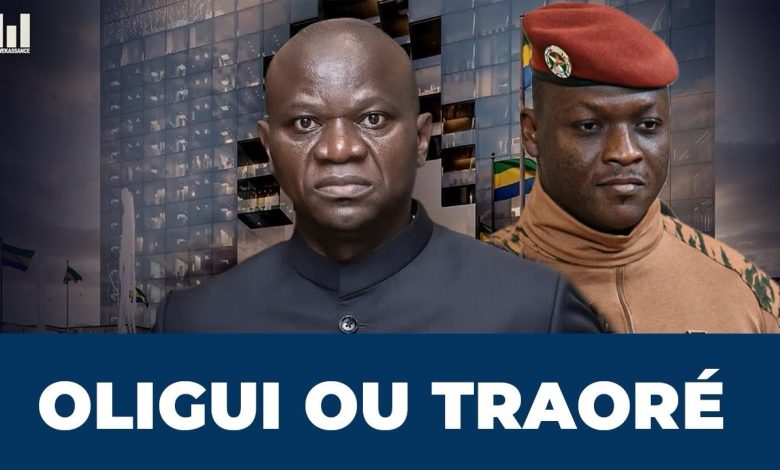
The question of whether Brice Clotaire Oligui Nguema should be seen as a hero or a criminal first requires a distinction between judgments and the available facts. Nothing presented here establishes criminal liability on his part. Several decisions and positions attributed to the Gabonese president, however, contribute to an image of a leader who emphasises economic sovereignty, the local processing of resources and a more efficient public administration.
These policies are viewed very favourably by those who see them as a break with economic practices considered detrimental to the country. Yet they are not, on their own, sufficient to assess political action as a whole. A leader may be supported, challenged or criticised: what matters is to rely on specific actions rather than a reductive opposition between hero worship and condemnation.
Repurchasing oil assets in the name of sovereignty
Among the facts most often highlighted is Gabon’s takeover of part of its oil assets through the Gabon Oil Company. This approach is presented as a means of strengthening national control over a strategic resource and making the country a major producer of its own oil.
The acquisition of Asala is notably cited. Assets from Tullow Oil Production are also mentioned, with output of around 2,000 barrels per day. The amount cited for this transaction is approximately $300 million.
Beyond the figures, the political meaning attributed to these acquisitions is clear: reducing dependence on outside interests and increasing the Gabonese state’s share in the exploitation of its resources. Ending rent-seeking, monopolies and exclusivity clauses in contracts is also put forward as an objective.
This strategy can be seen as an attempt to rebalance the economic relationships surrounding oil. It is based on the idea that a state with greater control over its assets also has a greater ability to direct revenues and industrial choices for the benefit of the country.
Manganese and the challenge of local processing
Manganese holds another central place in this vision of economic sovereignty. Gabon is presented as the world’s second-largest manganese producer in 2025, with output of around 9.7 million tonnes.
The key observation put forward is the loss of value resulting from the export of raw materials in their unprocessed state. Processing manganese within Gabon would, under this logic, keep more value in the national economy and create jobs, particularly for young people.
A memorandum of understanding was reportedly signed in July 2026 to process 700,000 tonnes of manganese locally by the end of 2031. This target reflects a stated intention to go beyond extraction and raw exports.
Local processing is often considered a decisive issue in the management of natural resources. Extracting a raw material does not generate the same economic benefits as processing it, adding value to it and developing the technical skills required around that activity. In Gabon’s case, the stated ambition is therefore industrial, social and economic at the same time.
A stated demand for discipline in public administration
Brice Clotaire Oligui Nguema is also portrayed as particularly firm on attendance in public services. During an early-morning visit to offices, he requested that absences be recorded and that dismissals be considered for staff members who do not report to work.
His argument rests on a simple idea: educated Gabonese people, particularly university graduates, are waiting for employment opportunities and could fill the positions of people who do not meet their professional obligations. He also links the renewal of teams to the need to speed up digitalisation and the processing of files.
This position places value on individual responsibility and the effective functioning of public administration. It draws a parallel between the experience of current staff and the expectations of young people, who may bring new skills, digital knowledge and different working methods.
Administrative firmness may be viewed as a response to delays or absenteeism. It also raises a requirement for consistency: any sanctions must be part of clear procedures applied fairly. The stated goal remains for the administration to support the country’s progress rather than slow it down.
Employment, closeness to the people and connection to one’s roots
The issue of employment also emerges through an episode in which a man directly asks the president for help. Before considering a position, he is asked about his abilities, including whether he can work and drive. This situation has been interpreted in different ways: some see it as a practical response to an individual request, while others may see it as a communications exercise.
Without being able to prejudge the actual outcome of this process, one point stands out: employment is presented as needing to be linked to the ability to carry out a task. Assistance is not reduced to a promise; it is associated with the question of skills and possible work.
The Gabonese president also stresses his rural origins and his attachment to village life. He recalls childhood memories connected to a river, fishing and hunting, while stating that people should not forget where they come from.
This message places value on villages and provinces. It rejects the idea that living outside major cities means having less value or fewer opportunities. The presence of schools and clinics in villages is cited as a reminder that these areas can also offer conditions for a good life and success.
Hero or criminal: an inadequate opposition
Presenting Brice Clotaire Oligui Nguema as either a hero or a criminal creates an overly simple alternative. The available elements primarily highlight a course of action: regaining part of the control over oil resources, encouraging manganese processing in Gabon, demanding greater rigour in public administration, and valuing work and rural roots.
These choices may contribute to an image of a leader determined to strengthen economic sovereignty and state efficiency. However, they do not, on their own, provide an exhaustive assessment or definitively answer every criticism or expression of support.
As with any political leader, the assessment should be based on verifiable decisions, their long-term results and their concrete effects on the population. Caution means avoiding both unqualified admiration and accusations without established evidence.
FAQ
Which oil assets has Gabon repurchased?
The acquisition of Asala is cited, along with Tullow Oil Production assets producing around 2,000 barrels per day. The amount cited for the latter transaction is approximately $300 million.
Why process manganese in Gabon?
The stated aim is to move beyond exporting raw material alone. Local processing is intended to retain more economic value in the country and create jobs.
What target has been announced for locally processed manganese?
A memorandum of understanding signed in July 2026 provides for the local processing of 700,000 tonnes of manganese by the end of 2031.