Abdoulaye Diop Defends Mali’s Sovereignty and Diplomatic Diversification

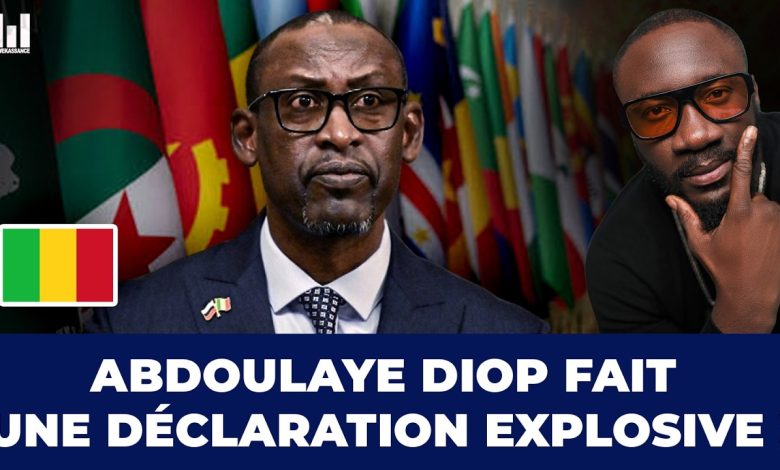
According to Abdoulaye Diop, Malian diplomacy must be based on national sovereignty, mutual respect and diversified partnerships. This direction, pursued during the transition led by Army General Assimi Goïta, aims to place the priorities defined by Malians at the heart of the country’s diplomatic, security and economic choices.
The minister presents this approach as a break with one in which national choices were largely shaped by external partners. He states that Mali intends to define its own problems, seek its own solutions and, where necessary, retain the ability to revise its choices independently.
Malian diplomacy focused on sovereignty
For the Malian authorities, the main outcome of this policy is a country that is more widely heard and respected on the international stage. Abdoulaye Diop also believes that external support is now more closely aligned with national priorities, in keeping with the position advocated by the government.
This vision is based on the concept of national ownership across all sectors of public life. It applies to peace and security as well as to economic development. The minister stresses the idea that Malians must occupy “the pilot’s seat” in decisions that concern them.
Within this framework, Mali has reassessed its participation in several international and regional organizations. This process notably led to decisions to withdraw from ECOWAS, the International Organisation of La Francophonie and the G5 Sahel. Abdoulaye Diop explains that these departures reflected the assessment that these frameworks no longer matched the ideals or interests of the Malian people.
Diversifying security and economic partners
Diversification is another central pillar of Malian diplomacy. It particularly concerns security and development. According to Abdoulaye Diop, this direction caused tensions with certain former partners, which allegedly denied Mali the opportunity to open up to new forms of cooperation.
The minister states that the ending or evolution of certain partnerships was not driven by hostility, but by their failure to meet the expectations expressed by the country. The Malian authorities have also sought to remove obstacles to acquiring military and economic equipment considered necessary for national defence and development.
Security is presented through a broader approach that brings together defence, peace, the economy and development. This concept is accompanied by a determination to internalize the peace process and no longer base development on waiting for external funding for plans designed at the national level.
Abdoulaye Diop says that Mali has not genuinely received foreign budget support for nearly five years and operates primarily through resources generated by Malians. He specifies that new resources had to be sought to support this effort, while maintaining the ability to mobilize partnerships compatible with the country’s vision.
Russia, China and Turkey: strengthened partnerships
The formalization and strengthening of relations with numerous states are among the actions highlighted. The President of the Transition took part in the Russia-Africa Summit and made an official visit to Russia, presented as a major turning point in the diversification of Mali’s partnerships.
The head of state also attended the Forum on China-Africa Cooperation summit in Beijing. According to Abdoulaye Diop, partnerships with Russia and China have been elevated to a strategic level.
Turkey is also described as an important partner, particularly in the field of security. Beyond these relationships, Mali says it has worked with countries in Africa, the Middle East, Europe, Asia, Latin America and other regions on security and development issues.
The minister particularly emphasizes the development of ties with African countries and peoples that share a vision of sovereignty and emancipation. For Bamako, international cooperation must be based on mutual respect, a win-win approach and the absence of a spirit of domination.
The AES and the search for coexistence with ECOWAS
The creation of the Alliance of Sahel States on September 16, 2023, is described as a geostrategic response to a geopolitical threat directed against the area concerned. Initially focused on security, the alliance subsequently led to the creation of the Confederation of Sahel States on July 6, 2024, in Niamey.
Abdoulaye Diop now refers to the existence of two groupings: the three AES countries on the one hand, and the twelve ECOWAS countries on the other. He states that both sides must preserve the gains of their populations, despite concerns arising from institutional and political developments in the region.
The minister emphasizes the need to maintain the free movement of people and goods. He says that this intention is shared by the other ECOWAS member states, so that populations can continue their activities and maintain their ties while arrangements are sought for peaceful coexistence between the two entities.
Culture and information as diplomatic tools
Cultural diplomacy holds an important place in this strategy. In January 2023, a diplomatic session was organized around this theme. For Abdoulaye Diop, promoting cultural heritage is a soft-power tool that can help change Mali’s image internationally.
The stated aim is to avoid reducing the country to attacks, terrorist incidents, security issues or poverty. Participation in major international events, including the Sakai World Expo and Expo Dubai, is cited as a way to promote Malian culture and broaden the narrative conveyed abroad.
The Malian authorities also pay particular attention to disinformation, information manipulation and the glorification of terrorism. A conference devoted to information warfare made it possible, according to the minister, to bring together different stakeholders and identify possible courses of action.
This concern has led to the development of crisis diplomatic communication, or a form of public diplomacy. The diplomatic corps is therefore encouraged to take part in cultural festivals and gatherings, alongside its traditional duties.
A diplomatic approach based on national choices
Abdoulaye Diop’s remarks present a Malian diplomacy that asserts national control over strategic directions. Diversifying partners, strengthening the AES, cultural promotion and combating disinformation appear as complementary levers within this approach.
The minister acknowledges that external interference and concerns persist. However, he believes that he has observed a gradual reduction in double standards, in the use of human rights as a tool for destabilization, and in interference in the country’s affairs. These assessments reflect the Malian authorities’ view of changes in their external relations.
FAQ
What principles does Malian diplomacy promote?
Abdoulaye Diop highlights sovereignty, national ownership of decision-making, mutual respect and partnerships presented as win-win arrangements.
Why has Mali strengthened its partnerships with Russia, China and Turkey?
According to the minister, this strengthening is part of a strategy to diversify partners, particularly in order to address security and development needs.
What role does the AES play for Mali?
The AES is presented as a response to security and geopolitical threats. Its creation was followed by the establishment of the Confederation of Sahel States in July 2024.