Xenophobia in South Africa: Condemning Violence and Examining National Failings

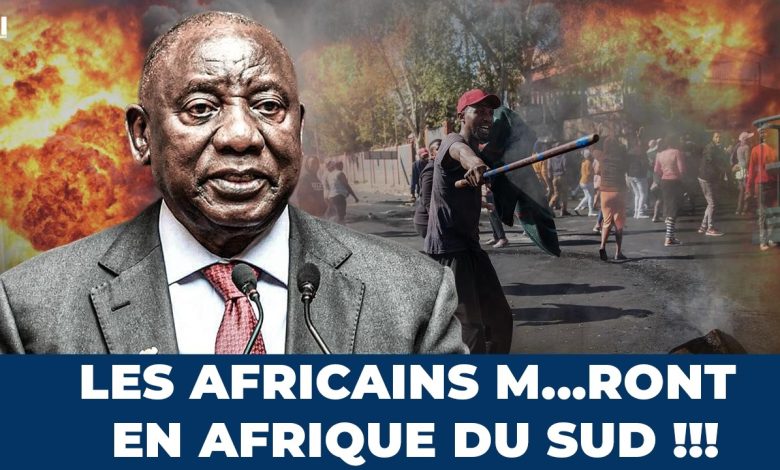
Xenophobia in South Africa can neither be downplayed nor excused. Targeting people because they are foreign, beating them, threatening them or destroying their documents is unjust and unacceptable violence. A person does not lose their dignity or their fundamental rights because of their nationality or immigration status.
However, the issue is not limited to the essential condemnation of violence. It also requires an examination of a broader reality: when large numbers of people leave their countries to seek safety, work or opportunities in another African country, this highlights the difficulties they face at home. Two ideas must therefore be held together: foreign nationals must never be targeted, and every state must also consider its ability to provide decent living conditions for its population.
Violence against foreign nationals is not an answer
In public debate, foreign nationals are sometimes blamed for unemployment, insecurity, poverty or economic competition. This logic of collective blame is dangerous. It turns very different individuals into a single group identified as a problem.
Yet violence neither creates jobs nor solves social problems. Above all, it puts people who may have done nothing wrong at risk. It indiscriminately affects workers, families, traders and people in precarious situations simply because they come from elsewhere.
The question of documents illustrates this risk particularly clearly. Verifying the authenticity of a document requires skills, training and an appropriate procedure. When unauthorised people claim this power, perfectly valid documents may be torn up or destroyed on the grounds that they are supposedly fake. Such a situation is both unjust and troubling.
Efforts to combat fraud or criminal activity, where they exist, must be the responsibility of the competent institutions and must comply with clear rules. They cannot become a pretext for attacks against all nationals of the same country. Crimes can be committed by foreign nationals, just as they can be committed by South Africans: origin cannot replace an examination of individual responsibility.
Not confusing crime, immigration and national identity
Concerns may exist in neighbourhoods where residents witness theft, violence, trafficking or other offences. These concerns must be heard without being turned into general hostility towards all foreign nationals. The presence of people involved in wrongdoing does not make other people of the same nationality guilty.
This distinction is essential. A society does not protect its citizens in the long term by allowing an association between immigration and crime to take hold. It protects them by prosecuting offenders on the basis of established facts, without tolerating attacks, vigilante actions or public humiliation.
It is also important to avoid portraying the entire South African population as xenophobic. The country includes people who openly reject violence against foreign nationals and defend African unity. Reducing all South Africans to the actions of part of society would reproduce precisely the mechanism of generalisation that fuels xenophobia.
A reminder of historic African solidarity
The reactions prompted by violence take on a particular dimension because of the history of African solidarity with South Africa. Many African countries welcomed South Africans as refugees during the darkest periods of their history. This welcome could include asylum, material support, friendship and educational opportunities.
This past explains the incomprehension and anger felt by many Africans when African foreign nationals are mistreated in South Africa. It is a reminder that solidarity among peoples should not be a memory invoked only when convenient, but a principle that also guides present-day relations.
However, recalling past assistance should not be used to claim a personal debt from individuals today. Solidarity cannot be reduced to a permanent accounting exercise. Rather, it should encourage mutual responsibility: protecting people, respecting their dignity and refusing to let economic hardship become a reason for violence.
The responsibility of states when citizens leave
Xenophobia also reveals a broader vulnerability on the continent. When citizens feel compelled to leave for another African country to find a better life, it is legitimate to question the shortcomings of their country of origin. Employment, security, services, economic opportunities and the quality of governance are all issues that cannot be avoided.
This is not to claim that migrants are responsible for the difficulties they encounter, nor to suggest that they should accept mistreatment. No one should be beaten or driven away for seeking a better life. But the leaders and institutions of every country have a responsibility to create conditions that allow their citizens to build their future at home if they wish to do so.
This perspective calls for a shift in the debate. Rather than limiting discussions to mutual accusations between populations, attention must focus on the causes of departure, national failings and cooperation between African states. A country able to offer prospects to its population reduces the vulnerability of those who have no choice but to depend on welcome elsewhere.
Football should not become a field for retaliation
Tensions linked to xenophobia sometimes spill over into sport. African supporters may celebrate South Africa’s defeats in response to violence attributed to certain South African groups. This reaction reflects deep unease, but it does not affect those responsible for attacks and does not solve the problem.
Football brings together players, coaches and supporters who do not necessarily share the same views on xenophobia. Making a national team or its athletes the automatic representatives of acts committed by part of the population extends the same harmful generalisation.
Sport can instead serve as a reminder that no rivalry justifies dehumanisation. Supporting a team or choosing not to support it remains a fan’s choice, but condemnation of violence must remain separate from sporting competition.
South African voices opposed to xenophobia
Julius Malema is presented as one of the South African figures who has publicly taken a stand against xenophobia and Afrophobia. In particular, he has challenged the idea that beating foreign nationals or closing their businesses can solve the employment issue. His argument is straightforward: violence against Zimbabweans, Nigerians or other Africans does not create jobs.
This position recalls a simple principle: social discontent must not be redirected towards the most vulnerable. Problems of employment, inequality and security require political, economic and institutional responses. They are not solved through brutality against African neighbours.
FAQ on xenophobia in South Africa
Can xenophobia be justified by crime?
No. Offences must be dealt with individually, on the basis of facts and by the competent authorities. They do not justify violence or discrimination against all foreign nationals.
Why does the issue also concern countries of origin?
Because departures to other African countries raise questions about the opportunities, security and living conditions offered to citizens in their own countries. This responsibility does not diminish the duty to protect migrants from violence.
Should all South Africans be considered xenophobic?
No. South Africans do oppose xenophobia. Attributing the actions of one group to an entire population is a harmful generalisation that does not help to understand or solve the problem.