Ibrahim Traoré: Popularity, Security and the Debate Over Political Freedoms in Burkina Faso

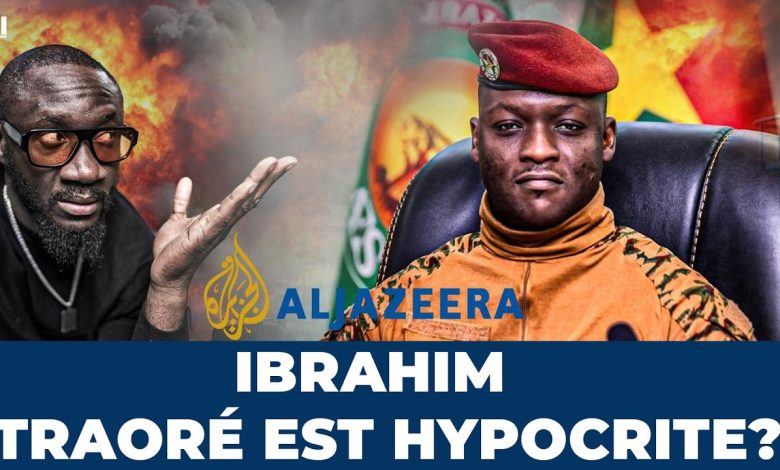
Ibrahim Traoré has occupied a prominent place in African political debates since coming to power in Burkina Faso in the 2022 coup. At 38, the officer is portrayed as one of Africa’s most recognisable leaders. His image has generated both strong support, particularly around the theme of sovereignty, and criticism concerning political freedoms, security and the duration of the transition.
An analysis attributed to Al Jazeera contrasts the Burkinabè president’s popularity with questions about his exercise of power. The issues raised point to a broader debate: how can a breakaway political agenda, the security emergency and expectations regarding the country’s democratic organisation be reconciled?
Why is Ibrahim Traoré popular?
Ibrahim Traoré’s popularity is notably associated with his rhetoric on national sovereignty and his denunciation of foreign influence. The expulsion of French troops from Burkina Faso is cited as one of the actions that strengthened his support among people opposed to that influence.
His image is also linked to the legacy of Thomas Sankara. According to the analysis cited, his speeches, style and references to former revolutionary leaders contribute to this perception. For his supporters, he embodies a desire for change and for regaining control over national resources and policy direction.
Sovereignty has therefore become a central political message. It is expressed through calls to promote local products, prioritise national interests and strengthen state control over sectors regarded as strategic.
Criticism of political freedoms and the transition
The criticism attributed to Al Jazeera first concerns political freedoms. It states that, in January, the authorities dissolved political parties and suspended political activities, arguing that such activities were fuelling divisions amid a national crisis.
This decision is presented as an extension of the military transition and the effective postponement of a return to conventional political activity. The question raised is whether a leader’s popularity and support for a sovereignty-based agenda are compatible with a shrinking political space.
In April, Ibrahim Traoré also stated that Burkina Faso was in a revolutionary rather than a democratic phase, calling on Burkinabè people not to focus on democracy. This position fuels the debate over the nature of the transition: its defenders see it as a response to the emergency and the need to act quickly, while its critics see it as grounds for concern over the return to pluralistic political life.
The debate over the effectiveness of public action
Another line of criticism concerns the potential gap between the political message and living conditions. The analysis cited argues that national pride alone cannot feed families or protect villages. This phrase sums up a central question: are the policies being implemented delivering concrete improvements for the population?
Arguments in favour of the transitional government, by contrast, highlight its ability to make decisions and launch projects quickly. Under this view, administrative procedures and lengthy consultations can slow down infrastructure construction, agricultural programmes and responses to immediate needs.
The debate is therefore not solely about the principle of democracy. It also concerns the pace at which public decisions are implemented, institutional safeguards, and whether the measures adopted during the transition are temporary or lasting.
Security remains at the centre of concerns
The security crisis remains a major issue in Burkina Faso. Ibrahim Traoré came to power promising to reverse the deteriorating security situation that had affected the country for years. However, the criticism relayed stresses that Burkina Faso remains heavily affected by violence from armed groups.
According to this criticism, attacks continue in several regions, civilians are regularly killed and millions of people need humanitarian assistance. It therefore challenges the idea that the situation has improved clearly enough.
For their part, supporters of the transition point to the strengthening of the national defence forces and the organisation of the Volunteers for the Defence of the Homeland, or VDP. Training civilians in defence is presented as a way to mobilise more of the population in the face of armed threats.
Claims also circulate that the Burkinabè army controls a large share of the territory, with the figure of 75% being mentioned. This is presented as a claim heard in the debate, rather than as an established assessment here. The actual extent of territorial control therefore remains at the heart of the controversy.
Gold, agriculture and local processing
The record highlighted by Ibrahim Traoré’s supporters includes several economic measures. The first concerns the gold sector, with gold presented as Burkina Faso’s leading export. The government is said to have strengthened state control over several mines, notably by acquiring stakes from owners or operators.
The stated objective is to ensure that the country benefits more from the revenue generated by its resources, without discouraging foreign investors. An increase in the state’s mandatory share in mining projects is also mentioned.
The construction and inauguration of a gold refinery are presented as an important step. The aim is to refine gold locally rather than send it abroad, in order to determine its actual purity and create more added value in Burkina Faso.
Agriculture is also among the areas highlighted. The government is credited with distributing hundreds of tractors, power tillers, motor pumps, seeds and fertiliser to farmers. These actions are described as support for national production and efforts to address food-related difficulties.
The launch of local industries, including a tomato-processing plant, is also cited. These initiatives are defended in the name of locally processing available produce and reducing dependence on imports.
A transition presented as temporary
The most sensitive issue remains the duration of the transition. Ibrahim Traoré has repeatedly stated that the current situation is temporary. The argument put forward is that a context of war and crisis requires speeding up certain projects: infrastructure, agriculture, equipment and the restoration of security control.
This justification does not put an end to the questions. The promise that the transition is temporary is precisely one of the elements on which the government will be judged. Critics expect guarantees on a return to normal political activity, while supporters stress the priority given to security and the rapid implementation of projects.
The debate surrounding Ibrahim Traoré is therefore not limited to his image or his speeches. It concerns concrete issues: the safety of the population, the state of political freedoms, the management of mining resources, support for agriculture and the state’s ability to deliver lasting results.
FAQ
Why did Ibrahim Traoré become popular?
His popularity is notably linked to his rhetoric on sovereignty, the expulsion of French troops, his references to Thomas Sankara’s revolutionary legacy, and the measures announced in the gold, agriculture and local-processing sectors.
What criticism has been levelled at Burkina Faso’s government?
The criticism mentioned concerns restrictions on political activities, the suspension of parties, the postponement of a return to ordinary political life, and persistent insecurity in several regions of Burkina Faso.
What does Ibrahim Traoré argue regarding democracy?
He has stated that Burkina Faso is going through a revolutionary rather than a democratic phase. This position is justified by his supporters as a need to act quickly in response to the crisis; it is challenged by those concerned about political restrictions and the duration of the transition.