War in Ukraine: Claims Surrounding Victoria Nuland and Negotiations

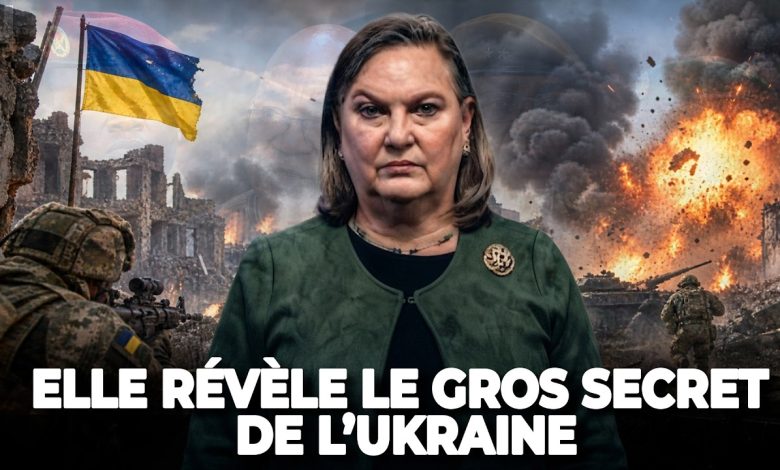
The war in Ukraine has prompted numerous interpretations of its causes, duration and the terms of a possible settlement. Statements attributed to Victoria Nuland, a former US political affairs official and diplomat specialising in European and Eurasian matters in particular, are being used to support the idea that discussions between Ukraine and Russia stalled over military, strategic and economic issues.
These claims chiefly concern negotiations held at the beginning of the conflict, the role of Western officials, and the consequences that limiting Ukraine’s armaments might have had. They should be examined cautiously: several comments made about these statements are matters of interpretation or political accusation and do not, on their own, constitute established proof.
Who is Victoria Nuland?
Victoria Nuland is described as an experienced US diplomat. She served as US Under Secretary of State for Political Affairs from 2021 to 2024. She also served as Assistant Secretary of State for European and Eurasian Affairs from 2013 to 2017, after serving as US Ambassador to NATO from 2005 to 2008.
This career explains why her name is frequently associated with major European security issues, relations between Washington and its allies, and the Ukrainian crisis. Her experience in several US administrations also fuels commentary portraying her as an influential figure in US foreign policy.
However, having held senior diplomatic positions does not, in itself, establish all the intentions attributed to US authorities or Western governments in the course of the war.
Negotiations Between Ukraine and Russia at the Centre of the Debate
The central point of the statements under discussion concerns a draft agreement discussed between Ukraine and Russia. According to this reading, compromises were considered at the start of the war, before the process changed direction following consultations with Western partners.
Boris Johnson is notably cited in this account. The claim is that his visit with Volodymyr Zelensky influenced the continuation of negotiations and encouraged the pursuit of a military outcome rather than the signing of an agreement. This account is presented as an interpretation of events: it assigns a decisive role to the former British prime minister without providing, in the available material, detailed evidence to establish that this visit alone halted an agreement that had already been finalised.
The difficulty is that wartime negotiations never depend on a single actor or a single clause. The positions of the belligerents, security guarantees, territory, sovereignty, military capabilities and international support can all influence the outcome of discussions.
The Issue of Limits Imposed on Ukraine’s Military Capabilities
The statements attributed to Victoria Nuland refer to a document containing significant restrictions on the Ukrainian military. The interpretation put forward is that Ukraine would have been required to limit its access to certain weapons, including artillery and missiles, while Russia would not have faced equivalent restrictions on its own military forces.
From this perspective, the agreement would have weakened Ukraine’s ability to defend itself without creating a comparable balance with Russia. The argument is therefore primarily one of security: a country that agreed to drastically reduce its military capabilities could find itself in a vulnerable position if the other party did not make the same commitments.
This alleged imbalance is presented as one possible reason for rejecting such an arrangement. The issue is not limited to the purchase of weapons: it concerns a state’s ability to protect its territory, replenish its stocks and benefit, or not, from external guarantees.
US Military Aid and Industrial Interests
The debate also extends to the arms industry. Raytheon, Lockheed Martin and Boeing are cited as major US companies involved in manufacturing military equipment. According to the argument put forward, the continuation of Ukrainian aid and rearmament could benefit these companies, particularly if Ukraine had to acquire systems made in the United States.
This observation feeds into a broader criticism: that economic and industrial interests could influence diplomatic choices. Under this line of reasoning, military spending would not merely be a response to war; it would also represent a major market for arms manufacturers.
However, two levels must be distinguished. On the one hand, arms contracts and defence needs do indeed involve economic considerations. On the other hand, the claim that companies dictated US strategy or prevented a peace agreement remains an accusation that would require specific, verifiable evidence to be established.
NATO, Interoperability and Equipment Purchases
The issue of military interoperability is also highlighted. Allied forces seek to use compatible systems so that they can cooperate, communicate and operate together. This logic can encourage the acquisition of similar equipment or equipment designed to common standards.
The commentary under review links this interoperability to purchases of US weapons by NATO members. However, this issue should not be reduced to a single or automatic requirement: interoperability primarily describes a practical need for military cooperation. The countries concerned may also have domestic or European production, depending on their choices and capabilities.
In the Ukrainian case, the issue takes on a particular dimension. External support directly affects the country’s defensive capabilities, developments on the front line and the balance of power with Russia. Any arms limitation, if written into an agreement, would therefore have major consequences for Ukraine’s future security.
Competing Narratives on the Causes of the Conflict’s Duration
The claims surrounding Victoria Nuland illustrate the existence of opposing narratives about the war. For some, the absence of an agreement is primarily explained by Ukraine’s security requirements and the need to avoid a peace considered too unfavourable to Kyiv. For others, Western geopolitical interests and the benefits connected to the military industry have helped make a negotiated outcome more difficult.
These two frameworks do not rest on the same assumptions. The first stresses Ukraine’s right to retain the means to defend itself against Russia. The second focuses on the influence of major powers, military alliances and industrial groups.
The debate over the war in Ukraine cannot therefore be reduced to a single explanation. Negotiations, when they take place, raise concrete questions: what military limits? What security guarantees? What obligations for each side? And what conditions would make it possible to prevent a resumption of fighting?
FAQ
What position did Victoria Nuland hold between 2021 and 2024?
She served as US Under Secretary of State for Political Affairs from 2021 to 2024.
Why are restrictions on the Ukrainian military controversial?
According to the interpretation presented, they could have limited Ukraine’s defensive capabilities without imposing comparable restrictions on Russia, creating a military imbalance.
Do arms industry interests alone explain the duration of the war?
No. This idea is a critical interpretation advanced in the debate. The causes and duration of the conflict also involve military, territorial, diplomatic and security issues.