Burkina Faso–Russia: Security Cooperation, Sovereignty and Break with France

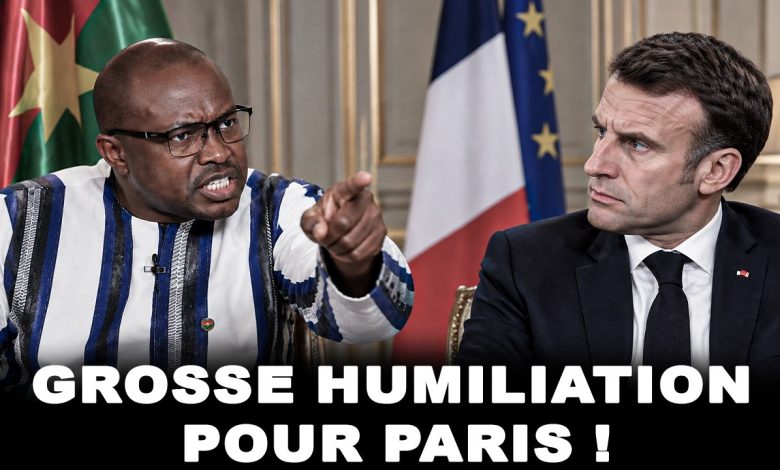
Burkina Faso now presents its relationship with Russia as a strategic partnership based on the country’s security needs, the transfer of experience and the pursuit of cooperation between sovereign states. This direction is also accompanied by a very firm criticism of the former relationship with France, which Burkinabè authorities describe as unbalanced and marked by a logic of domination.
At the heart of this diplomatic phase is the security situation. Burkinabè authorities describe the struggle being waged on their territory as existential and as a fight for national liberation. They say they want to regain control over the country’s strategic choices and independently define development priorities for the benefit of the population.
The role of Russian instructors according to Burkinabè authorities
In the military sphere, Burkina Faso–Russia cooperation is presented as being linked to the acquisition of equipment. According to the position expressed by Burkinabè authorities, the presence of Russian instructors primarily meets a need for technical support: enabling combat forces to become familiar with the equipment acquired.
This assistance is described as standard practice in military equipment contracts. The instructors are therefore said to be tasked with supporting training in the use of the equipment, without this cooperation being presented as a substitute for national forces.
The authorities believe that this partnership has helped improve the operational capabilities of Burkinabè combat forces. They also stress a logic of sharing experience: operations conducted in the field are said to have enabled national forces to develop methods adapted to local realities, which would then be shared with the Russian partner.
Under this interpretation, security cooperation is therefore not limited to supplying equipment. It also rests on the exchange of operational lessons between the two countries.
A relationship with Russia claimed to be “between equals”
Burkinabè authorities reject the idea that closer ties with Moscow would mean replacing one dependency with another. Instead, they advocate a shift from one model of cooperation to another, which they describe as honest, transparent and based on preserving each party’s interests.
Russia is presented as a partner that has not colonised African countries and does not seek to erase the languages, cultures or endogenous foundations of African states. This distinction is central to Burkina Faso’s official discourse on sovereignty: international cooperation is accepted insofar as it does not undermine the country’s ability to decide its own future.
Burkinabè officials also recall that ties between the two countries are not new. They refer to cooperation dating back to the years of independence, as well as more extensive exchanges during Thomas Sankara’s revolution. Generations of Burkinabè citizens are said to have been trained in Russia in several fields, including journalism.
An intergovernmental commission to broaden exchanges
The creation of an intergovernmental commission between Russia and Burkina Faso is intended, according to the authorities, to turn political orientations into concrete action. This body is associated with the desire to expand cooperation beyond defence issues alone.
Exchanges within this commission are described as regular. Its next meeting could be held at the beginning of 2027, with the stated aim of assessing progress, setting new priorities and defining courses of action for the benefit of both peoples.
Cooperation is also considered from a broader geopolitical perspective. Burkinabè authorities call for international relations to be based more strongly on respect for the sovereignty of peoples and on balances they consider more representative of today’s world.
The deliberate deterioration of relations between Burkina Faso and France
The position defended by Ouagadougou towards France is far more critical. Burkinabè authorities say they have no dispute with the French people, but denounce what they describe as French imperialist policy. They link this assessment to colonial history and to the relations maintained, in their view, for more than a century between France and several African states.
In this account, previous relations are considered structurally unequal. The authorities refer to agreements they deem favourable to only one side and reject the idea that decisions concerning Burkina Faso should be made outside the country. They therefore state that they want to pursue national choices without external diktats.
This position forms part of a stated determination to look to the future rather than remain focused on past disputes. Burkinabè authorities say that the country is pursuing projects in different sectors and maintain that Burkina Faso’s economic, financial and development situation is positive. However, no specific indicators are detailed in the statements concerned.
Ukraine, the media and allegations of disinformation
Burkinabè authorities have also accused Ukraine of being involved alongside terrorist groups active in the territory of the Alliance of Sahel States. This accusation is made by Burkina Faso’s authorities, which have not publicly provided detailed evidence in the statements examined.
On the media front, they denounce what they regard as campaigns of manipulation and disinformation attributed to French media outlets. In particular, they accuse them of focusing on the difficulties faced by Burkina Faso, Mali and Niger, while giving less attention to setbacks suffered by armed groups.
These criticisms are part of a broader challenge to French influence and to what the authorities present as an information battle. They believe that the media outlets concerned seek to shape public opinion and perpetuate the fragilities of countries in the region.
Culture, training and relations between peoples
Beyond security and diplomacy, Burkina Faso emphasises the human dimension of its rapprochement with Russia. The authorities consider that a lasting relationship between two states must go beyond political dialogue alone and be based on exchanges between peoples.
Training, cultural exchanges and artistic co-creation are cited as important areas. According to Burkinabè statements, these fields already have a dynamic of exchange and should help embed the bilateral relationship over the long term.
FAQ
What is the stated role of Russian instructors in Burkina Faso?
According to Burkinabè authorities, they support combat forces in becoming familiar with military equipment acquired from Russia and take part in sharing operational experience.
Why have relations between Burkina Faso and France deteriorated?
Burkinabè authorities attribute this deterioration to what they describe as a historically unbalanced relationship and to a French policy they characterise as imperialist. They specify that they are not targeting the French people.
Which areas does cooperation between Burkina Faso and Russia cover?
The statements highlight security, equipment, training, exchanges of experience, intergovernmental cooperation, and cultural and artistic fields.