Explosion at a KNDS Factory in Italy: What Is Known About the Investigation

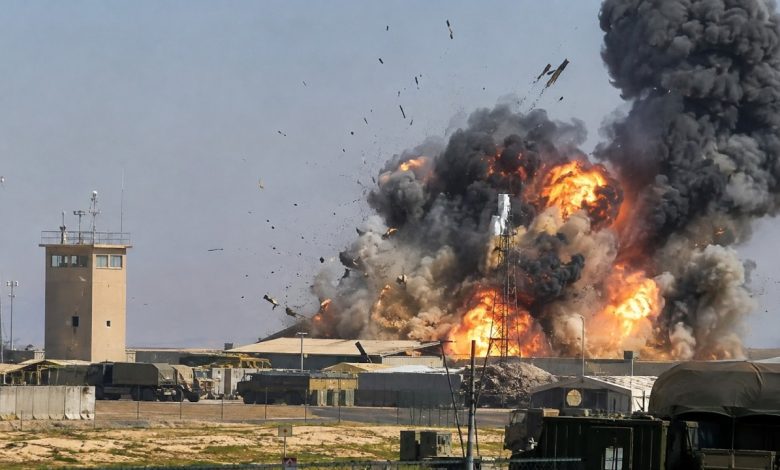
An explosion occurred at a KNDS arms factory near Rome, Italy. The site is described as producing artillery ammunition and components subsequently sent to Ukraine. At this stage, the cause of the explosion has not been established: an investigation is under way to determine whether it was an industrial accident or an act of sabotage.
In the absence of any reported official conclusion on the cause of the incident, it would be premature to attribute the explosion to a specific actor. Nevertheless, the context of the war in Ukraine is raising questions about the security of European military and industrial facilities involved in supplying Ukraine.
A factory linked to production for Ukraine
The factory involved is described as a production site for artillery ammunition and components shipped to Ukraine. This output is part of the military support effort provided by several European countries to Kyiv since the start of the conflict with Russia.
The nature of this activity explains why the explosion is being closely watched. When a facility involved in manufacturing or transporting military equipment is struck, the potential consequences extend beyond the site itself: they can also affect production chains, deliveries and the protection of sensitive infrastructure.
However, the site’s connection to military aid for Ukraine alone does not allow for the conclusion that the incident was deliberate. The investigation will notably have to distinguish between a possible technical failure, an accident that occurred during work, or external intervention.
Why sabotage is being considered
The possibility of sabotage is being raised amid heightened tensions between Russia and several European states. Accusations, denials and diplomatic retaliatory measures are multiplying in an environment where infrastructure linked to defence, transport and logistics has become particularly sensitive.
But a hypothesis is not evidence. No reported conclusion makes it possible to claim that Russia was responsible for the explosion in Italy. Any attribution must therefore await the results of investigations conducted by the relevant authorities.
This caution is all the more necessary because incidents involving drones, explosives or military facilities are often accompanied by conflicting accounts. In cases of this kind, responsibility can only be established seriously on the basis of physical evidence, technical findings, and judicial or administrative conclusions.
A European context of diplomatic tensions
The explosion occurred while Western military aid to Ukraine remains a point of confrontation with Moscow. Germany is reported to have released military assistance including an air-defence system intended to protect Kyiv from Russian attacks.
The United Kingdom is also described as having announced a package worth £100 million for Ukraine, intended in particular to acquire Patriot air-defence missiles to protect Ukrainian power networks ahead of winter. The amount is presented as equivalent to around €116 million.
The sharing of missile technology with Ukraine is also at the heart of tensions. According to the reported statements, London approved cooperation between British, French and Ukrainian industries to advance a project related to Ukraine’s missile-production capabilities. Moscow warned that, if British weapons were used against Russian territory, Russia reserved the right to target British military targets in Ukraine or elsewhere.
Further deterioration in Russian-German relations
Against this backdrop, Germany accused Russia of being involved in a case involving drones found at Leipzig Airport. According to the reported information, the devices were loaded with explosives, but their detonation systems reportedly failed to operate. Russia firmly denied any involvement and described the accusations as a provocation.
The case was followed by reciprocal diplomatic decisions. Germany announced the closure of the Russian Consulate General in Bonn and the termination of the lease for the Russian House in Berlin. In response, Russia ordered the closure of the German Consulate General in St Petersburg, as well as German cultural centres on its territory.
The explosion at the KNDS factory in Italy therefore comes at a time when industrial risks, suspicions of sabotage and diplomatic tensions overlap. However, the central question remains unchanged: only the investigation will clarify the exact circumstances of the explosion and rule out or confirm the various hypotheses put forward.
FAQ
Where did the explosion occur in Italy?
The explosion struck a KNDS arms factory near Rome.
What does this factory produce?
The site is described as manufacturing artillery ammunition and components intended for Ukraine.
Has the explosion been attributed to Russia?
No. An investigation is under way to determine whether the explosion resulted from an industrial accident or an act of sabotage. No definitive attribution has been reported.