Ibrahim Traoré Defends a Burkinabè Strategy of Sovereignty and Security

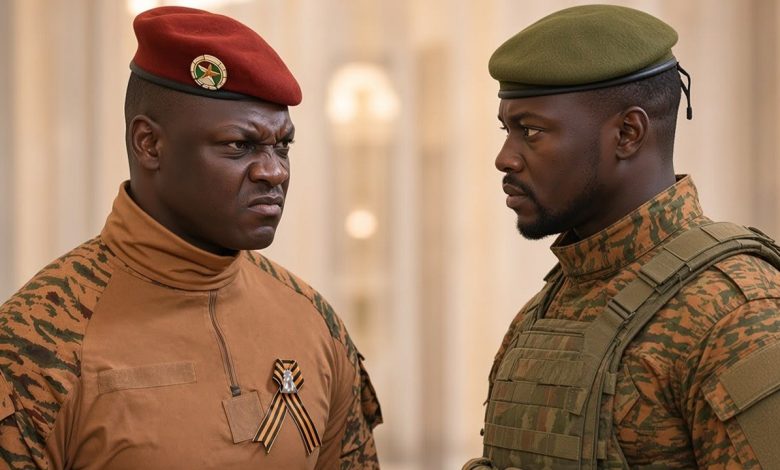
Ibrahim Traoré advocates an approach based on Burkina Faso’s sovereignty, self-reliance in the fight against insecurity, and the mobilisation of the population. In his statements, the Burkinabè president stresses the need for African states to rely on their own capacities while turning to technical partnerships when they consider them necessary.
His message is addressed both to Burkinabè people and to other African countries. It links security, territorial recovery, industrialisation, scientific research and youth involvement. He also strongly criticises outside interventions and comments on the situation in Burkina Faso.
Sovereignty presented as a condition for security
Ibrahim Traoré states that Burkina Faso’s security is, first and foremost, the responsibility of Burkinabè people. In his view, the country’s forces and citizens must lead the effort to recover territory and defend the country against armed groups.
He maintains that the security situation has improved in certain areas since foreign forces left in 2023. In particular, he refers to greater possibilities for road travel within the country, where he believes several routes had previously been threatened or cut off by insecurity. Ibrahim Traoré presents these developments as the result of efforts by Burkinabè forces.
The Burkinabè president rejects the idea that outside actors are best placed to determine how the conflict should be addressed. He believes that local populations and forces understand the realities on the ground and must therefore retain control of their strategy.
In his remarks, this position does not rule out acquiring equipment abroad. Ibrahim Traoré mentions the possibility of purchasing technology or military equipment from international partners and then training Burkinabè users. However, he draws a distinction between occasional technical assistance and the conduct of operations on the ground, which he assigns to national forces.
The AES and the assertion of regional capacity for action
The president links this direction to the Alliance of Sahel States (AES). He presents the organisation as a framework in which member states have chosen to “fight” together and says he is convinced of their ability to continue on this path.
In this vision, regional unity is not limited to military cooperation. It also requires the political will to take responsibility for choices made by the states concerned, without waiting for a solution to be imposed from outside. Ibrahim Traoré highlights collective responsibility, effort and work as drivers of this autonomy.
He criticises foreign interpretations of Burkina Faso’s situation when, in his view, they pass judgement on security developments or on the country’s decisions. For him, such positions may reflect interests that differ from those of the Burkinabè population. This analysis is a central element of his case for stronger political and security sovereignty.
Criticism directed at the African Union
Ibrahim Traoré calls on the African Union to play a more active role in addressing the crises affecting the continent. He cites conflicts in Ethiopia, the Democratic Republic of the Congo and Sudan, as well as persistent insecurity in the Sahel, to highlight what he sees as insufficient continental mobilisation.
He believes that the pan-African organisation should be able to deploy more strategies and resources to assist states facing conflict. His remarks are not limited to Burkina Faso: he makes a broader appeal for African solidarity in the pursuit of peace and stability.
He also refers to an attack in Tinzaouaten against forces of the Confederation of Sahel States. According to his statements, a non-African state allegedly announced that it had supported and taken part in the attack. Ibrahim Traoré criticises the African Union for not publicly condemning this alleged interference and calls on the institution to break its silence.
Through this appeal, he asks African organisations to respond more closely to the expectations of the population, particularly young people. He links the African Union’s credibility to its ability to take a position and act during crises affecting states on the continent.
A call for unity and political responsibility
For Ibrahim Traoré, African unity requires dialogue, mutual understanding and the building of common foundations. He believes that certain behaviours must be fought in order to foster this unity: cowardice, betrayal and incompetence.
He also addresses African leaders, asking them to acknowledge their mistakes when they believe they have been compromised or influenced by interests contrary to those of their peoples. He states that such an acknowledgement could make it possible to resume work focused on the independence of states and development.
His message rests on a recurring idea: Africa must stop seeing itself as dependent on solutions coming from elsewhere. He does not portray this autonomy as isolation, but as the ability to define priorities, develop skills and defend interests.
Youth, science and work at the heart of the project
Ibrahim Traoré gives a central place to young people. He calls on them to believe in their abilities, work, train and turn towards science. In his view, intellectual and technical development depends on sustained effort, research and continuous improvement.
He invites young people to take part in transforming the country, notably through industrialisation and stronger research. He believes that Burkina Faso can become an example if it succeeds in mobilising this potential and developing its own responses to economic, technological and security challenges.
The Burkinabè president criticises attitudes he considers passive or focused on distraction. Instead, he encourages commitment to work, learning and social usefulness. In his view, everyone should be able to contribute to their family, community and country.
A vision based on action and autonomy
Ibrahim Traoré’s statements outline a political direction in which sovereignty is inseparable from security, knowledge and citizen participation. He advocates a strategy in which Burkinabè people themselves defend their territory, while being able to acquire tools and skills from foreign partners.
This approach is accompanied by a call for more concrete African solidarity in the face of conflicts, as well as greater youth mobilisation. For Ibrahim Traoré, the challenge is to make collective effort, training and control over national choices the foundations of lasting independence.
Frequently asked questions
What is Ibrahim Traoré’s position on security in Burkina Faso?
Ibrahim Traoré states that the fight against insecurity must be led above all by Burkinabè people. He highlights the role of national forces and territorial recovery as elements of his strategy.
What does he ask of the African Union?
He calls on the African Union to take stronger action in response to conflicts in Africa, notably by providing strategies and support to states affected by war or insecurity.
What role does he assign to young people?
He encourages young people to train, work, pursue science and contribute to development, industrialisation and research in Burkina Faso.