Bassirou Diomaye Faye and Kiraay: What the Creation of a New Party Reveals in Senegal

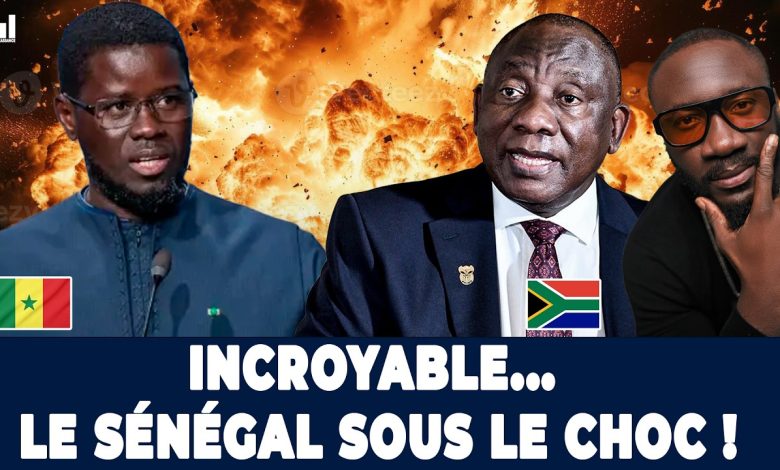
The creation of Kiraay by Bassirou Diomaye Faye is presented as a major turning point in Senegal’s political landscape. The new party, whose name is said to come from Wolof according to the available information, is associated with the slogan “The nation first”. Above all, its founding marks the emergence of a political structure distinct from Pastef, the party associated with Ousmane Sonko.
This initiative is interpreted as formalising a split between two leaders previously described as very close. Beyond their personal relationship, the situation raises an institutional question: how is power organised when a president seeks to build his own political base while a former ally retains significant influence in Parliament?
Kiraay, a “common home” around Bassirou Diomaye Faye
When presenting the party, Bassirou Diomaye Faye referred to the creation of a “common home” and compared the act of founding it to planting a seed. He addressed those present as “patriotic republican brothers and sisters”.
In this interpretation, the launch of Kiraay reflects the desire to establish an organisation directly connected to the president: with its own activists, candidates, message and networks. Such an organisation can allow a head of state to avoid remaining permanently dependent on a party led by another political figure.
Supporters of Bassirou Diomaye Faye expressed their backing for the project. Several hundred people reportedly waited outside the gathering despite the heat, holding signs of support. Participants described the day as important and said they placed their trust in the president.
A break with Ousmane Sonko and Pastef?
The reported information points to growing tensions between Bassirou Diomaye Faye and Ousmane Sonko. The stated areas of disagreement include the movement’s leadership, economic policy direction and the handling of the debt crisis. The split is therefore presented not as a simple, isolated disagreement, but as the result of visions and ambitions that had become difficult to reconcile.
According to the account cited, Bassirou Diomaye Faye ended Ousmane Sonko’s tenure as prime minister in May 2026. Ousmane Sonko then reportedly became president of the National Assembly. These developments point to a new distribution of power: executive authority around the president and significant parliamentary influence on the Pastef side.
The departure of personalities to Kiraay has been downplayed by voices close to Pastef, who refer to only a few dozen resignations compared with what they describe as strong membership momentum within their party. This difference in assessment illustrates the battle over public perception that accompanies any political realignment.
Parliament at the heart of the balance of power
The main institutional factor highlighted is Pastef’s weight in the National Assembly. The party is credited with 130 of the 165 seats. If this figure is confirmed, it gives Pastef considerable parliamentary power and makes the building of Kiraay especially strategic for Bassirou Diomaye Faye.
A president who cannot rely on a majority directly committed to his agenda may face difficulties in advancing priorities, passing legislation or retaining control over the political timetable. Conversely, a dominant force in Parliament can influence negotiations and the overall institutional balance.
The issue is therefore not limited to a rivalry between two individuals. It also concerns the relationship between presidential legitimacy, parliamentary majority, party discipline and the ability to govern over time.
Two opposing interpretations of the split
Some of Ousmane Sonko’s supporters portray him as a central figure in a project for a free and strong Senegal, particularly through a political line critical of colonialism and neo-colonialism. Some believe that Bassirou Diomaye Faye owes an important part of his rise to power to their initial alliance, and that this shared history entails a degree of political loyalty.
Another interpretation holds that a president of the Republic must be able to make his own decisions and build an independent organisational base. From this perspective, having fought a political battle together does not necessarily require two leaders to follow the same path indefinitely.
Comments attributed to Ousmane Sonko after his dismissal, in which he reportedly referred to Bassirou Diomaye Faye as “our little brother”, also prompted reactions. Some saw it as a familiar expression; others considered it inappropriate given the presidential office. The episode shows how words can become political markers in a context of rupture.
Why do political alliances weaken?
Political history offers many examples of alliances becoming competitive once governing begins. The common feature is often the transition from a shared goal—winning power or leading an opposition movement—to concrete decisions on the economy, institutions, priorities and the distribution of responsibilities.
The examples of François Mitterrand and Michel Rocard in France, Tony Blair and Gordon Brown in the United Kingdom, and Uhuru Kenyatta and William Ruto in Kenya are cited to illustrate this type of development. These comparisons cannot predict what will happen next in Senegal, but they show that past closeness is not always enough to preserve a political alliance.
Emmanuel Macron’s founding of En Marche in 2016, which later became Renaissance, is also mentioned as an example of a political leader choosing to build a structure outside traditional parties. In Senegal, Macky Sall left Abdoulaye Wade’s Senegalese Democratic Party in 2008 to create the Alliance for the Republic, before becoming president in 2012.
What political consequences are possible?
At this stage, the creation of Kiraay presents Bassirou Diomaye Faye with an organisational challenge: turning the announcement of a new party into a lasting political presence. This requires uniting supporters, building local structures and clarifying a distinct political line.
For Pastef and Ousmane Sonko, the challenge is to show that the party retains its cohesion, support and parliamentary influence despite the announced departures. The coexistence of two political forces stemming from the same history could increase negotiations, tensions or deadlock, depending on how their relationship develops.
The creation of Kiraay therefore does not merely settle a question of party affiliation. It opens a new phase in which Bassirou Diomaye Faye and Ousmane Sonko will each have to define their position, strategy and ability to unite support in Senegal.
FAQ: Kiraay and the split with Pastef
What is Kiraay?
Kiraay is the political party founded by Bassirou Diomaye Faye. Its launch is presented as the creation of a political structure of the president’s own, distinct from Pastef.
Why is the creation of Kiraay important?
It comes amid reported tensions between Bassirou Diomaye Faye and Ousmane Sonko. It could alter the balance between the presidency, Pastef and the National Assembly.
What is Pastef’s strength in the National Assembly?
According to the information provided, Pastef holds 130 of 165 seats. This parliamentary majority explains the importance of the balance of power surrounding the new Kiraay party.