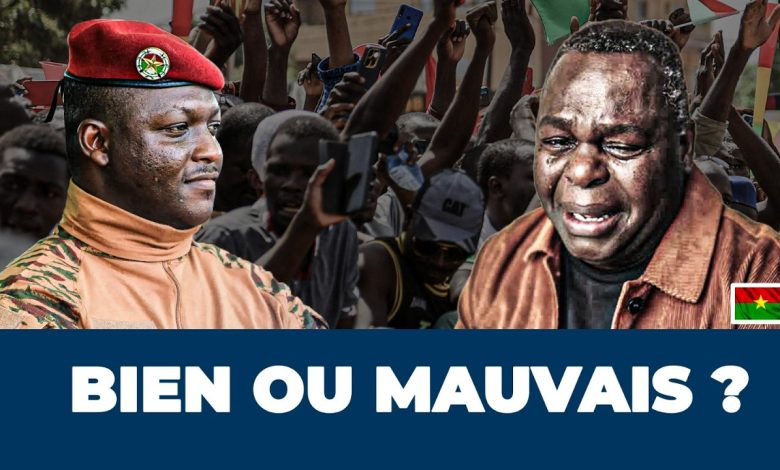
The video titled “7 CHANGES BROUGHT BY TRAORÉ TO FASO” presents seven measures attributed to the Burkinabè authorities under Ibrahim Traoré. Its author describes them as decisions intended to strengthen the dignity of aid recipients, oversight of humanitarian organizations, national attachment, access to school, management of mining resources and security.
This summary covers the points mentioned in the transcript. Several explanations, judgments and interpretations expressed in the video are those of its author; they are therefore presented as such.
1. The ban on displaying images of vulnerable people during aid efforts
The first change mentioned concerns the representation of aid recipients. According to the video, it would now be forbidden to show vulnerable people, particularly during distributions of food or other essential items, in order to protect their dignity.
The author criticizes images showing children or adults living in poverty as part of fundraising campaigns. He believes that this type of communication can undermine the dignity of the people concerned and be used to obtain funding or visibility.
The justification put forward in the video is therefore the desire not to use poverty for advertising or fundraising purposes. According to this presentation, aid should be provided without showing the faces of recipients.
2. Stricter rules for NGOs
The second measure discussed concerns non-governmental organizations. The video mentions the dissolution of 100 NGOs and explains that the authorities have reportedly strengthened requirements for transparency, oversight and regulation of their activities.
An excerpt cited in the transcript mentions persistent difficulties related to the supervision of interventions, information-sharing, accountability, compliance with national priorities, activity monitoring and oversight of actors operating in the country.
According to the video, organizations and structures working in the humanitarian sector must be accredited. It also states that the funding they receive should be deposited in bank accounts that allow the State to track its origin and use.
A share of resources intended directly for beneficiaries
The transcript also states that the partners concerned must now devote 80% of their resources to directly meeting beneficiaries’ needs. The stated objective is to reduce the share allocated to the operation of the structures and to better monitor spending.
The video’s author also links this oversight to the security context. He believes that better financial monitoring would make it possible to know more precisely what is happening on the ground, at a time when the country faces, in his words, threats and armed groups.
3. Oversight of departures abroad for studies
The third measure mentioned concerns studies abroad. According to the video, a person wishing to leave Burkina Faso to pursue training would have to obtain government approval or authentication of their application, including when they are funding their own studies.
The author presents this mechanism as a way to examine the intended course of study and its potential benefit to the country. He emphasizes the idea of students returning and contributing to nation-building after completing their studies.
This approach is nevertheless discussed in the video itself: its author says that some people might see it as a restriction on the freedom to choose one’s future. He cites Qatar as an example of another country where, according to him, studies abroad are also subject to approval by the authorities.
4. Mandatory patriotic training for students
The video then mentions mandatory patriotic training, described as an immersion program for new high-school graduates and university students. Its stated aim would be to remind young people of their history, identity, origins and role in the country’s future.
According to the transcript, this training would seek to strengthen love of the homeland, unity and young people’s readiness to contribute to security as well as national development.
In his commentary, the author links this orientation to the need to build the country and maintain a concrete connection with one’s place of origin. These assessments reflect his view of the scope of the measure.
5. Announced efforts regarding school fees and schools
The fifth point concerns education. The video states that Burkina Faso is making efforts to eliminate school fees, distribute textbooks free of charge and reopen schools intended to accommodate displaced children.
The stated goal is to enable children to return to school and remain there. The transcript provides no further details on the timetable, the institutions concerned or the arrangements for implementing these actions.
6. Regaining control of gold mines and creating a state mining company
The sixth measure concerns the gold sector. According to the video, the government has reportedly regained control of several foreign gold mines, created a state mining company and amended the mining code in Burkina Faso’s interest.
The author explains that this direction would seek to retain more wealth in the country, increase State revenues, combat gold smuggling and reduce what he describes as exploitation by foreign actors.
The transcript does not specify the mines concerned, the date on which control was regained, or the precise provisions of the amendment to the mining code. These details therefore cannot be specified here.
7. Recruiting trained civilians to support the army
Lastly, the video mentions the recruitment of trained civilians to help the army. It refers to them as VDPs and mentions large-scale recruitment as well as a Patriotic Support Fund.
The reason put forward is to strengthen the fight against terrorism and restore security throughout the country. The author argues at length that the population must be able to face adversity and not rely solely on the armed forces.
His comments on learning warfare, prayer and “instinct” reflect his personal opinion. The factual point highlighted in the video is the existence of recruitment of trained civilians to support the security effort.
What the video highlights about the changes in Burkina Faso
The seven changes presented in the video cover a range of areas: humanitarian action, oversight of NGOs, student mobility, civic training, education, mining resources and security. Their common thread, as set out by the author, is a strengthening of the State’s role and an orientation toward sovereignty, resource control and national mobilization.
The video takes a largely favorable tone toward these decisions. It nevertheless includes an explicit reservation about the oversight of studies abroad, which the author acknowledges may be perceived as limiting individual autonomy. The other positive or critical assessments expressed in the video remain attributable to its author.
FAQ
What are the seven changes mentioned in the video?
The video cites the protection of vulnerable people’s image, oversight of NGOs, control over departures to study abroad, patriotic training, school measures, management of gold mines and the recruitment of trained civilians to support the army.
What does the video say about NGOs in Burkina Faso?
It mentions the dissolution of 100 NGOs, the accreditation of humanitarian organizations, better monitoring of resources and a rule under which 80% of resources should directly benefit the people receiving aid.
What role does the video attribute to VDPs?
According to the transcript, VDPs are civilians recruited and trained to support the army in the fight against terrorism and in seeking to restore security.
Video source: 7 CHANGES BROUGHT BY TRAORÉ TO FASO on YouTube.