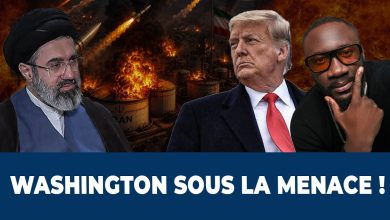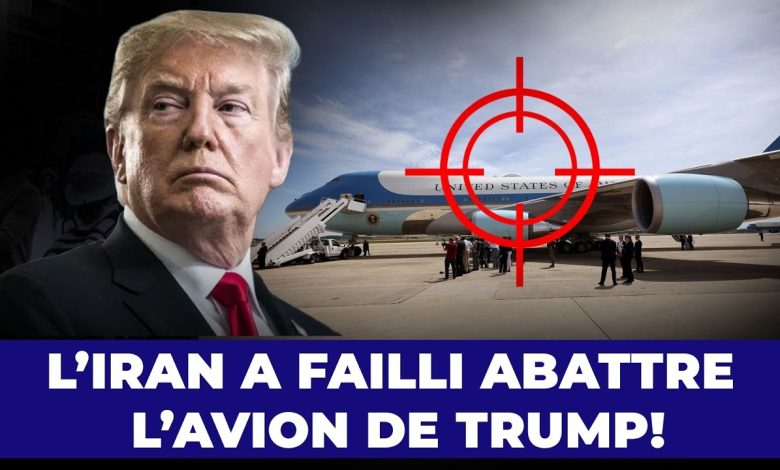
The transcript states that Donald Trump would have changed planes before returning to the United States, after a trip to Turkey linked to a NATO meeting. The reason put forward in this account is a security concern: a potential threat attributed to Iran against the presidential aircraft.
This version is based on reported information and the narrator’s interpretations. The narrator presents the plane change as a sign that the threat would have been taken seriously by the U.S. president’s team.
A security alert attributed to Israeli intelligence
According to the transcript, intelligence from Israel, and more specifically attributed to the Mossad, would have warned U.S. services of a risk targeting Donald Trump during his return flight. The scenario mentioned is that of a possible Iranian attack on the presidential aircraft.
The narrator states that this alert would have led Donald Trump’s team to alter its travel arrangements. However, the transcript presents no document, official statement, or independent confirmation to establish the exact circumstances of this decision.
The video also mentions Benjamin Netanyahu. According to the narrator, the Israeli leader would have “neither confirmed nor denied” the reported alert publicly. This lack of a position is interpreted in the transcript in light of relations that the narrator describes as having been worse between Donald Trump and Benjamin Netanyahu at that time.
Why the former aircraft would have been preferred
The central point of the account is the supposed choice of an older aircraft for the return journey. The transcript contrasts this plane with a more recent aircraft, described as having been offered by Qatar and valued at $400 million.
According to the narrator, the older plane would have been considered preferable because it had already been tested and its protective capabilities were better known. Conversely, the transcript states that uncertainties would remain regarding the new aircraft’s ability to protect the president in a dangerous situation.
This explanation does not mean, in the account, that a newer aircraft would be without protection. Rather, it conveys the narrator’s argument that, in the event of a threat, officials would have favored a platform whose systems had already been proven.
The technical capabilities cited in the transcript
The video lists several security features attributed to the former Air Force One. These characteristics are presented as the main reasons for changing aircraft:
- reinforced armor against explosions;
- protection against electromagnetic pulses;
- electronic countermeasures against jamming;
- missile defense systems;
- secure communications;
- the ability to perform functions related to nuclear codes;
- a stated range of more than 18,000 kilometers without stopping or refueling.
According to the transcript’s logic, these elements would make the older aircraft an option particularly suited to a “dangerous flight.” The narrator emphasizes the plane’s presumed ability to withstand threats, maintain communications, and defend itself against an attack.
Window shades lowered during the flight
The transcript also reports that journalists on board would have been instructed to lower the aircraft’s window shades. Donald Trump is quoted partially in English to explain this measure by the dangerous nature of the flight due to possible threats.
For the narrator, this sequence constitutes an important element: it would be a direct acknowledgment of an unusual level of risk during the journey. The video sees it as proof that U.S. authorities would have seriously considered the possibility of an attack.
The narrator also interprets a statement attributed to Donald Trump — “If you go, I go” — as a way of associating the people on board with the flight’s potential danger. The transcript provides no further context for this statement.
The reaction attributed to Donald Trump
According to the account, Donald Trump would have stated that in the event of a deadly attack against him by Iran, an extremely harsh response should be carried out against that country. The narrator notably mentions the idea of “decimating Iran” and states that U.S. missiles would be positioned toward Iran.
These remarks are analyzed in the video as a deterrent message. The reasoning presented is as follows: making public the prospect of very severe retaliation would serve to warn any potential adversary of the cost of an attack on the U.S. president.
The narrator also sees this as an expression of vulnerability. In the narrator’s view, publicly mentioning the consequences of an attack would show that this possibility is considered feasible. This reading is the interpretation put forward in the transcript.
The Iranian context mentioned in the video
In its final section, the transcript refers to the Strait of Hormuz, which Iran would have closed to passage according to the narrator. The narrator links this situation to strikes described as reciprocal, as well as tensions surrounding a ship that would have attempted to pass without authorization.
The narrator attributes three objectives to Iran. The first would be to secure an end to hostilities and sanctions, notably on oil, as well as the lifting of a U.S. naval blockade mentioned in the video. The second would be to exercise control over the Strait of Hormuz, with Iranian approval required for crossings.
Finally, the transcript presents these actions as a demonstration of deterrence: according to this interpretation, any aggression should result in costly repercussions. In this regard, the narrator cites attacks on ships, U.S. bases, and interests located in the Gulf.
What to take away from the account
The transcript explains Donald Trump’s plane change in Turkey by an alleged threat attributed to Iran and an alert attributed to the Mossad. It maintains that the former Air Force One would have been chosen for its security systems, considered more proven in a risky context.
It also presents the statements attributed to Donald Trump as a deterrent message toward Iran. However, the elements presented in the video remain those reported by the narrator and should be understood as such, in the absence of additional evidence or confirmations provided in the transcript.
FAQ
Why would Donald Trump have changed planes in Turkey?
According to the transcript, this change would have been prompted by a potential threat attributed to Iran, following an alert that would have come from Israeli intelligence.
Why would the former Air Force One have been chosen?
The narrator states that the older aircraft was considered more battle-tested and equipped with advanced protections against explosions, jamming, electromagnetic pulses, and missiles.
Was the reported threat confirmed in the transcript?
No. The video reports an alert attributed to the Mossad and indicates that Benjamin Netanyahu would have neither publicly confirmed nor denied it. No independent confirmation is provided in the transcript.
Video source: Why Donald Trump changed planes in Turkey?