Reactions in Uganda and Ghana Following Violence Targeting Foreigners in South Africa

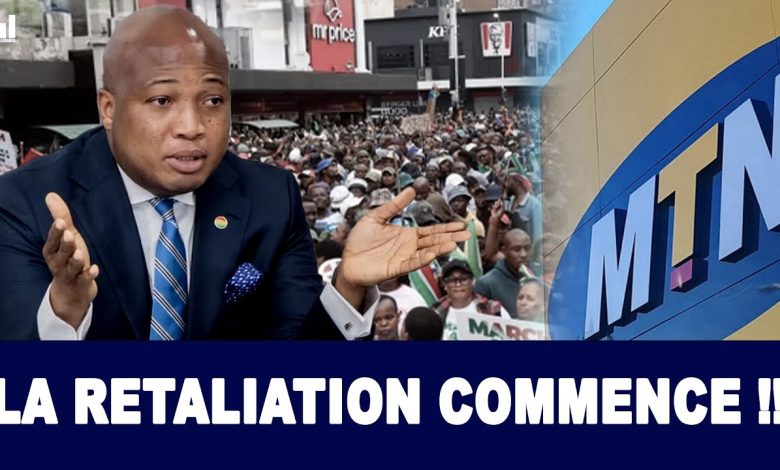
Reactions from Uganda, Ghana and Lesotho are discussed in the video following actions targeting foreigners in South Africa. The issue is not only about enforcing immigration rules: it also concerns reported violence, destruction of property, the presence of South African companies in other African countries and tensions surrounding the idea of Pan-Africanism.
The transcript reports that foreigners perceived as being in an irregular situation were called on to leave South African territory. It stresses that several Africans do not necessarily challenge the principle that a state may enforce its laws. However, they denounce the methods that allegedly accompanied certain operations: assaults, beatings and injuries. The video also states that people lost their lives, without providing figures or verifiable details about the circumstances.
The debate: immigration control and violence against foreigners
The commentary raises a central question: can a country enforce its immigration laws without this leading to violence or abusive treatment? The video recalls that people holding passports were allegedly arrested because they did not have a visa or permit allowing them to work.
This distinction is important in the argument presented: holding a passport or having entered a territory would not automatically mean being authorized to carry out professional activity. The video therefore acknowledges that South Africa may invoke its national rules regarding residence and employment.
But the narrator believes that no administrative irregularity justifies physical violence. He also questions the responsibility of South African authorities, particularly when police officers were allegedly present during actions carried out against foreigners. However, the transcript does not make it possible to independently establish the involvement of the South African government: these are allegations and interpretations attributed to speakers cited in the video.
In Uganda, calls to target South African economic interests
The video shows a Ugandan speaker outside facilities linked to MTN, a South African telecommunications company operating in several African countries according to the commentary. He calls for pressure to be put on South African companies operating in Uganda, on the grounds that they would be generating revenue on the continent while Africans were allegedly being mistreated in South Africa.
The same speech also mentions Standard Bank, referred to in the transcript as “Stanbic.” The speaker does not present himself as preventing employees from working, but as conducting a picket or protest action. His message, as relayed, is to call for South African economic interests to leave if the situation of foreigners does not change.
This position is based on an idea of reciprocity: if citizens of other African countries cannot live or work safely in South Africa, South African companies should not, in his view, be able to continue operating normally elsewhere on the continent. This is a demand made by this speaker; the video provides no evidence to state that it represents Uganda’s official policy.
In Ghana, a petition targeting South African licences and contracts
The transcript also presents an initiative attributed to the “Ghana First” alliance. In a petition addressed to Ghanaian authorities, this coalition calls for the suspension and non-renewal of expired mining and commercial licences held by South African entities in Ghana.
According to the text quoted in the video, this step would be a response to “xenophobic attacks” targeting Ghanaian citizens in South Africa. The petition’s authors ask for South African interests to be examined through a principle of national priority: when Ghanaians can carry out an activity or benefit from an opportunity, it should not be awarded to South Africans.
The commentary also mentions gold-related contracts which, according to it, would benefit from simplified renewal mechanisms. This claim is reported by the video without contractual documents or details about the companies, dates or conditions involved. It should therefore be understood as an argument put forward in the debate, rather than as a fact established by the transcript.
The demand for compensation for destroyed property
Another issue raised concerns compensation for the property of Ghanaian nationals that was allegedly destroyed in South Africa. The video reports that a Ghanaian figure allegedly asked the South African government to reimburse losses related to businesses, homes or property belonging to Ghanaians.
The narrator criticizes the response he attributes to South African authorities, according to which a large proportion of the activities concerned would be illegal. He sees this as an insufficient response to demands for an investigation and compensation. Here again, the video expresses a point of view: it presents neither a full statement from the authorities concerned nor an official compensation procedure.
Lesotho and accusations of involvement by South African authorities
The transcript also mentions a member of the Lesotho government. This person believes that the presence of police officers during mobilizations or actions hostile to foreigners would show that South African authorities were aware of the situation, or even involved.
He relies in particular on the conduct he attributes to police officers and on the alleged use of slogans calling on foreigners to leave. For this speaker, the lack of intervention against those carrying out hostile acts would reveal state responsibility.
These accusations are serious, but the transcript provides no independent evidence to confirm them. The content only makes it possible to establish that an official cited in the video puts forward this interpretation of events and consequently calls for pressure to be exerted on South African interests in Lesotho.
Pan-Africanism put to the test
The video places these reactions within a conflict between two principles. On the one hand, every state retains the right to enforce its legislation on the entry, residence and employment of foreigners. On the other, critics invoke African solidarity, freedom of movement and the ambition of continental economic cooperation.
Ghana is portrayed in the transcript as supporting openness to African citizens, notably through visa-related measures. The video also mentions the African Continental Free Trade Area, arguing that it should encourage investment between neighbouring countries and easier movement of people. These elements are used to underscore the contrast the narrator sees with the events reported in South Africa.
The question therefore remains twofold: how can national laws be enforced without stigmatizing or brutalizing foreign populations? And how can the ambitions of African cooperation be preserved when citizens of one country feel threatened or excluded in another? The video does not settle this debate, but it shows that Ugandan, Ghanaian and Lesotho actors are considering economic and political responses to the situation described.
FAQ
Why are South African companies mentioned in Uganda and Ghana?
In the video, speakers cite them as means of economic pressure. They believe that South African companies operating in their countries should not be able to continue their activities normally if African nationals are victims of violence or exclusion in South Africa.
Does the video state that the South African government is responsible for the violence?
It reports accusations made by some speakers, particularly in Lesotho, but does not present independent evidence establishing the direct responsibility of the South African government.
Is the checking of work permits challenged in the video?
The commentary acknowledges that a state may enforce its laws on visas and work permits. The criticism mainly concerns the violence and treatment that allegedly accompanied certain operations against foreigners.
Video source: UGANDANS AND GHANAIANS READY TO PUNISH SOUTH AFRICA