Ibrahim Traoré Calls for Fighting Religious Extremism in Burkina Faso

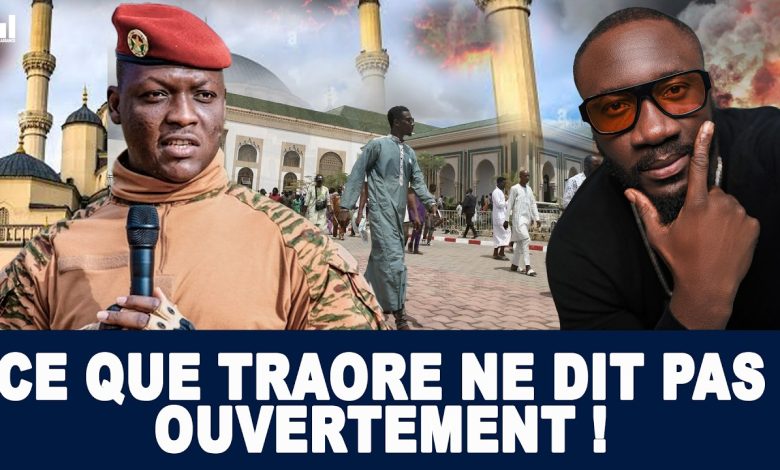
In a segment relayed by a YouTube video, remarks attributed to Burkinabè President Ibrahim Traoré address religious extremism, hate speech and cohesion among citizens. The message presented in the video does not target a religion as a whole: rather, it calls for combating fanatical excesses, whether claimed by Muslims, Christians or other believers.
The video also emphasizes the intention to regulate certain sermons deemed extremist, monitor training paths abroad, and give greater prominence to education, technology and local production. The elements below only restate the remarks and claims reported in this transcript.
A call against fanaticism, not against a religion
The central point of the speech attributed to Ibrahim Traoré is the condemnation of extremism. He states that beliefs must not be used to justify violence, rejection or an inability to question certain practices.
In the excerpt, there is particular reference to movements that derogatorily label objects, knowledge or tools produced outside their religious community. The Burkinabè president, as quoted, denounces a contradiction: using phones, vehicles, means of communication or other technologies while systematically rejecting those who designed them.
According to the remarks relayed, this criticism targets a rigid view of the world that would set believers against others and lead to the rejection of anything that does not conform to a strict religious vision. It is also recalled that no community should impose its vision through coercion.
A condemnation that also concerns Christian excesses
The segment does not limit the issue to Islam. In the reported passages, Ibrahim Traoré also refers to forms of Christian extremism. He notably criticizes speeches that may lead people to break with their relatives on the grounds that they do not practice the same faith or attend the same church.
The transcript refers to situations in which parents are allegedly accused of witchcraft or rejected by their children under the influence of sermons. These examples are used to denounce religious fanaticism and the consequences it can have within families.
The message attributed to the president is therefore presented as cross-cutting: extremism would not be specific to one religion. It would emerge whenever a person or group claims to hold the truth alone, refuses all discussion and regards others as enemies or people to be excluded.
Sermons suspended, according to the reported remarks
The video states that certain preaching activities have allegedly been suspended in Burkina Faso. According to the transcript, Ibrahim Traoré says that these suspensions could continue if people made statements inciting extremism.
At the same time, he praises imams described as “courageous,” “dignified” and “patriotic,” who reportedly continue to convey a religious message aimed at raising awareness. This distinction is important in the reported speech: the criticism does not target religious leaders in general, but those whose remarks could divide or radicalize.
The video commentator also mentions cases of imams being suspended or arrested, as well as controversies surrounding a bill on the control of statements made in places of worship. These claims are reported in the video, but no official document or independently verifiable evidence is provided in the transcript.
The issue of religious training abroad
Another aspect of the speech concerns young Burkinabè people who are said to be undertaking training in certain Arab countries. According to the remarks relayed, the authorities have reportedly identified more than 800 people concerned, without embassies necessarily being aware of their presence or activities.
In the excerpt, the president questions the content of this training. He states that the people mentioned would study sharia, Islamic law and jurisprudence without learning a trade. The video presents this as a risk if such training were intended to bring back to Burkina Faso a desire to impose religious rules on society as a whole.
The transcript then associates sharia with various punishments cited by the commentator: amputations for theft, corporal punishment, penalties related to adultery, alcohol or changing religion. These descriptions are framed in the video as examples of rules its authors do not wish to see applied in Burkina Faso.
According to the reported remarks, Ibrahim Traoré says he wants these young people to return and considers that those who refuse to return would no longer be Burkinabè. He stresses the country’s need for engineers, new technology specialists, skills related to artificial intelligence and development.
Funding all religious youth groups
In the excerpt, the Burkinabè president also raises the possibility of national funding for young people from different faiths. He mentions Catholics, Protestants, Muslims and traditionalists.
The stated objective would be to reduce the influence of external funding that could attract young people living in precarious circumstances. The video argues that poverty can make some people more vulnerable to funding and indoctrination. The remarks therefore stress the need to find a form of internal support without favoring one faith.
This approach is presented as both a social and political response: supporting young people so that they do not become dependent on external networks or interests, while preserving the country’s religious diversity.
“All human beings” must be loved
The segment particularly highlights a statement attributed to Ibrahim Traoré: all human beings created by God would have the right to be loved. The speech emphasizes an inclusive vision here, beyond religious affiliations.
The president is also presented as stating that his responsibility concerns all the children of Burkina Faso, particularly those living in remote areas or who do not have food. In this context, he rejects the idea that religious tensions should divert the country from its collective priorities.
Finally, the video connects this fight against fanaticism to a broader discourse on sovereignty, imperialism and the need to produce locally. Ibrahim Traoré calls on young people to think, create and develop skills, rather than limiting themselves to ideological divisions or religious practice disconnected from the country’s material needs.
FAQ
What does Ibrahim Traoré criticize about religious extremism?
In the remarks relayed, he criticizes extremism for fostering rejection, violence, division and the abandonment of reflection. He specifies that these excesses can exist in several religions.
Does the speech target all Muslims or all Christians?
No. The transcript distinguishes between believers and religious leaders who preach peace and those who, according to the reported remarks, make extremist statements or encourage the exclusion of others.
What priority is highlighted for young Burkinabè people?
The speech calls for directing more young people toward education, technology, engineering, reflection and production in order to meet Burkina Faso’s development needs.
Video source
Watch the source video on YouTube