Ghana–South Africa: Cyril Ramaphosa’s Visit Rejected Amid Xenophobic Tensions

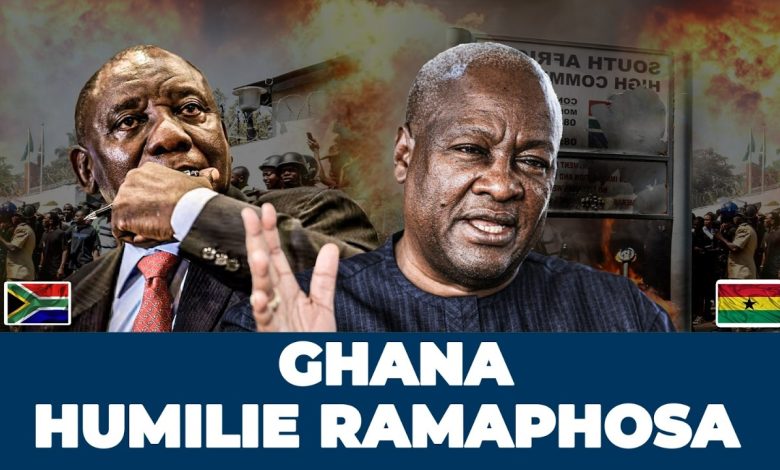
The Ghanaian government reportedly rejected a request for a state visit by South African President Cyril Ramaphosa. According to the transcript, this decision is linked to Accra’s concerns over recent xenophobic violence in South Africa, which reportedly affected Ghanaian nationals.
The issue goes beyond the question of a presidential trip. It also concerns the protection of citizens abroad, travel arrangements between the two countries, and the disagreement between Ghanaian and South African authorities over the death of a Ghanaian national.
A state visit rejected amid high tensions
According to the information reported in the video, Accra believes that the situation of Ghanaians living or staying in South Africa requires a strong political and diplomatic response. The transcript presents the refusal to receive Cyril Ramaphosa as a signal to South African authorities regarding the safety and treatment of Ghanaian nationals.
This episode comes amid a climate described as marked by a resurgence of violence targeting foreigners in certain areas of South Africa. The video refers to the return to Ghana of around 1,000 nationals, as well as the registration of another 900 people for a repatriation process.
These figures and circumstances are attributed to the transcript. According to the account presented, they illustrate the scale of the concern expressed by Ghanaian authorities for their nationals.
A dispute over the circumstances of a Ghanaian’s death
The disagreement between the two countries concerns, in particular, the death of a Ghanaian national. Ghana reportedly maintains that he was killed during the attacks of 30 June, a date presented in the transcript as that of an ultimatum issued by groups hostile to immigrants.
South Africa, again according to the video, rejects this version. South African authorities reportedly stated that the man was killed on 29 June in a hair salon in Nyanga, Cape Town, during an alleged attack linked to an attempted extortion.
The difference in date and context is central: Accra reportedly links the death to anti-immigrant violence, while Pretoria disputes that link. The transcript does not make it possible to establish definitively which of these versions is accurate. It reports conflicting claims by the two governments.
The South African Ministry of Justice reportedly described the Ghanaian statements as factually incorrect. For its part, Ghana reportedly considers that the matter is part of a broader context of assaults, threats and difficulties faced by its citizens.
The protection of nationals at the heart of Ghana’s position
The transcript stresses two priorities attributed to Ghana: the safety of its citizens and their dignity. Beyond the death mentioned, Accra reportedly demands that Ghanaians should neither be assaulted, insulted nor treated in a degrading manner in South Africa.
The reported discourse presents this position as a demand for respect in relations between African states. According to this account, it is not merely a matter of responding to an isolated incident, but of recalling the responsibility of authorities towards their nationals living abroad.
The video also mentions the actions of the Ghanaian foreign minister, referred to in the transcript as “Mr Ablaka.” It refers to his previous interventions concerning Ghanaians arrested or involved in the conflict between Russia and Ukraine. These passages are presented to underscore a diplomatic approach focused on assisting Ghanaian citizens outside the country.
Travel and cooperation agreements put to the test
According to the transcript, Ghana and South Africa have an arrangement allowing their citizens to stay for up to 90 days in the other country without a visa. The video sees this as a sign of a level of mutual trust between Accra and Pretoria.
This mobility framework is linked to the goal of African integration. The narrator notes that the African Continental Free Trade Area, often referred to by the acronym AfCFTA, aims in particular to encourage investment and the movement of people across the continent.
In the same vein, the transcript states that Ghana has introduced visa-free travel for holders of African passports and established an electronic visa system for members of the diaspora. The video presents these measures as reflecting a desire for openness, while highlighting the perceived contradiction between free movement and the violence reported in South Africa.
The issue of destroyed property and compensation
Another point of tension concerns material damage. According to the transcript, Ghana reportedly seeks compensation for property belonging to Ghanaians that was destroyed during the unrest: vehicles, homes or business activities.
The South African position reported in the video is said to be more restrictive. Pretoria would agree to compensate only property that is officially registered and recognised as legal by the relevant institutions. Property not meeting these criteria would not be covered, according to the account presented.
This divergence illustrates the practical dimension of the crisis: beyond diplomatic statements, it also concerns losses suffered by individuals and the conditions under which possible compensation could be granted.
A diplomatic crisis over safety, dignity and mobility
The alleged rejection of Cyril Ramaphosa’s visit is therefore part, according to the transcript, of a broader crisis between Ghana and South Africa. Ghanaian authorities reportedly seek guarantees regarding the safety of their nationals, respectful treatment and a response to the material losses mentioned.
South African authorities, for their part, reportedly dispute at least part of the Ghanaian account concerning the national’s death and recall that compensation is conditional on the legal status and registration of the property concerned.
The case highlights the fragility of the relationship between migrant protection, the right to protest, public safety and African integration. The versions reported in the transcript remain opposed on essential points, particularly regarding the circumstances of the death mentioned.
Frequently asked questions
Why did Ghana reportedly refuse Cyril Ramaphosa’s visit?
According to the transcript, Accra cites xenophobic violence affecting Ghanaians in South Africa, as well as concerns regarding their safety and dignity.
What is the disagreement concerning the deceased Ghanaian national?
Ghana reportedly links his death to the anti-immigrant violence of 30 June. South Africa reportedly disputes this version, stating that he was killed on 29 June in an alleged extortion case in Nyanga, Cape Town.
Do Ghana and South Africa have a visa-free agreement?
The transcript states that an agreement would allow citizens of both countries to stay for up to 90 days in the other state without a visa.
Video source: view the source video on YouTube.