Gabon: why Brice Clotaire Oligui Nguema is ending the fishing agreement with the European Union

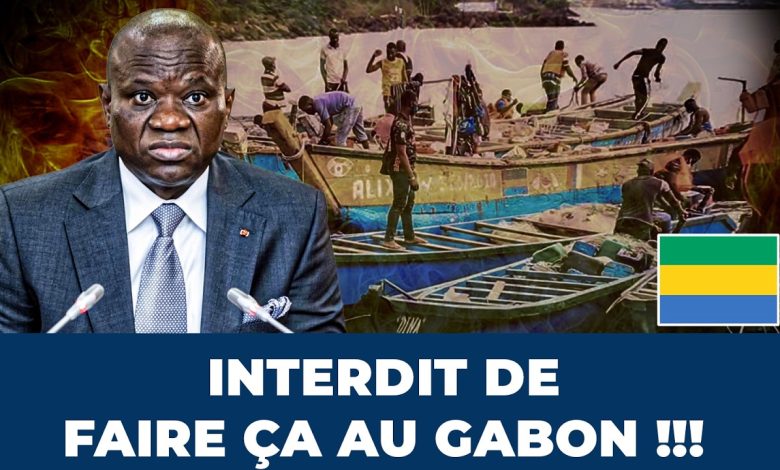
According to the transcript, Gabon decided in 2025 to unilaterally terminate its fisheries partnership agreement with the European Union. In the video, this direction is attributed to President Brice Clotaire Oligui Nguema and presented as a desire to review the conditions for access to Gabonese waters.
The commentary argues that the agreement did not sufficiently benefit Gabon, either financially or in terms of local benefits. It also refers to commitments allegedly made concerning infrastructure, employment, training and fish processing, without having been fulfilled to the extent expected in the video.
A fishing agreement considered unbalanced by the video
The central point raised in the transcript concerns the supposedly unbalanced nature of the Gabon-European Union fishing agreement. The narrator states that European vessels had access to waters described as rich in fishery resources, while the financial compensation paid to Gabon was allegedly limited.
The video mentions an amount of one million dollars per year. Its author presents this sum as insufficient in view of the value of catches made in Gabonese waters. The transcript mentions tuna in particular among the fish concerned, without providing precise data on catch volumes, the species actually caught or the revenue generated.
It is therefore necessary to distinguish between the factual elements attributed to the decision to terminate the agreement and the assessments made in the video. It argues that the benefits received by European partners were greater than the gains obtained by Gabon.
The promises mentioned regarding the fisheries sector
According to the transcript, several commitments were associated with the fisheries partnership. The first concerned infrastructure development. The video refers in particular to the construction or improvement of ports, as well as their equipment to meet the sector’s needs.
A second component concerned technology transfer and the training of Gabonese fishers. In this view, access to marine resources was to be accompanied by a sharing of skills enabling the local sector to gain greater autonomy and capacity.
Job creation is another point mentioned. The narrator states that the agreement was supposed to help generate significant employment in Gabon, particularly through the structuring of activities linked to fishing and seafood processing.
Lastly, the transcript refers to the establishment of fish-processing plants and compliance with quotas or measures against overfishing. It criticises the European Union for not having honoured these various commitments, but does not provide documents, a timetable or figures that would make it possible to assess their implementation.
The issue of overfishing in Gabonese waters
The video also argues that European fishing practices were excessive. It speaks of overfishing and a lack of compliance with the limits that were supposed to govern the exploitation of marine resources.
This criticism is part of a broader issue: the control of natural resources by coastal states. For the narrator, the termination of the agreement reflects Gabon’s determination to no longer allow its waters to be exploited under conditions considered unfavourable to the country.
However, the transcript details neither the applicable rules, nor the monitoring mechanisms, nor any officially recorded violations. Above all, it expresses a critical position on the economic and environmental balance of the partnership as described in the video.
Modernising Gabonese fishing: the objective put forward
Beyond the break with the fisheries partnership agreement, the video attributes several priorities for Gabon’s fisheries sector to Brice Clotaire Oligui Nguema. The first would be the modernisation of artisanal fishing.
The second direction mentioned is the development of semi-industrial fishing. The idea presented is to raise the capacity of the national sector so that Gabon can make greater use of, add value to and process its own resources.
Training for deep-sea fishing professions is also among the objectives mentioned. In the transcript, this focus is associated with a broader ambition: investing in local skills rather than relying primarily on foreign operators to benefit from marine resources.
These objectives are presented in the video as a response to the perceived limitations of the former partnership. They outline a vision focused on strengthening the capacity of Gabonese stakeholders, local employment and better value creation from seafood products.
A decision presented as a choice of economic sovereignty
The video’s commentary gives this termination political and economic significance. It sees it as an assertion of sovereignty over Gabonese resources, as well as a desire to negotiate conditions more favourable to the country.
The video adopts a favourable tone towards this decision and believes that Gabon should itself invest in its fisheries sector. This assessment reflects its author’s point of view. The transcript does not present the European Union’s position, the precise terms of the end of the agreement, or any possible diplomatic or economic consequences.
The issue nevertheless raises an essential question: how can a country rich in fishery resources turn this wealth into infrastructure, jobs, know-how and sustainable local activities? It is around this issue that the video structures its analysis of the Gabonese decision.
FAQ
What decision is Gabon said to have made regarding the European Union?
According to the transcript, Gabon decided in 2025 to unilaterally terminate a fisheries partnership agreement with the European Union.
Why is this agreement criticised in the video?
The video presents it as offering little benefit to Gabon, due to financial compensation considered low, local benefits considered insufficient and promises that, according to its author, were not kept.
What objectives are attributed to the Gabonese president for fishing?
The transcript mentions the modernisation of artisanal fishing, the development of semi-industrial fishing and training for deep-sea fishing professions.
Video source
Watch the source video on YouTube.