South Africa: In Germiston, Foreign Nationals and Citizens Say They Were Evicted from Their Homes

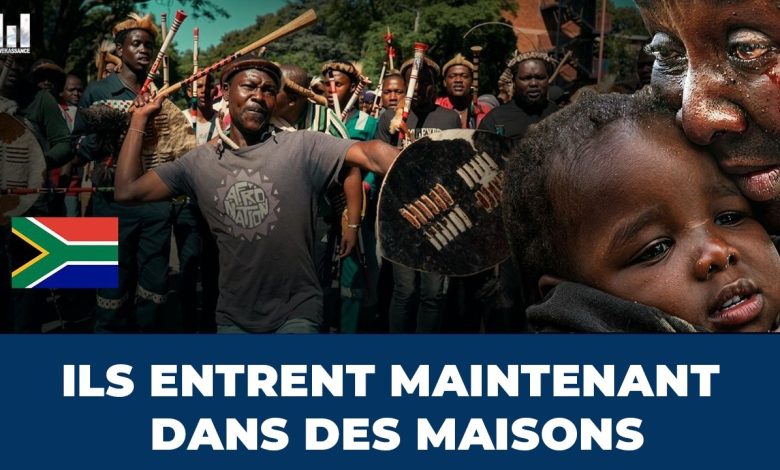
In Germiston, South Africa, reported incidents around 30 June 2026 caused concern among many residents. Protesters allegedly entered private properties to remove people perceived as foreign nationals before handing them over to the police. According to several accounts, the practice did not affect only undocumented people: residents who said they had legal status, and even South African citizens, also say they were affected.
The context was marked by calls for Africans living illegally in South Africa to leave. The date of 30 June had been presented as a deadline for undocumented people. However, the accounts gathered in Germiston raise a central question: when civilians themselves identify people as foreign nationals and remove them from their homes, the distinction between immigration enforcement, intimidation and violence becomes particularly difficult to establish.
Occupants removed from private homes
Images and testimonies report that groups of protesters went door to door in certain Germiston neighbourhoods. Occupants were allegedly taken out of their homes or buildings and then brought to police officers present at the scene.
This situation is described as targeting people considered, rightly or wrongly, to be foreign nationals. Yet according to the accounts cited, the documents of those concerned were not always checked before they were removed from their homes. People with legal status may therefore have been caught up alongside those suspected of being undocumented.
The presence of law enforcement during some of these episodes is at the heart of the questions being raised. Accounts describe civilians allegedly taking occupants to the police. They therefore raise the issue of the role authorities are expected to play when a group enters a private home, identifies people based on their appearance or presumed origin, and then hands them over to officers.
Families say they were injured and traumatised
A man described as a foreign national reportedly said that his children were injured during these events. Two young girls, one of whom appeared to be bleeding, were reportedly seen in this context. Available information does not make it possible to establish the precise circumstances of their injuries, but this account illustrates the fear expressed by families confronted with these door-to-door operations.
A South African resident also testified that her home had been looted. She explained that she initially believed the thefts had been committed by foreign nationals, before stating that the people who entered her home were South African. Her daughter was in the shower when people allegedly forced their way into the house and told her to come out as she was.
Another account mentions damaged doors and gates. A young woman said that her father was taken away even though the family identified themselves as South African and from Limpopo. She also said that her sister was allegedly taken out of the shower while naked. For this family, the mobilisation described as peaceful was not peaceful in practice: their home was allegedly forced open, and their relatives were left traumatised by what they experienced.
When appearance and language become grounds for suspicion
The accounts highlight a major risk: confusing nationality, ethnic origin, language and physical appearance. South Africa has many communities and several languages. Residents of Limpopo, particularly Batsonga people, say they fear being mistaken for people from Mozambique or Zimbabwe because they share similar features, a language or closely related cultural references.
South Africans from this community say they are regularly treated as foreign nationals in their own country. According to them, people who target foreign nationals do not always know how to distinguish South African citizens from Mozambican or Zimbabwean nationals. This confusion can expose citizens to insults, abusive checks, eviction from their homes or violence.
The problem becomes even more serious when identification is based on skin colour or facial features. According to the accounts reported, some people are presumed to be foreign nationals because they have darker skin or because they do not fit protesters’ image of a particular South African community. Such reasoning cannot establish an individual’s legal status or citizenship.
Somali and Ethiopian businesses also targeted
The reported events were not limited to homes. Shops and grocery stores run by Somalis, Ethiopians and other Africans were also allegedly looted. These local businesses are sometimes accused of selling expired or dangerous products. In the accounts cited, these accusations are presented as recurring.
However, the reported looting raises questions about the consistency of these accusations: if products are considered unfit or dangerous, taking them during thefts does not, by itself, confirm their nature or the real motives behind the attacks. The available accounts above all show that these small businesses were exposed to predatory acts in a climate of high tension.
The situation is a reminder that rhetoric targeting entire groups can quickly have consequences for individuals, families and economic activity. When a shopkeeper, neighbour or resident is targeted because of their presumed origin, the boundary between political demands, social rejection and collective violence can disappear.
The issue of controlling foreign nationals does not justify intrusions
The presence of undocumented people and debates over immigration are sensitive issues. South Africans claim the right to demand that rules on entry and residence in their country be enforced. But the accounts from Germiston show why any action carried out outside a legal framework poses an immediate danger.
Entering a house, forcing open a door, removing an occupant or deciding on someone else’s behalf that they are a foreign national is not a simple administrative check. Such acts can affect people with legal status, South African citizens and children. They can also lead to injuries, property damage and a lasting sense of insecurity.
The accounts heard stress one reality: once presumed origin becomes the main basis for identifying people, no one is fully safe. South African citizens who speak a language close to those of neighbouring countries or whose appearance is associated with that of a foreign national may in turn be targeted.
FAQ
What happened in Germiston around 30 June?
Accounts report that protesters forced their way into homes, removed occupants perceived as foreign nationals and brought some people to the police. Businesses were also allegedly looted.
Were all those targeted undocumented?
No. According to the reported accounts, people with documents and South African citizens were also allegedly affected, particularly residents who identified themselves as Batsonga and from Limpopo.
Why do South African citizens say they are mistaken for foreign nationals?
Some explain that they are mistaken for Mozambicans or Zimbabweans because of their language, community background or appearance. Yet these criteria cannot establish a person’s nationality or administrative status.