Did Ibrahim Traoré Say That God Hates Black People? The Meaning of His Remarks

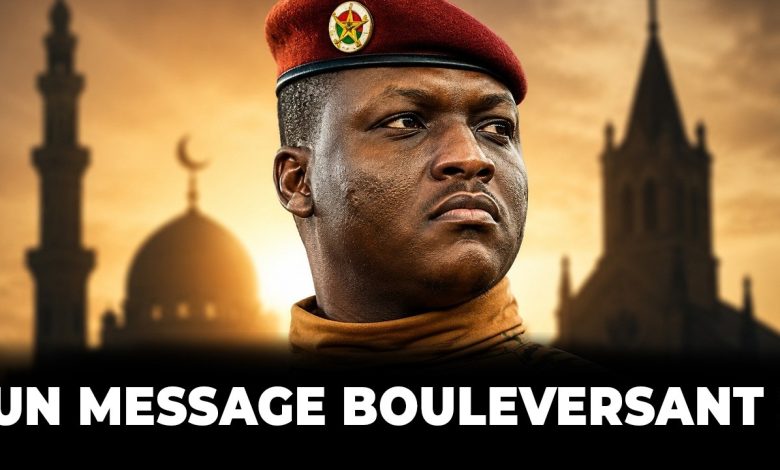
Ibrahim Traoré’s statement that “God is angry with Black people” has caused confusion. In the remarks in which it appears, the Burkinabè president does not argue that God hates Black people because of their skin colour. Instead, he links the expression to a critique of passivity, dependence and what he describes as a refusal to use intelligence, work and knowledge in the service of the community.
His message is directed especially at Burkinabè and African youth during a celebration of academic excellence. He advocates a vision centred on education, patriotism, scientific and technical fields, as well as local production and processing.
What does the statement about God and Black people mean?
Ibrahim Traoré says that he believes in God, whom he presents as the creator of the world. However, he distinguishes this belief from certain religious interpretations and teachings that he considers misguided. In his view, religion can be misunderstood or used for political purposes, domination or personal enrichment.
When addressing his statement, he explains that God would be “angry” because Africans, in his analysis, do not make sufficient use of their intellectual abilities to work, invent, produce and improve the living conditions of their societies. He therefore does not make a racial or theological condemnation of Black people: he uses deliberately strong language to urge effort and action.
His reasoning is as follows: if human beings have brains and limbs, they must use them in order to be useful to themselves, their families and their community. He criticises the idea of passively waiting for miracles or material improvement without personal commitment.
A criticism of passive waiting in the name of faith
The Burkinabè head of state believes that some religious messages can encourage passivity by urging believers to expect everything from God. He considers that such an attitude diverts young people from seeking knowledge, taking initiative, improving themselves and working.
He also challenges religious leaders who, according to his remarks, call on young people to resign themselves to their situation while living comfortably themselves. His message does not target the existence of faith, since he himself reaffirms his belief in God. It targets what he describes as a poor understanding and misuse of religion.
Ibrahim Traoré calls on priests, imams, pastors and other religious leaders to encourage an active youth. He praises those who also carry out professional work, while asking that young people not be “put to sleep” by messages that would distance them from effort and responsibility.
Religion, violence and collective responsibility
In these remarks, Ibrahim Traoré also links extreme interpretations of religion to terrorist violence. He says that people can commit crimes while believing that they will reach paradise. He calls on leading religious figures to speak out and remind people that religion should, in his view, help them do good, distinguish right from wrong and be useful to their community.
This part of his remarks is based on a clear distinction between faith, which he says he respects and shares, and the use of faith for manipulation, violence or passivity. He asks that emotions should not close off discussion of these issues, which he acknowledges are sensitive.
A call to change perceptions of Africa
The Burkinabè president refers to an old belief that Black people are cursed or inferior. He explicitly rejects this idea, which he describes as false. He argues that Black peoples, too, have had guides and prophets, even if they have not been sufficiently recognised in the narratives passed down.
He also repeats a quote attributed to Jomo Kenyatta: Africans had the land while Europeans had the Bible; after Africans learned to pray with their eyes closed, they opened their eyes again to find that the land had changed hands. Ibrahim Traoré calls for the political meaning of this statement to be understood: in his interpretation, beliefs or religious practices may have been used to divert Africans from their resources and responsibilities.
He connects this criticism to poverty, dangerous migration routes and economic dependence. He laments that young Africans die at sea and believes that African leaders must take responsibility for these situations rather than attribute them to divine will.
Giving priority to science, technology and industry
A large part of his remarks concerns Burkina Faso’s school system. Ibrahim Traoré congratulates students who passed their examinations, as well as their teachers and parents. He announces that changes are underway in the education system, both in working conditions and in the content taught, in order to adapt it to the country’s realities.
Above all, he wants greater orientation towards scientific, technical and industrial professions. He specifies that he does not consider literature useless, but believes that more scientists are needed. He even raises the possibility of closing seconde A classes to open seconde C classes, along with recruiting the necessary teachers.
To illustrate this imbalance, he cites figures that he says he recalls from memory: out of around 65,000 baccalaureate graduates, only 571 would be in the C stream and 38 in the E stream. He believes these figures show a shortage of scientific and industrial profiles, at a time when Burkina Faso is seeking to industrialise and technical skills are lacking in certain recruitment processes.
According to him, robotics, mechanics, weapons, ammunition and explosives all fall within the sciences. He therefore calls on young people to learn, copy what works, create and develop their own production capacities. He also mentions young people with lower-secondary or baccalaureate qualifications who win robotics prizes, seeing this as evidence of skills that should be developed.
Patriotism and development: the message to young people
Ibrahim Traoré’s remarks link the quality of human resources to patriotism. He argues that academic knowledge without attachment to one’s country is not enough. He refers to courses introduced into the curriculum, as well as patriotic immersion after the baccalaureate.
His final call is clear: young people must continually seek knowledge, work, create and contribute to Burkina Faso’s development. He asks them to put their skills at the service of their families, communities and country.
The statement about a God who is “angry with Black people” must therefore be understood in this context. In his own explanation, it is a criticism of inaction and dependence, not an assertion that God rejects Black people. His message is based on an injunction to mobilise intelligence, science, work and collective responsibility.
Frequently asked questions
Did Ibrahim Traoré say that God hates Black people?
No. He used the phrase that God was “angry with Black people”, but explained it through what he describes as a failure to make use of intelligence, work and the capacity to produce. He also rejects the idea that Black people are a cursed people.
Does he criticise all religions?
No. He says that he believes in God. His criticism concerns what he calls the poor understanding, poor teaching and use of religion for domination, passivity or violence.
What importance does he give to education?
He presents education as a foundation of development and calls for stronger scientific, technical and industrial fields. He wants young people to put their knowledge at the service of Burkina Faso.