An attempted coup in Niger, described as a mutiny led by military personnel, reportedly targeted several locations considered strategic for seizing power. According to the reported information, the movement targeted Base 101 near the airport, the presidential palace and the state television channel Télé Sahel.
Nigerien defence and security forces reportedly moved quickly to contain the movement. Gunfire and explosions were reported in the country, while the authorities referred to a group of soldiers who had broken military regulations and held some of their comrades captive in the barracks at Base 101 in Gamé.
Three sites at the centre of the attempted takeover
The three targets mentioned were not insignificant. In any attempt to overthrow a government, control of military assets, the seat of executive power and information channels is a decisive issue.
Base 101 and the airport challenge
Base 101, located near the airport, was reportedly among the first sites attacked. Control of an airport area can make it possible to control arrivals and departures, as well as facilitate the deployment of reinforcements. In a crisis, this space can therefore become central for forces seeking to establish a balance of power.
The presidential palace as a symbol of power
The presidential palace was also reportedly targeted. Seizing or surrounding the head of state is a major objective in a coup: it could allow those behind the movement to directly challenge the authority in place and create the impression that the government has been neutralised.
General Abdourahamane Tiani has led Niger since the 2023 military takeover, which resulted in the arrest of Mohamed Bazoum. The reported attempt would therefore be part of a context in which the current government remains exposed to tensions, including within the military apparatus.
State television, a decisive communications tool
State television channel Télé Sahel reportedly constituted the third target. Controlling a public broadcaster can be used to air an official statement, announce a change of power or call on military units to cease fighting. In this type of situation, communication also seeks to create the impression that a new command already controls the state.
The broadcast of a message can influence the calculations of forces that are still undecided. It may also seek to demoralise units that remain loyal to the authorities or encourage military personnel to lay down their arms.
A mutiny rapidly contained, according to the authorities
The movement was reportedly contained thanks to a swift response from the defence and security forces. The reported official wording referred to a “show of discontent” that was gradually brought under control after the sites concerned were retaken.
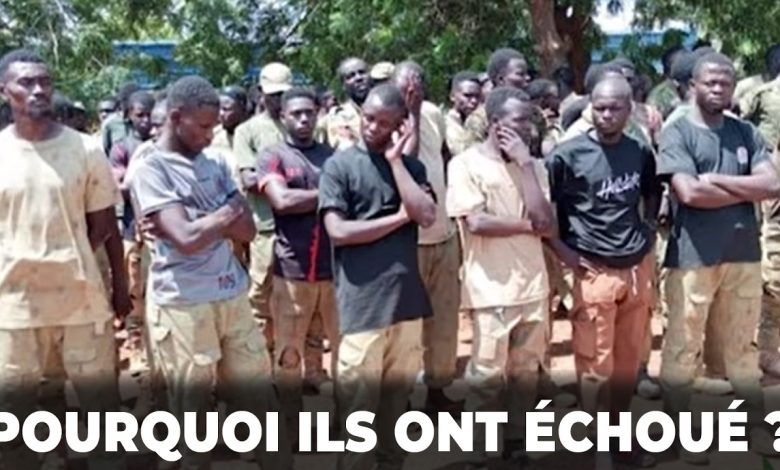
This sequence is a reminder that a mutiny does not necessarily involve an external adversary. The military personnel involved were reportedly Nigeriens, described as men from the front line and hardened by field operations. Such a situation highlights the possible fragility of internal cohesion when troops are exposed over a prolonged period to fighting, losses and a lack of visible results.
Security remains Niger’s main challenge
When the military took power in 2023, improving the country’s protection against jihadist groups was among the justifications put forward. Yet the assessment presented remains critical: attacks reportedly continue, and soldiers reportedly continue to die.
This reality places Nigerien authorities before an essential expectation: delivering tangible results on the ground. A change of government does not automatically resolve a security crisis. When the population and deployed forces do not perceive an improvement, discontent can emerge or intensify.
The time needed to assess a security policy is also an issue. Military capabilities, intelligence, equipment, unit coordination and civilian protection do not change overnight. However, time alone is not enough: it must be accompanied by noticeable improvements in day-to-day security.
The role attributed to Russian support
Accounts of this crisis attribute an important role to the Russian forces of the Africa Corps, presented as having replaced Wagner. Their intervention reportedly provided ground and air support to Nigerien authorities in order to repel the mutiny.
This presence is described as having become significant for Niger’s security. It illustrates the security rapprochement undertaken by Nigerien authorities with Russia. But it also raises the issue of dependency: every military partnership serves interests, and Niger must preserve its capacity to ensure its own security in the long term.
The debate is therefore not limited to the choice of an external partner. It concerns the ability of the Nigerien state to strengthen its own forces, maintain military discipline and respond to the expectations of populations facing insecurity.
What this episode highlights
The reported attempted coup in Niger first reveals the importance of strategic sites in a political and military crisis. A base near the airport, the presidential palace and state television are all points whose control can influence the outcome of a confrontation.
It also serves as a reminder that an army can be affected by internal frustrations. The units most exposed in the field may experience deep fatigue when operations drag on and losses accumulate.
Finally, this episode highlights the fundamental challenge Niger still faces: strengthening the country’s security while preserving the unity of its defence forces and its sovereign decision-making capacity.
Frequently asked questions
Which locations were reportedly targeted during the mutiny in Niger?
The sites mentioned are Base 101 near the airport, the presidential palace and state television channel Télé Sahel.
Why is state television a strategic target during a coup?
It can make it possible to broadcast an official announcement, claim control of power and issue instructions to the armed forces and the public.
What is the main issue raised by this crisis?
The crisis underscores the persistence of security challenges, possible tensions within the army and the need to sustainably strengthen Niger’s security capabilities.