Mombasa Refinery: What Dangote’s Proposal Could Change for Kenya and East Africa

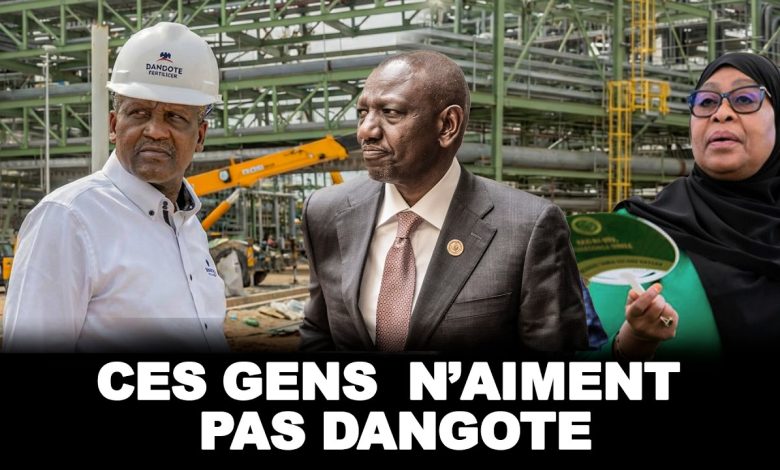
Could an oil refinery in Mombasa strengthen the energy independence of Kenya and East Africa? Ali Dangote, described as Africa’s richest man and head of a Nigerian group active in refining, has expressed a preference for Mombasa rather than Tanga in Tanzania as the site of a possible regional project.
The issue goes beyond competition between two port cities. It is about processing a greater share of the region’s oil resources locally, rather than exporting raw materials and then importing petrol, diesel, kerosene and other already refined products. At this stage, however, this is a direction rather than the announcement of a refinery that has already been built or definitively committed.
Why Mombasa is being considered for a refinery
The proposal is part of a debate initiated by Kenyan President William Ruto on the creation of a joint refinery for East Africa. The idea is to use oil resources from Kenya, Uganda, South Sudan, the Democratic Republic of the Congo and other countries in the region to support shared industrialisation.
William Ruto initially mentioned Tanga, Tanzania, as the potential host for the facility. According to his statements, a regional refinery in Tanga would be intended to process supplies from, in particular, the DRC, Kenya, South Sudan and Uganda. He also mentioned the need for a pipeline link between Tanga and Mombasa, as well as the use of existing infrastructure to transport finished products.
Ali Dangote later stated that he preferred Mombasa. His choice highlights the strategic role of this Kenyan coastal city in regional supply. However, the stated preference does not amount to an official decision: the site, financing structure, participating countries and operational conditions still need to be agreed upon.
An ambition to refine in East Africa for the regional market
The principle being advocated is greater local processing. Africa has crude oil, but available refining capacity does not always meet the needs of African markets. The countries concerned therefore remain heavily dependent on imports of refined petroleum products.
A Mombasa refinery, if it were to go ahead, could supply fuels to several countries in East and Central Africa. The stated aim is to reduce the export of raw materials followed by the import of finished products, creating more value within the region.
This reasoning also rests on energy security. When global supply chains are disrupted, economies that depend on distant suppliers are more exposed to pressure on fuel availability. Regional refining capacity would not automatically remove every risk, but it could limit part of this external dependence.
Expected economic benefits
Supporters of a regional refinery point to several potential effects. Building and operating a complex of this scale could create jobs and help develop technical skills. It could also encourage related industrial activities, particularly in petrochemicals, fertilisers and plastics.
Such a project could also boost intra-African trade in refined products. For importing states, production closer to consumer markets could help reduce import bills and foreign-currency requirements associated with purchases from distant suppliers.
These benefits nevertheless depend on the project actually being carried out, its economic model, its crude-oil supply and the ability of partners to coordinate the required infrastructure. A refinery alone is therefore not a guarantee of lower prices or immediate prosperity.
The experience of the Dangote refinery in Nigeria
Ali Dangote bases his argument on his group’s experience in Nigeria. The Dangote refinery is described as Africa’s largest and as an operating private facility. It is presented as an example of African industrial capacity capable of delivering finished products to several markets across the continent.
According to the information put forward, countries such as Ghana, Cameroon, Togo and Côte d’Ivoire receive products from this refinery. This experience supports the idea that a comparable model could be developed in East Africa, provided that the necessary investment, agreements and infrastructure are secured.
The Dangote group indicated that it had around $45 billion to invest between the time of that statement and 2030, notably in infrastructure and various projects. For the refinery envisaged in East Africa, financing would mainly be provided by the group, using debt and with possible participation from the countries concerned. The start of construction was presented as dependent on the signing of an investment agreement.
The dispute over Tanga and regional relations
The debate over the proposed location also revealed the diplomatic sensitivities surrounding a cross-border project. Tanzanian President Samia Suluhu Hassan publicly asked William Ruto why he had mentioned a refinery in Tanga without informing her beforehand.
William Ruto later said that he might have been better off referring to Mombasa rather than Tanga. Above all, he reaffirmed his belief that the region’s oil, mineral and agricultural resources should serve local industrialisation, wealth creation, jobs and opportunities.
This episode shows that a regional refining project is not only a technical or financial matter. It also requires close political coordination among states, because the choice of host country determines where infrastructure will be located, where part of the economic activity will take place and where direct industrial benefits will be generated.
Would a Mombasa refinery save or weaken Kenya?
The question requires a nuanced answer. The arguments in favour are based on the possibility of making Mombasa a supply hub for East and Central Africa, developing a processing industry and reducing dependence on refined-fuel imports.
But the facility cannot be assessed as an automatic solution. The project depends on an agreement between investors and governments, financing, pipelines and lasting cooperation among the producer and consumer countries involved. Dangote’s preference for Mombasa is therefore important support for the Kenyan idea, without being equivalent to a final construction decision.
For Kenya, the issue is whether Mombasa can become the anchor point of a regional industrial strategy. For East Africa as a whole, the broader debate concerns the ability to process resources available on the continent before selling them or reimporting them as finished products.
FAQ on the Mombasa refinery project
Has the Mombasa refinery been officially launched?
No. A preference for Mombasa has been expressed, but the project’s launch remains conditional on an investment agreement between the parties involved.
Why is a regional refinery being considered?
The aim is to process more oil within the region in order to limit refined-fuel imports, strengthen energy security and support industrialisation in East Africa.
Why was Tanga also mentioned?
William Ruto had referred to Tanga as a possible location for a joint refinery serving several countries in the region. The statement prompted a public response from the Tanzanian president, who said she had not been informed beforehand.