AES and Nigeria: Burkina Faso Challenges Remarks on Regional Insecurity

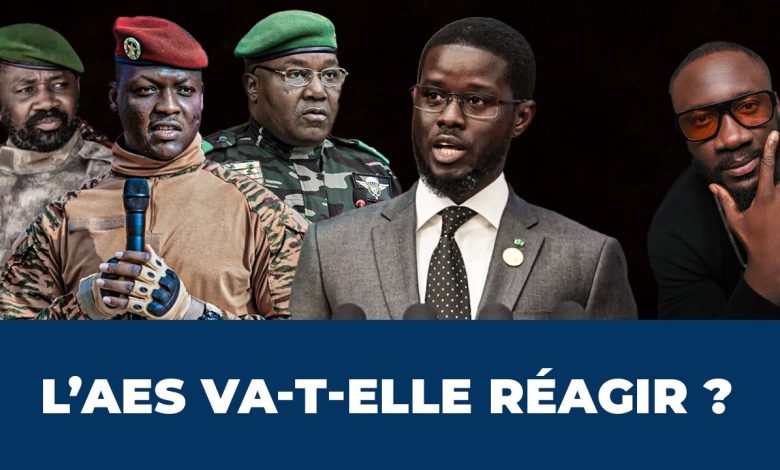
Relations between Nigeria and the countries of the Alliance of Sahel States (AES) have been marked by a new controversy over regional security. Remarks attributed to the Nigerian president drew a link between Nigeria’s security difficulties and the situation in Mali, Burkina Faso and Niger. Burkina Faso challenged this interpretation, calling instead for a joint response to a cross-border threat.
According to the reported remarks, the Nigerian president stated that some terrorists active in his country were not Nigerian and that insecurity in Mali, Burkina Faso and Niger was worsening Nigeria’s difficulties. This position prompted a firm response in Ouagadougou.
A Response Burkina Faso Considered Necessary
Jean-Marie Traoré, Burkina Faso’s Minister of Foreign Affairs, described the remarks as “hasty,” “simplistic” and “surprising.” Burkina Faso’s response stresses that the security crisis cannot be reduced to the responsibility of a single group of countries.
The minister notably highlighted the efforts and sacrifices made by the defence forces and civilian populations of the AES countries in their fight against terrorism. From this perspective, portraying the Alliance’s states as a cause of Nigeria’s problems would mean overlooking the reality of the violence they themselves are facing.
The position expressed by Ouagadougou favours another approach: insecurity is described as a shared problem that requires the states concerned to cooperate rather than shift responsibility for the crisis onto one another.
Why the Issue Is Sensitive for the AES
Mali, Burkina Faso and Niger have faced armed attacks and persistent security instability for several years. The three countries, united within the AES, have made sovereignty and security coordination priorities of their alliance.
In this context, accusations of an alleged export of insecurity to Nigeria are seen as particularly sensitive. They affect both the image of the AES states and their ability to control their territories, while their armies and populations are already engaged in a conflict against armed groups.
Burkina Faso’s reaction is therefore not limited to a disagreement over language. It defends the idea that the fight against terrorism in the sub-region must be based on a comprehensive analysis that takes account of each country’s specific realities.
The Boko Haram Precedent in Nigeria
To challenge the idea that Nigeria’s difficulties stem mainly from the current situation in the AES area, several historical elements have been put forward. Boko Haram is presented as a movement that emerged in northern Nigeria in 2002, founded by Mohammed Yusuf.
The movement subsequently became violent in 2009, following the death of its founder. This chronology is used to recall that Nigeria’s security issues, particularly those linked to Boko Haram, predate the rise of jihadist crises in Mali and Burkina Faso, as well as the creation of the AES.
Niger was already involved in the fight against Boko Haram before the current authorities came to power in Mali, Burkina Faso and Niger. This point supports the argument that insecurity in the Lake Chad Basin and in the Sahel has multiple roots and cannot be explained solely by the situation in the AES countries.
Internal Challenges Raised in Nigeria
The controversy has also revived debate over Nigeria’s internal difficulties. The issues mentioned include corruption within the military apparatus, economic difficulties, unemployment, banditry and population displacement linked to insecurity.
Allegations of corrupt practices in the Nigerian army have also been mentioned, including the alleged existence of personnel listed on paper without corresponding to actual staff. These allegations are presented as a factor that could weaken the capacity to fight armed groups.
The issue of forced migration has also been raised. Nigerians are said to have found refuge in neighbouring countries, notably Niger, Cameroon and Chad, because of insecurity and difficult economic conditions. These elements are cited to underline that Nigeria’s challenges cannot be reduced to an external cause.
A figure concerning ambulances is also cited: Nigeria is said to have 0.4 ambulances per 100,000 people. This figure is put forward to illustrate the broader difficulties the country is said to face, beyond the fight against terrorism alone.
The Military Aircraft Incident in December 2025
Another episode has been mentioned in tensions between Nigeria and Burkina Faso. On 8 December 2025, a Nigerian army C-130 aircraft, carrying 11 military personnel according to reported information, allegedly entered Burkinabè airspace without authorisation.
The aircraft was reportedly forced to land. Nigerian authorities initially stated that it was heading to Portugal. This explanation was questioned in comments surrounding the case, given the route mentioned.
No established conclusion has been provided regarding the aircraft’s actual mission. Suspicions of espionage or support for armed actors have been raised, but these are interpretations rather than proven facts in the available information.
A Call for Regional Cooperation
Beyond the criticism, Burkina Faso’s response highlights the need for cooperation between states. The fight against terrorism concerns territories connected by borders, population movements and armed networks that extend beyond national boundaries.
Under this logic, the countries of the region are invited to seek mechanisms for dialogue and coordination rather than fuel tensions through public accusations. The security of Nigeria, Mali, Burkina Faso and Niger is presented as interdependent.
Finally, this sequence highlights the fragility of relations between Nigeria and the AES. Political and security differences remain significant, but the scale of armed threats makes the issue of regional cooperation difficult to set aside.
FAQ
Why did Burkina Faso respond to Nigeria?
Ouagadougou reacted after remarks attributed part of Nigeria’s security difficulties to the situation in Mali, Burkina Faso and Niger. Minister Jean-Marie Traoré described this analysis as simplistic and called for cooperation between states.
What historical argument has been put forward against these accusations?
The argument is based in particular on the long-standing presence of Boko Haram in Nigeria. The movement is presented as having been founded in 2002 and becoming violent in 2009, before the emergence of the current crises in Mali and Burkina Faso and the creation of the AES.
What happened to the Nigerian aircraft in December 2025?
According to the reported information, a Nigerian C-130 military aircraft allegedly entered Burkinabè airspace without authorisation on 8 December 2025 and was forced to land. The precise reasons for its route have not been established in the available information.